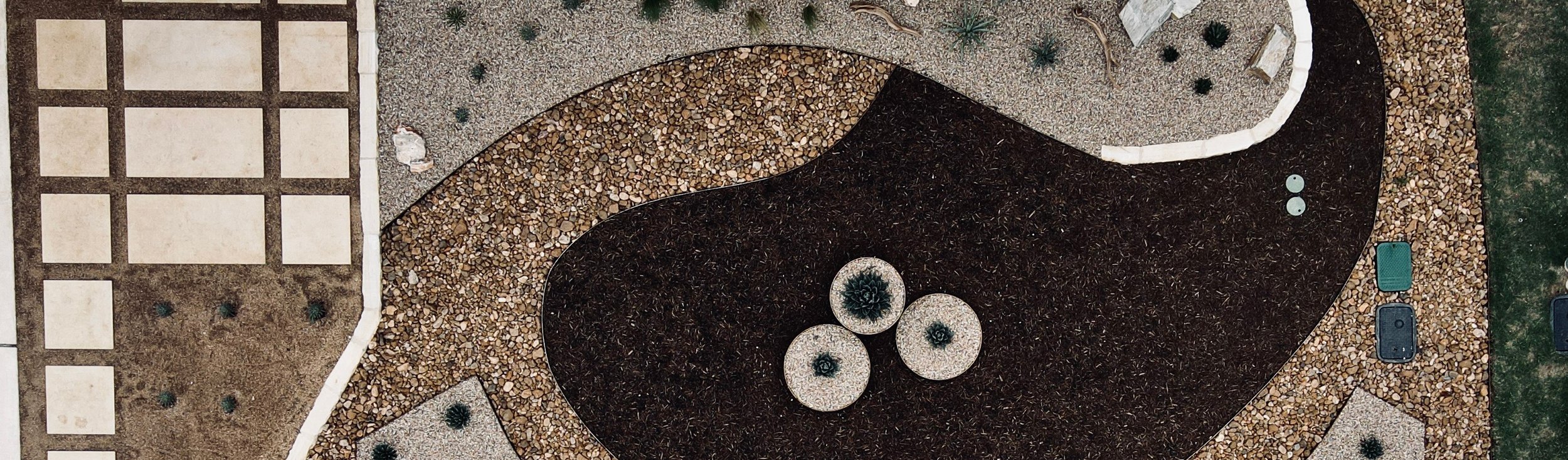

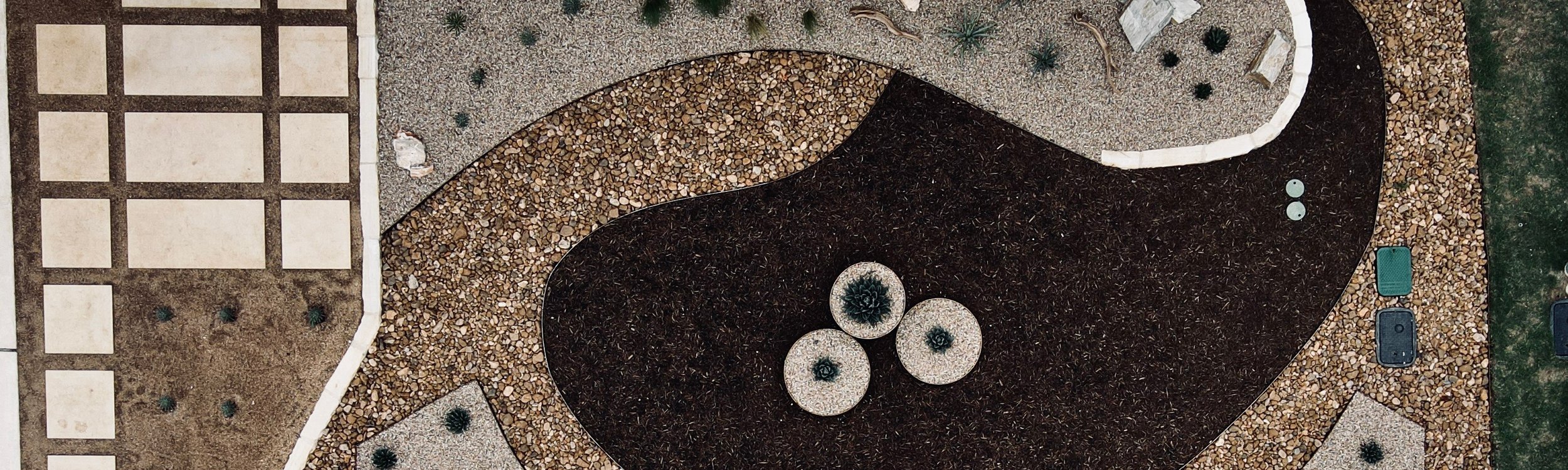

Xeriscaping in Austin, TX
Water-wise yards built on the seven xeriscape principles. Thrive Landscape and Design designs and installs full xeriscapes across Austin and the Hill Country, with soil prep for clay and caliche, native plant palettes, and drip irrigation that lives within Austin Water guidelines.
Xeriscaping is a formal design discipline, not a style. Denver Water coined the term in 1981 and built it around seven principles: planning, soil improvement, smart plant selection, practical turf, efficient irrigation, mulches, and low maintenance. Thrive Landscape and Design brings every one of those principles to Austin yards. We amend clay and caliche soils, build planting zones grouped by water need, install pressure-regulated drip irrigation, lay three to four inches of hardwood mulch, and finish with decomposed granite, native masses, and sculptural agaves. The result is a Hill Country xeriscape that looks designed, not bare. For a broader overview of styles, see our drought-tolerant landscaping page.
Learn More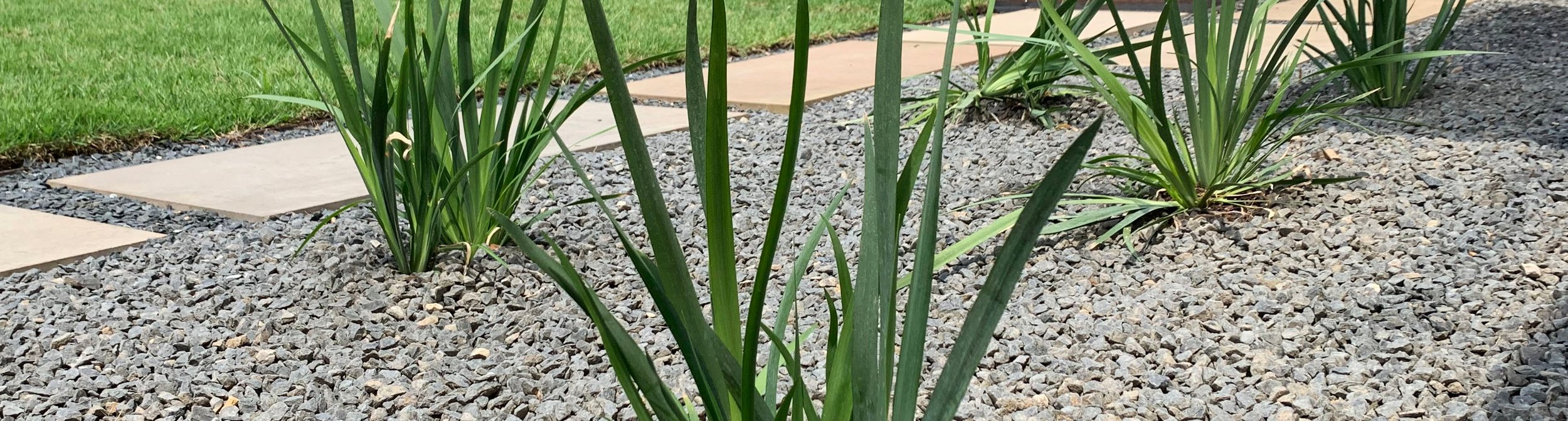
- 7 Xeriscape Principles Applied
- 19+ Years In Central Texas
- 5/5 Average Rating
Explore the Full Landscape Design Lineup
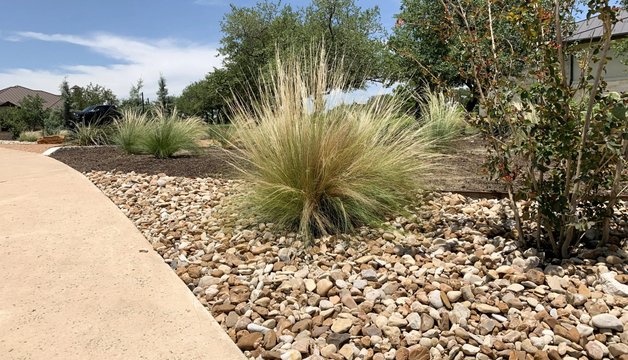
Drought-Tolerant Landscaping
The broader low-water approach, focused on plants and layouts that hold up through Central Texas heat.
Learn More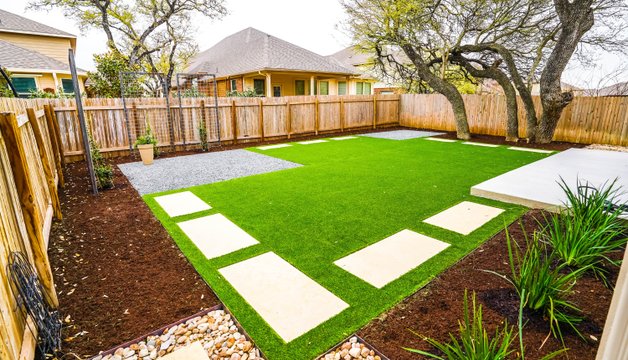
Artificial Turf
Year-round green with zero water use, a practical pairing with xeriscape beds on tight Austin lots.
Learn More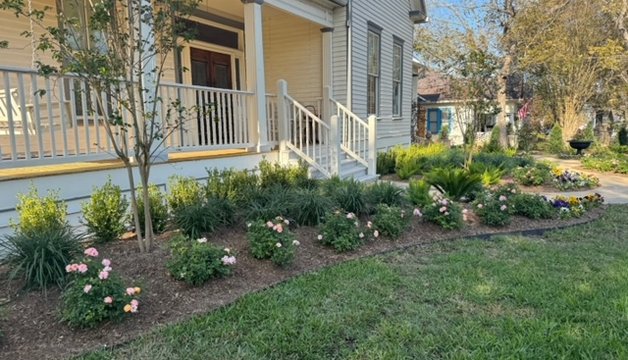
Planting Installation
Native grasses, shrubs, and accent plants installed and soil-prepped to fill in your xeriscape fast.
Learn More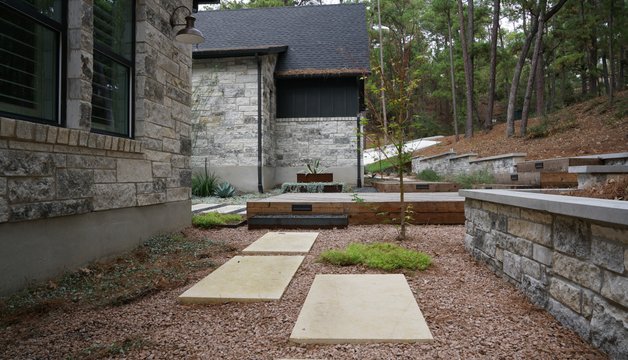
Landscape Design
See the full landscape design service hub, including all related design and install options.
Learn More


Our Xeriscape Process
Audit & Plan
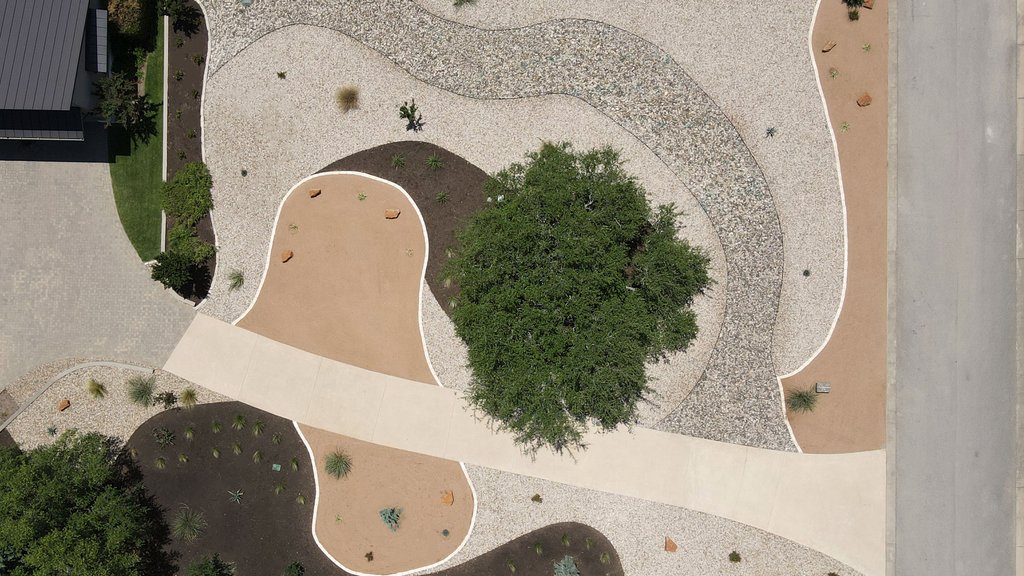
We walk your property, measure sun and shade, check drainage, and map the existing irrigation. We talk through goals, HOA rules, and how you actually use your yard, then deliver a hand-drawn xeriscape plan with hydrozones, materials, and a written scope. This is xeriscape principle one done right.
Soil & Drip
Austin clay and caliche fight you if you skip prep. We break up compacted ground, amend with compost and expanded shale, and install pressure-regulated drip lines with point-source emitters at every plant. A smart controller schedules zones around Austin Water guidelines and seasonal weather.
Plant Zones By Water Need
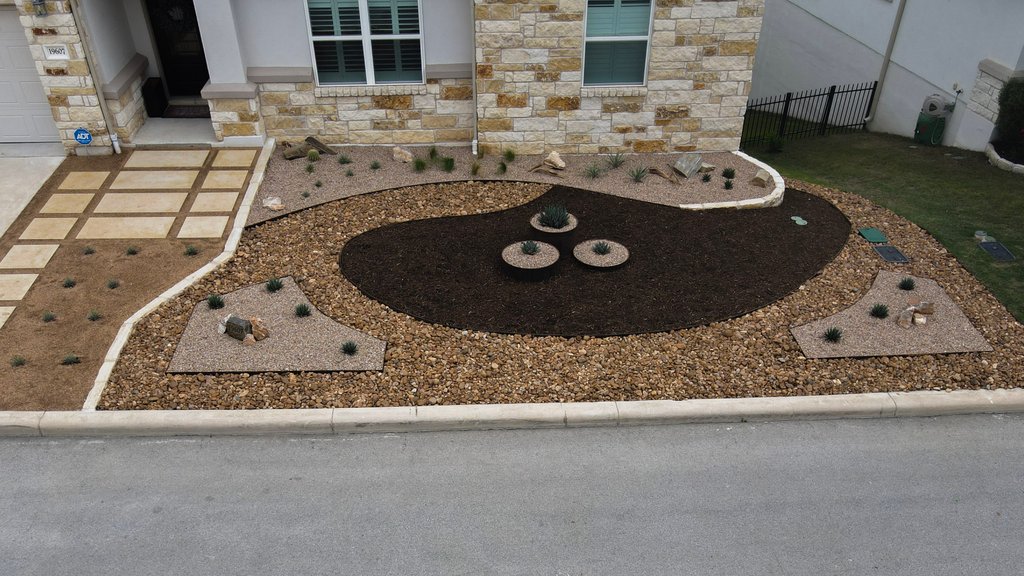
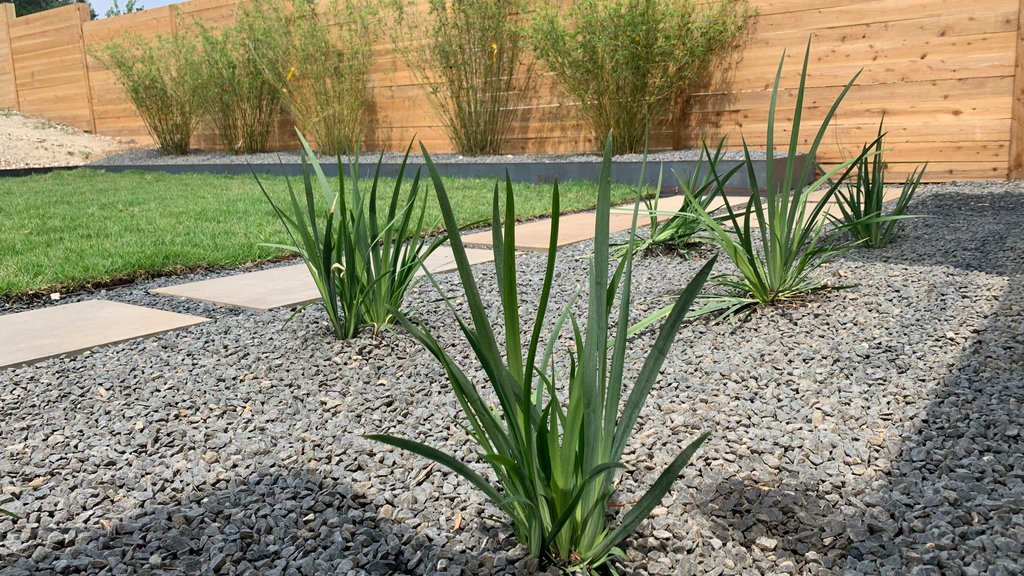
We group plants into hydrozones: very low, low, and moderate. Cenizo, agarita, salvia greggii, yucca, and gulf muhly anchor the very-low and low zones. Practical turf, only buffalo grass or native bermuda where you actually use it, sits in its own zone. Mass plantings cut edging and maintenance.
Mulch & Finish
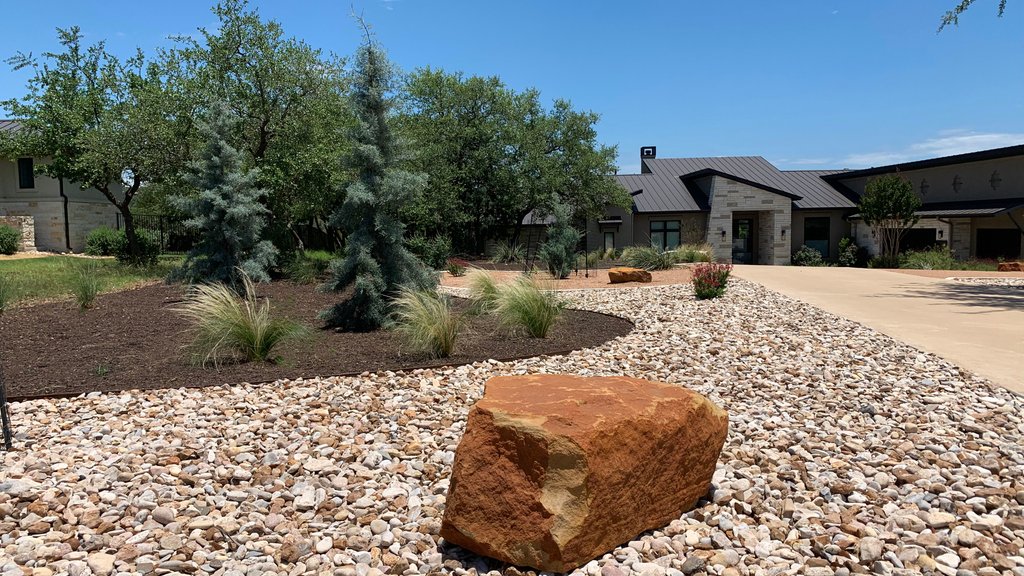
We finish with three to four inches of hardwood mulch in beds, decomposed granite and gravel in paths and fire-resilient zones, and limestone or steel edging to hold the lines clean. You walk through the finished xeriscape with us, then we hand off a care guide and irrigation schedule.
Water-Wise Xeriscape Builds
Travis, Luis and the crew did an amazing job on our front yard landscaping. Travis had a vision that we could've never come up with on our own. They were communicative, hard working and had incredible attention to detail. We were really impressed with our experience and will… Read more

We’ve been very impressed with Travis and his team at Thrive Landscaping. From the initial design consultation through revisions and installation, the entire process was smooth, thorough, and high quality. We needed an HOA-compliant design that improved drainage and reduced… Read more
Travis was very responsive on the pricing . Luis and the crew did an amazing job and fixed a lot of problems that the prior firm had created. Very pleasant group and seem to want to please clients.
Great people providing outstanding service. Our yard has never looked better. And best of all, they stand behind their work. If something needs attention after the job is finished, they’re right on it.
After interviewing several companies, we chose Thrive Landscape to create some hardscaping for our back yard. They installed stone paving for our patio and pool area, a gravel area for our fire ring, and a raised gravel pad for a greenhouse. Everything looks great! We had a good… Read more
Thrive replaced some dying plants in a white rock bed and left it clean and beautiful. You would never know they had been in the rock bed at all - no dirt, no disruption - they left it better than they found it!
Our neighbor a few houses down had Thrive do his property and we liked how it looked, so we decided to contact them to see what it would cost to do our house. Wanted to get rid of the sand burrs and decided to do stone, rock and mulch for the whole yard in front of the house. I… Read more
We have used Thrive landscape for several projects over the past two years. They have delivered outstanding service, careful attention to detail, and impeccable service and care after the project was complete. Travis Odom is outstanding, and his vision helped us transform our… Read more
We were very pleased with Thrive from the initial bid to the completion of the project. We had our front yard and backyard landscaped. Communication was excellent and when a couple issues occurred they were quickly resolved. The onsite crew was great to work with and were… Read more
Excellent service and advice. Knowledgeable, on time, communicative owner, and crew. This is the place you want to call for your landscaping needs! We are extremely satisfied with the outcome and will use the service again. Thank you Travis and crew.
I was really pleased with Thrive. Travis arrived exactly on time for the quote, had a great design, and was able to start quickly once the plans were approved by my HOA. The crew was polite and worked quickly. They left the whole worksite very neat, and my front yard now looks… Read more
Had grass that was dead, Travis and his team transformed my backyard in a few days!
I am a repeat customer of Travis's. He recently transformed my front yard. The design was perfect for what we wanted to accomplish and the crew did high quality work which included clean-up. I will keep coming back to him in the future.
Thrive is a very professional and excellent business - they did a wonderful job on my project and I couldn't be more pleased with the end results. Will definitely use them again!
I had an outstanding experience with Thrive. Quality, honesty, value and customer service were phenomenal! Exceeded my expectations!
Swapped out black stone that were killing my plants with mulch. Added a bunch of plants and sod. Also got my irrigation and stone walkway complete. I say it is all looking great.
I don't know where to begin. Travis and his team provided an amazing landscape design, strategy, and results on our backyard for my 50th birthday celebration. Travis was patient and very detailed with his quote and made sure he covered every detail with me. Once we decided to… Read more
I’ve done two projects with these guys to include a landscaping project where I added sod, metal planters, and plants. The second was a fence repair and both turned out great. They were fairly priced, scheduled quickly, executed on time, and worked through my lunch list at the… Read more
We chose Thrive Landscaping after a friend of ours used them for their own backyard and we could not be happier with our decision. Travis and team were incredibly professional, thorough and communicative the entire time. They added new grass, flowers, gravel and lights to our… Read more
Travis with Thrive Landscape & Design did an amazing job redesigning our backyard! They were hard-working, timely, responsive and appreciated their craftsmanship they put into the project. The space looks better than we imagined — highly recommend!
Wow! Travis and his team did an amazing job refreshing our back yard! They were professional, prompt, respectful and above all had an eye for detail! It was an absolute pleasure working with them to create our dream back yard! I highly recommend Thrive Landscape and DESIGN… Read more
Our project was the tear-out, re-design and rebuild of a fairly substantial deck. Great experience with Travis Odom and Thrive Landscape. Travis is congenial, professional and great to work with. The guys on site did excellent work. We’re very happy with the finished product and… Read more
Mr Travis Odom made an excellent, unique, and original cedar fence design that we ended up using.
Great design and construction for my landscaping project. Travis and his crew were very attentive and detailed. They also took on board our feedback and we’re very willing to evolve their designs.
Travis did a great job fixing the drainage along the side of my house! Was very responsive, timely, and reasonably priced. Would reach out to again for any future landscaping needs.
Travis was very responsive and did an excellent job designing our difficult yard. We LOVE the end result and can’t wait to do phase two. Can’t say enough how happy we are with the design!
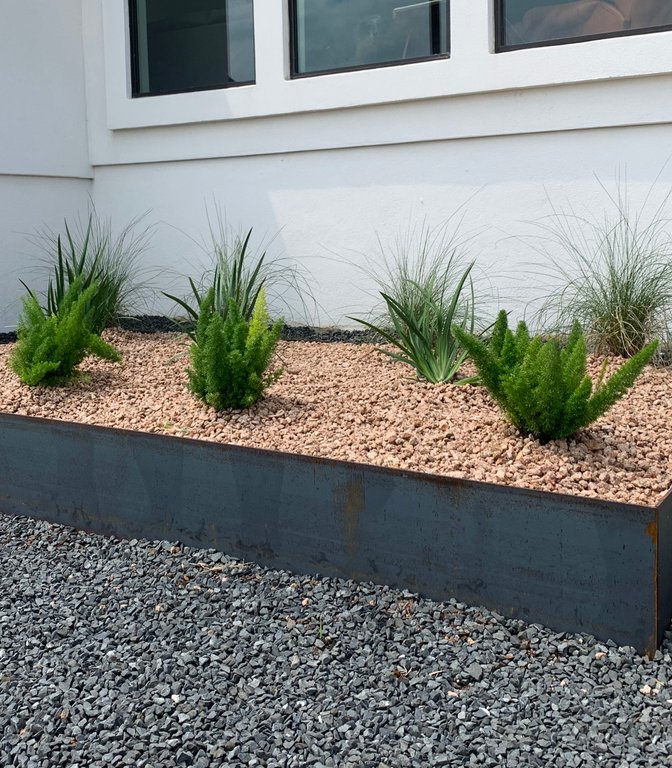
Signs Xeriscaping Is Right For You
Water-Wise Design Built On Principles
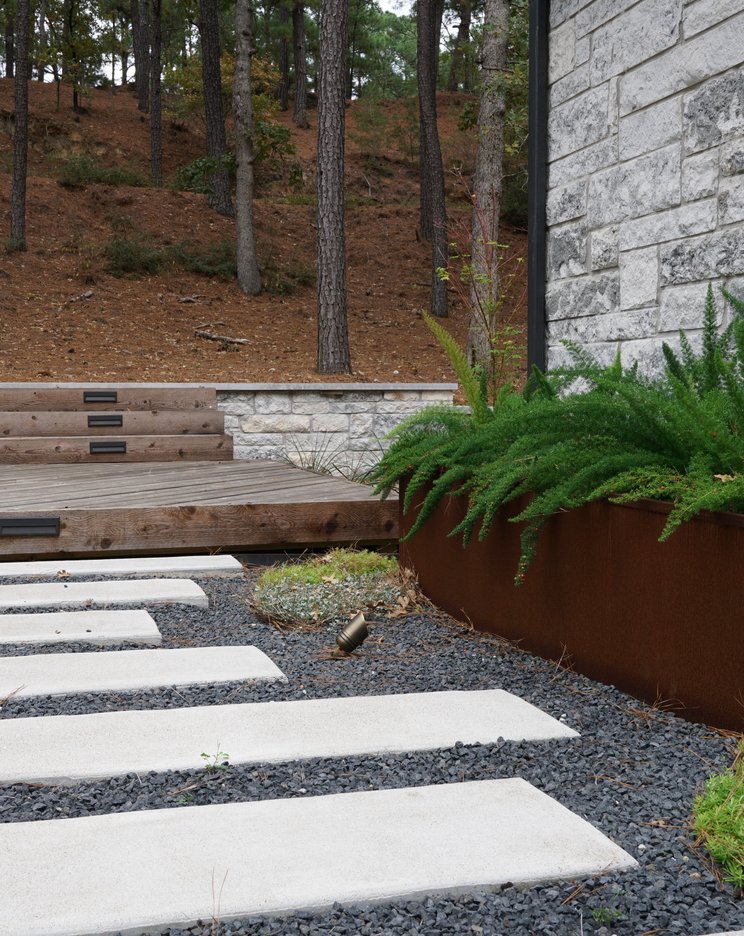
Xeriscaping in Austin makes the most sense when your water bill keeps climbing, your turf burns out by July, or you want a Hill Country look that holds up through drought and hard freezes. If any of these sound familiar, the seven-principle method will pay you back in water savings and lower maintenance.
Request A QuoteThirsty turf and broadcast sprinklers drive most Austin water bills. Xeriscape hydrozones plus drip irrigation cut waste at the source.
Native plants and practical turf sized to use, not size, hold up through Austin Water restrictions without browning out.
Decomposed granite and gravel zones near the home build defensible space for properties in Dripping Springs and west Travis County.
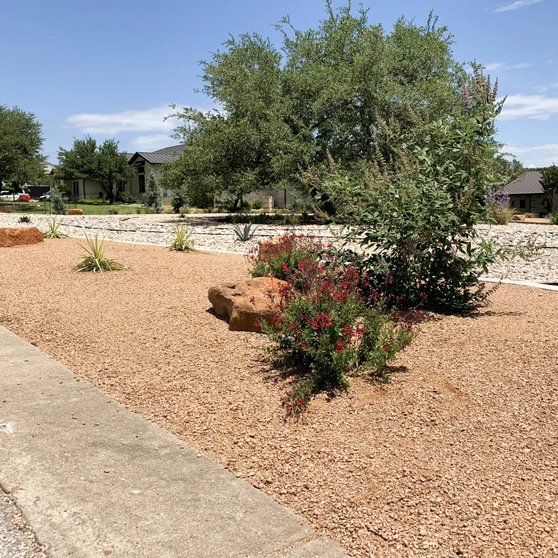

Why Choose Thrive For Xeriscaping?
All Seven Principles, Not Just Plants
We design to the Denver Water principles: planning, soil, plants, practical turf, drip, mulch, low maintenance.
Built For Clay & Caliche
Our soil prep handles the dense clay east of Austin and the shallow caliche west of MoPac so roots actually take.
Native Plant Knowledge
Cenizo, agarita, salvia, yucca, gulf muhly. We choose plant palettes from the Lady Bird Johnson Wildflower Center native database.
Smart Drip, Not Broadcast Spray
Pressure-regulated drip emitters per plant, weather-based controllers, and zones sized to EPA WaterSense guidance.
Hill Country Xeriscape Design & Install
We design and install xeriscapes across Austin and the Hill Country, with extra focus on lots in the wildland-urban interface that benefit from gravel and decomposed granite buffers. Materials and plant lists are pulled from Austin Water WaterWise guidance.
- Lakeway
- Driftwood
- Westlake Hills
- Dripping Springs
- Bee Cave
- Round Rock
- Cedar Park
- Steiner Ranch
- River Place
- Pflugerville
- Shoal Creek
- & more
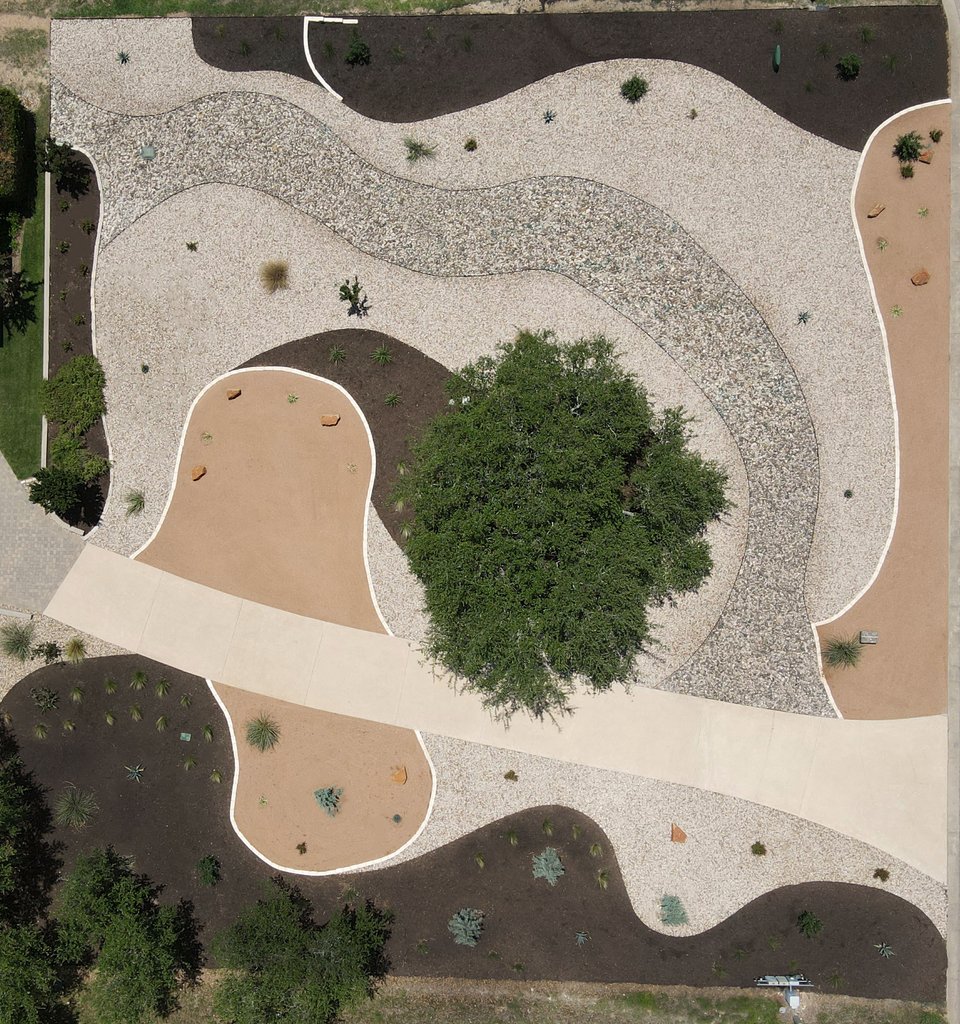 Dripping Springs Hill Country Xeriscape
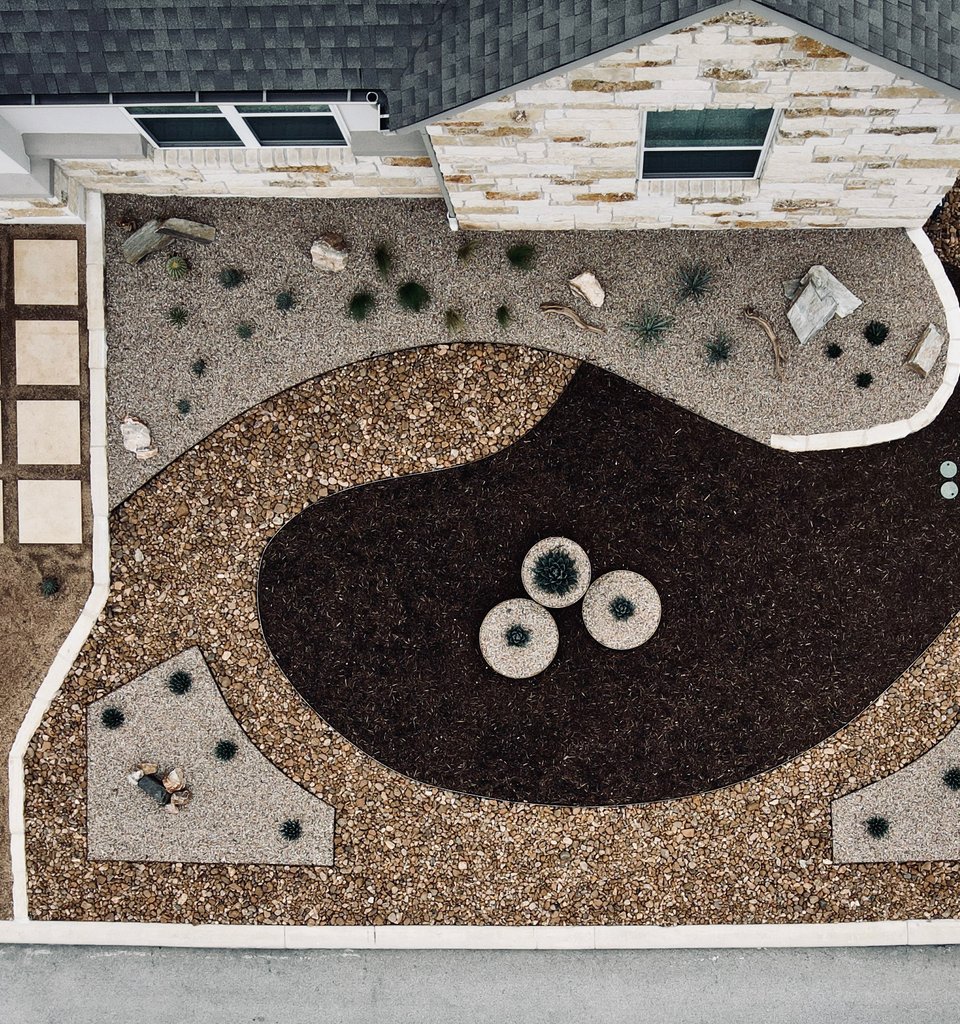 Spicewood Front Xeriscape
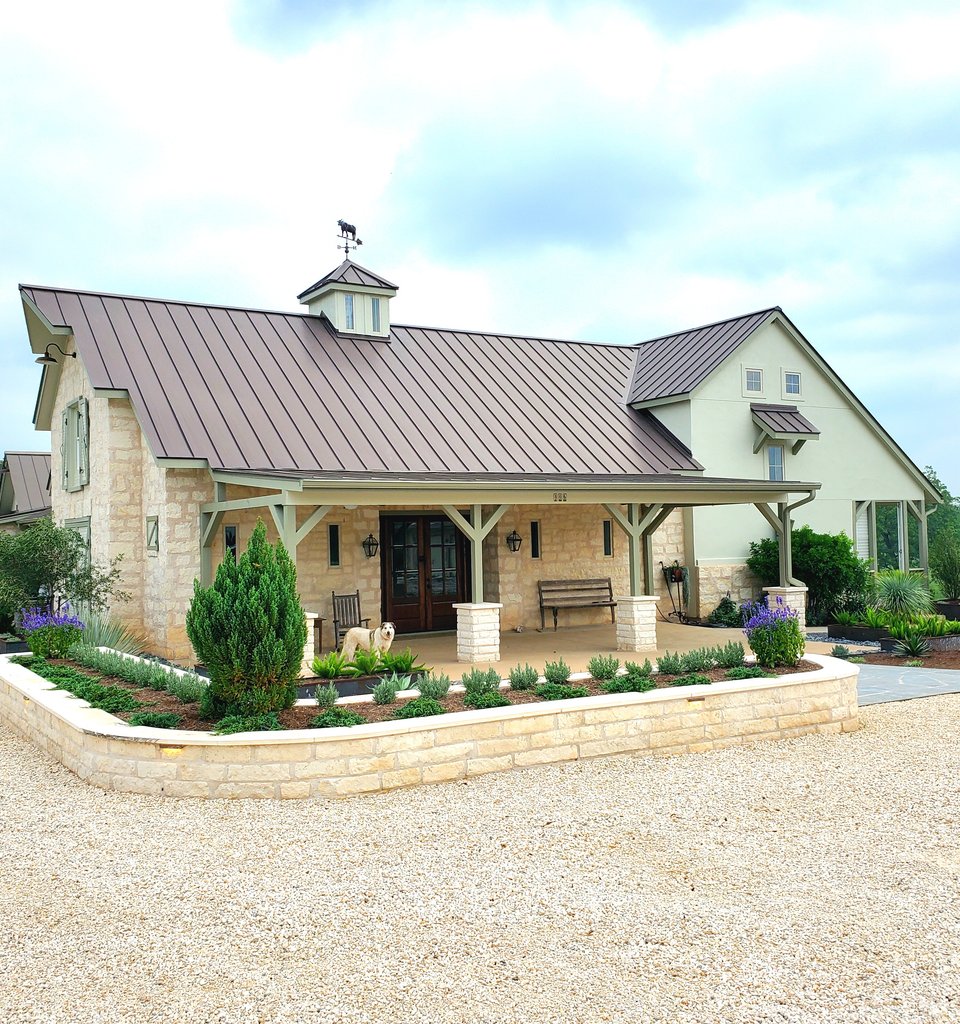 Smithville Ranch
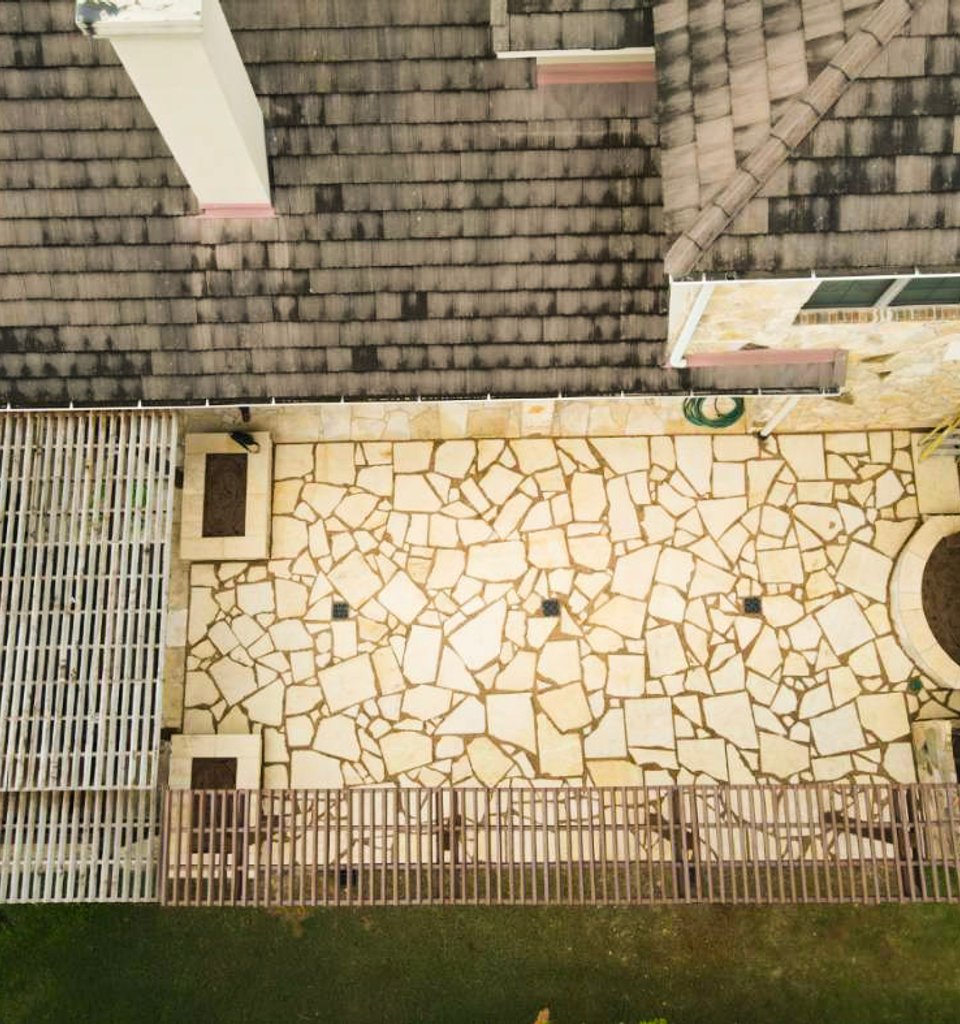 Lakeway Trellis & Patio
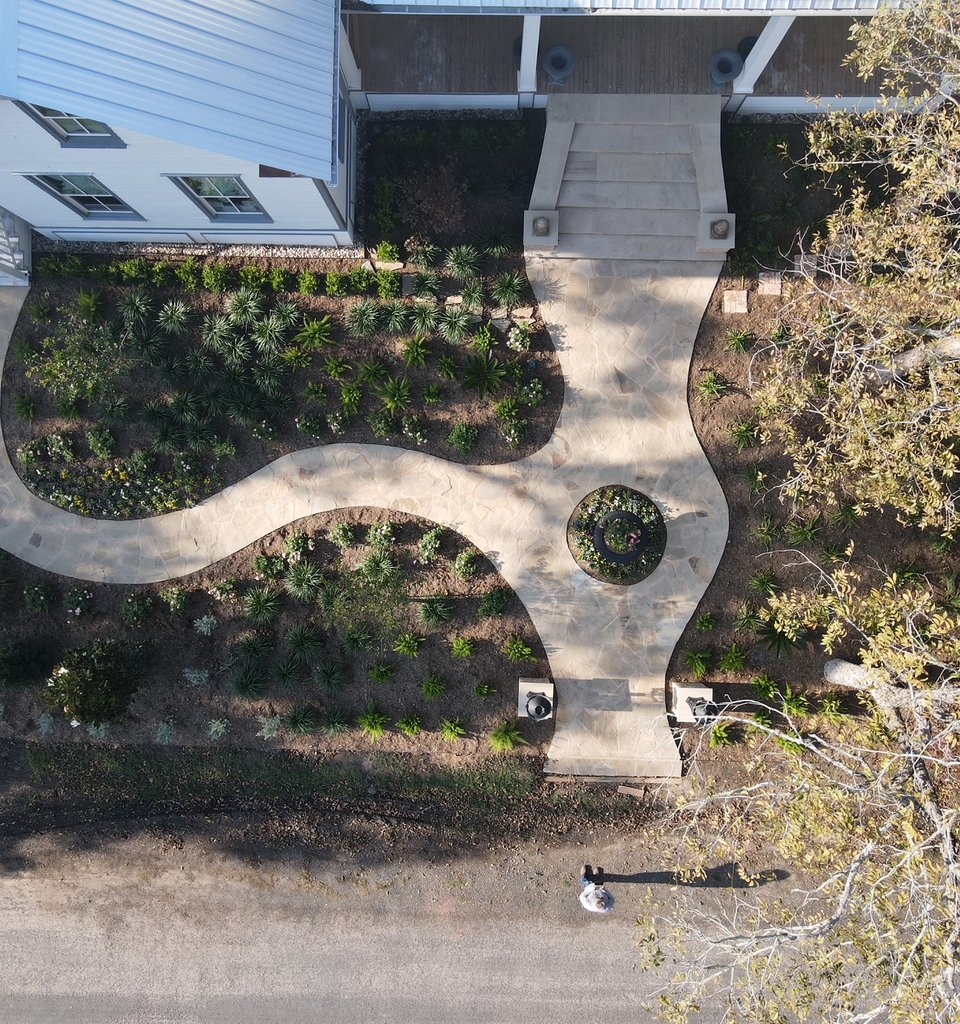 Fayetteville Garden District Style
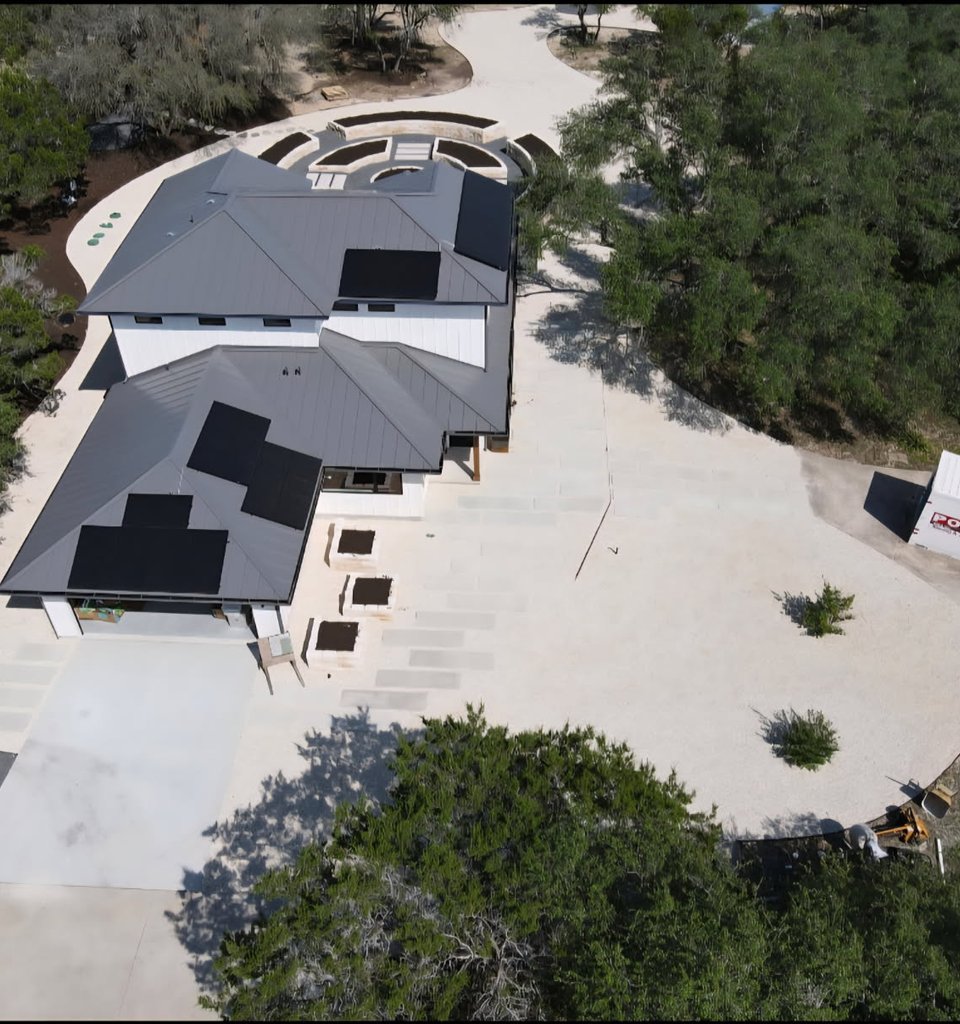 Driftwood Garden Estate
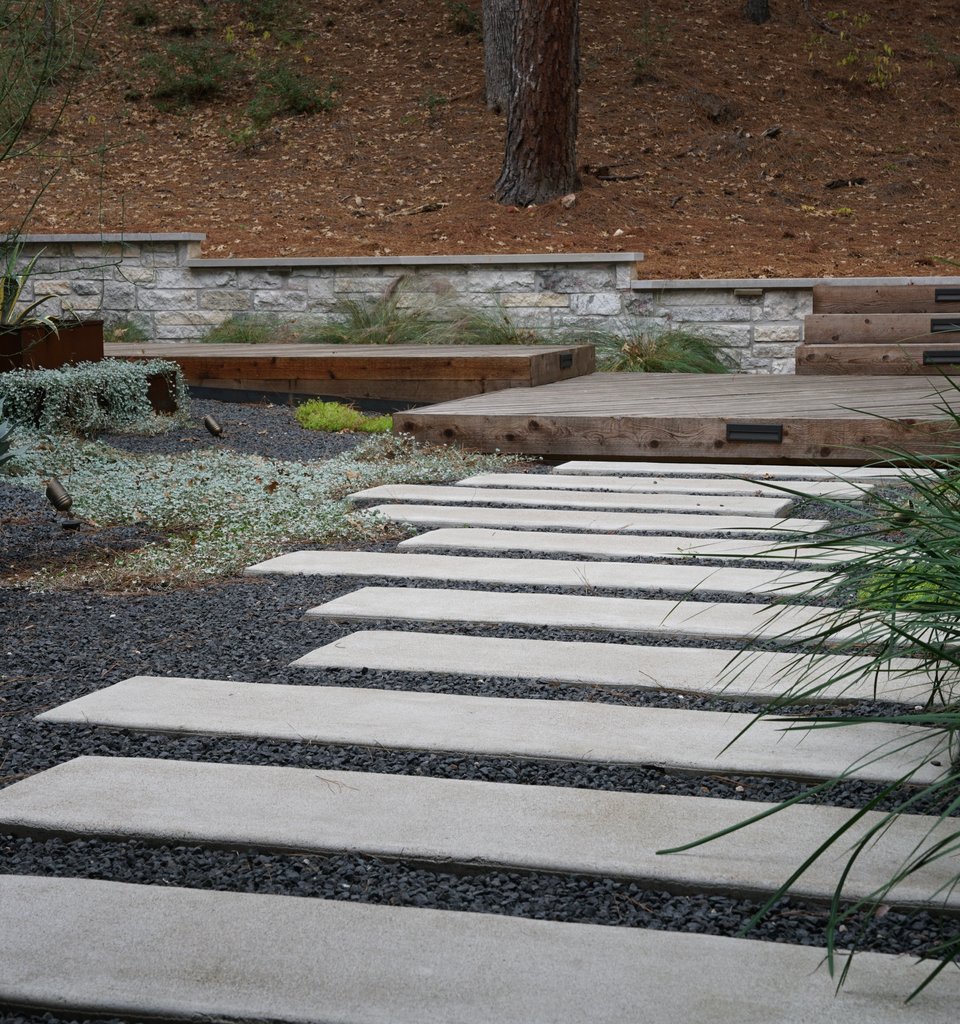 Bastrop Lost-Pines Courtyard Design
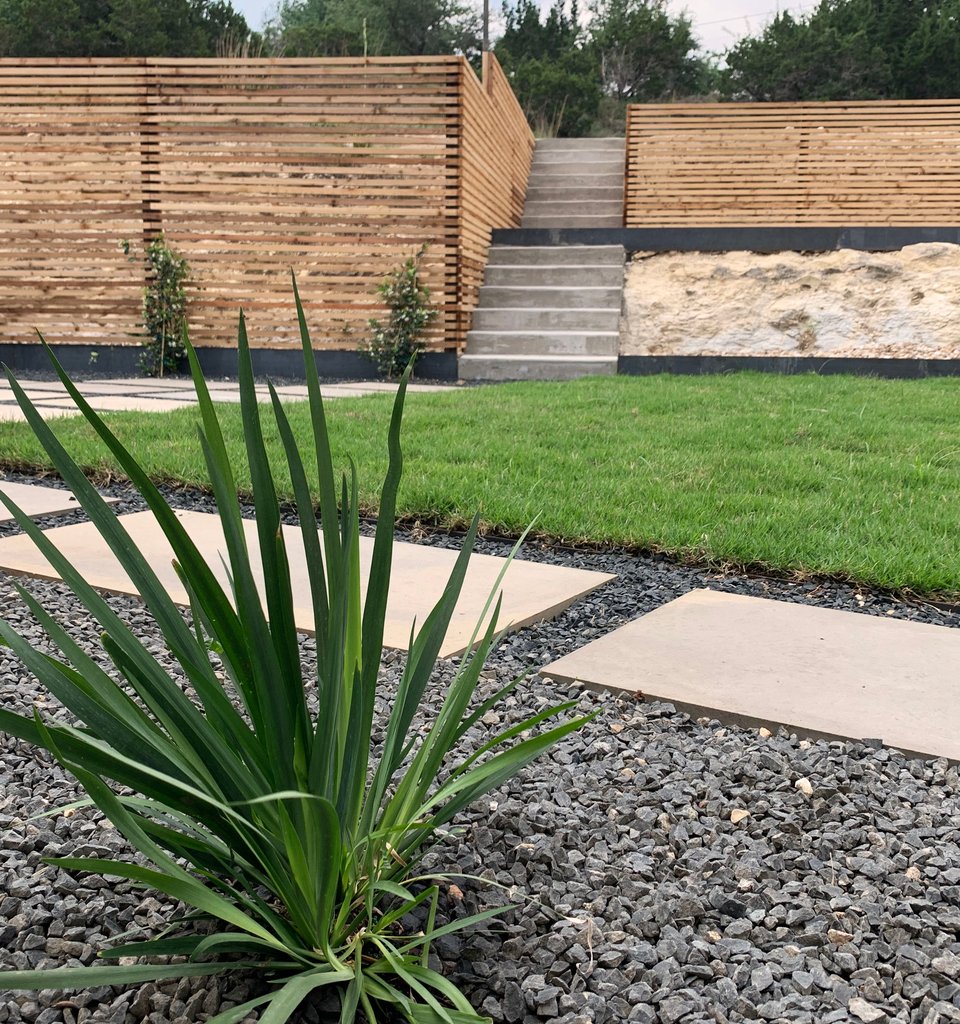 Westlake Hills Modern Terrace
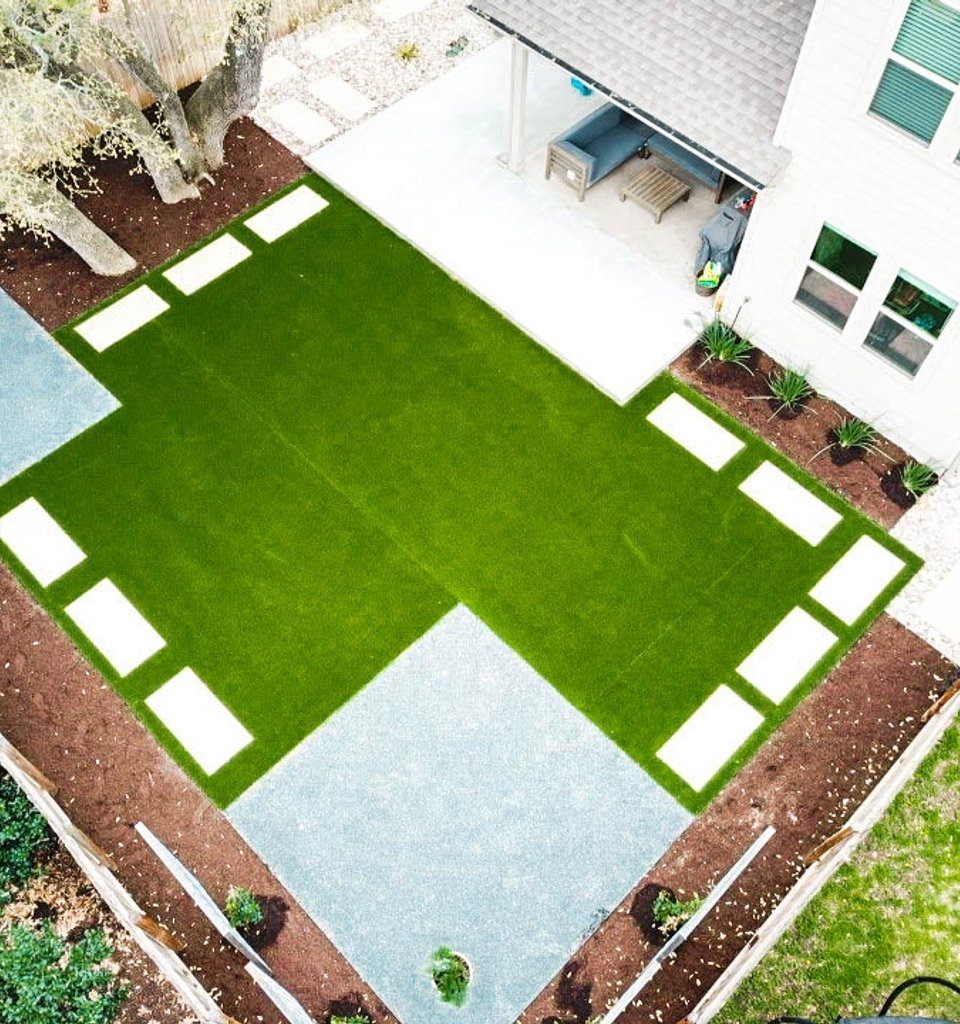 Round Rock Turf Checkered Garden
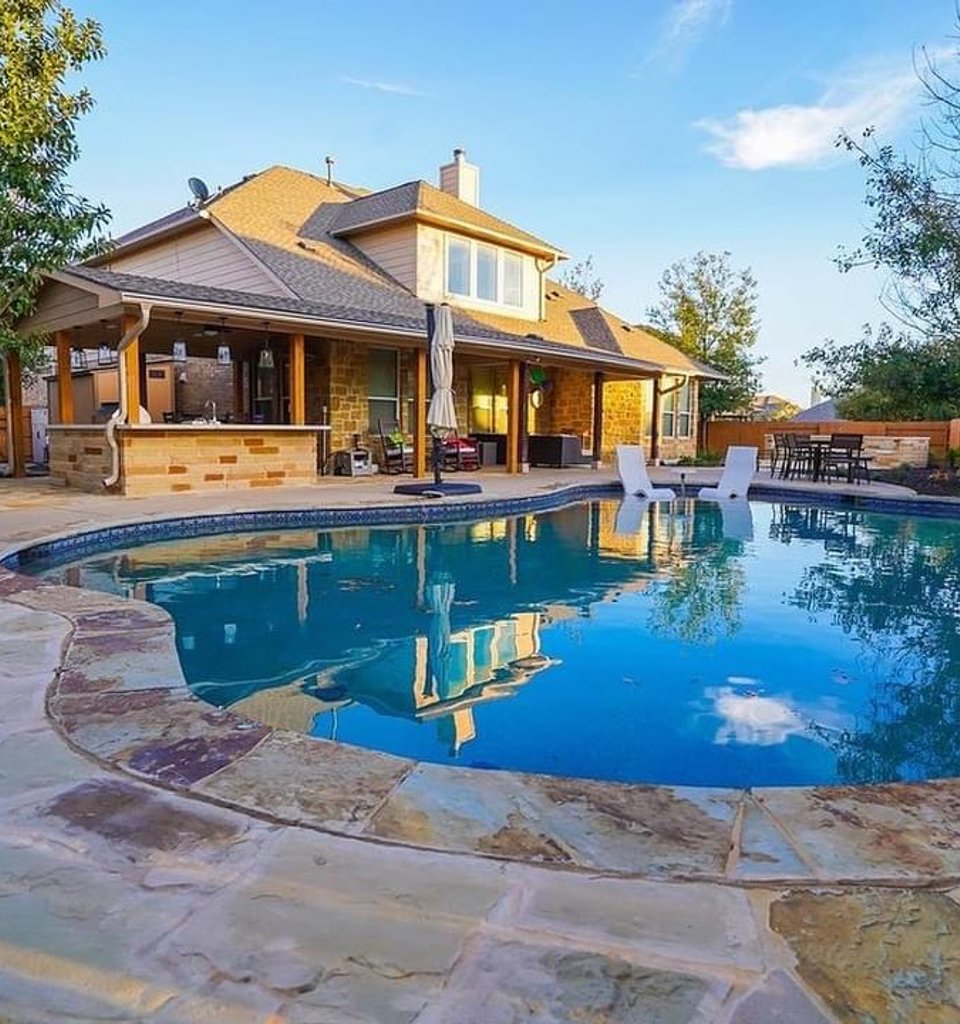 Steiner Ranch Outdoor Kitchen & Pool Retreat
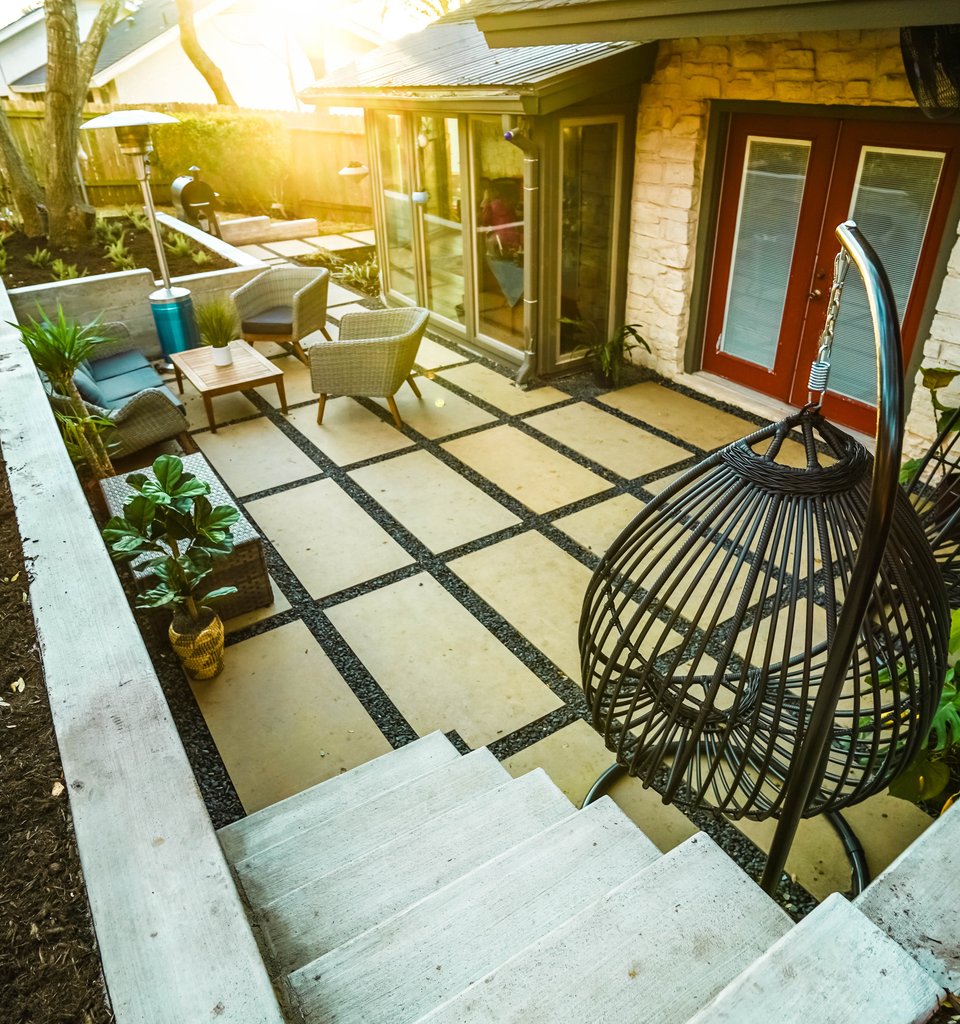 Shoal Creek Terrace Revival
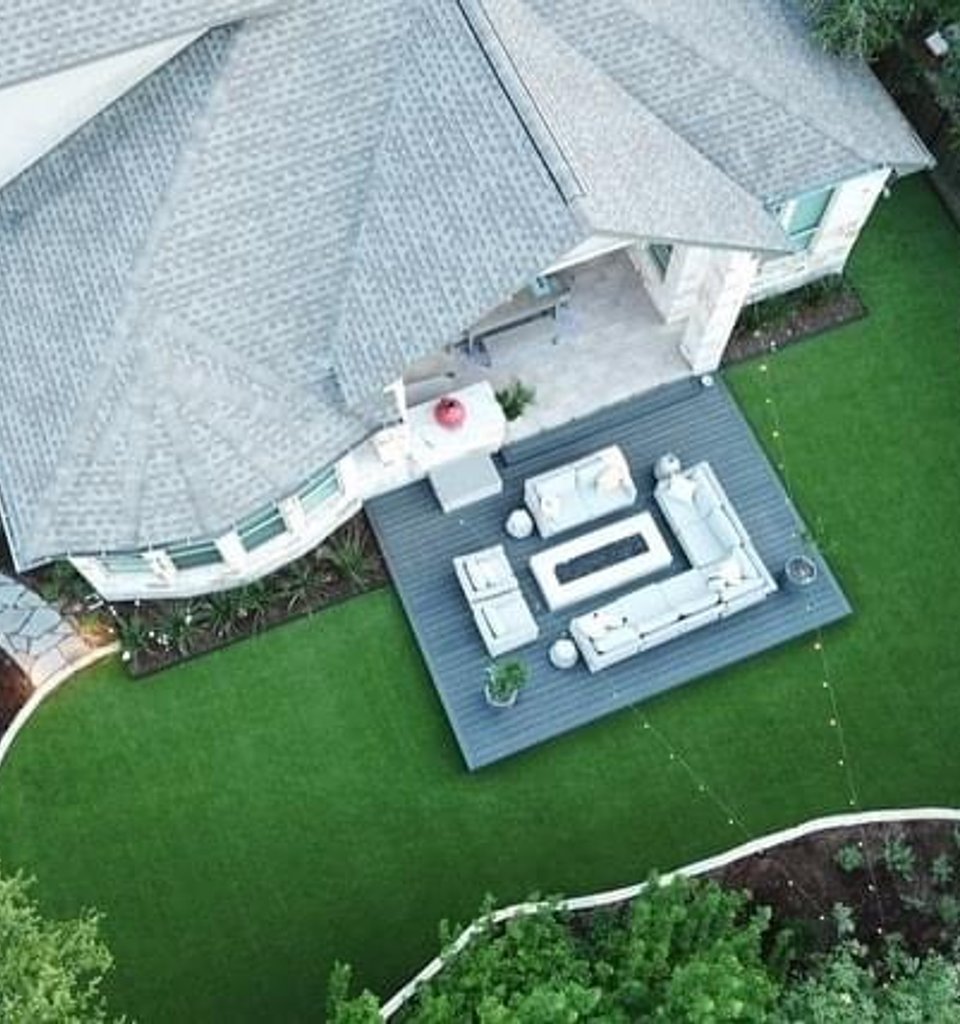 Bee Cave Backyard Under the Oaks
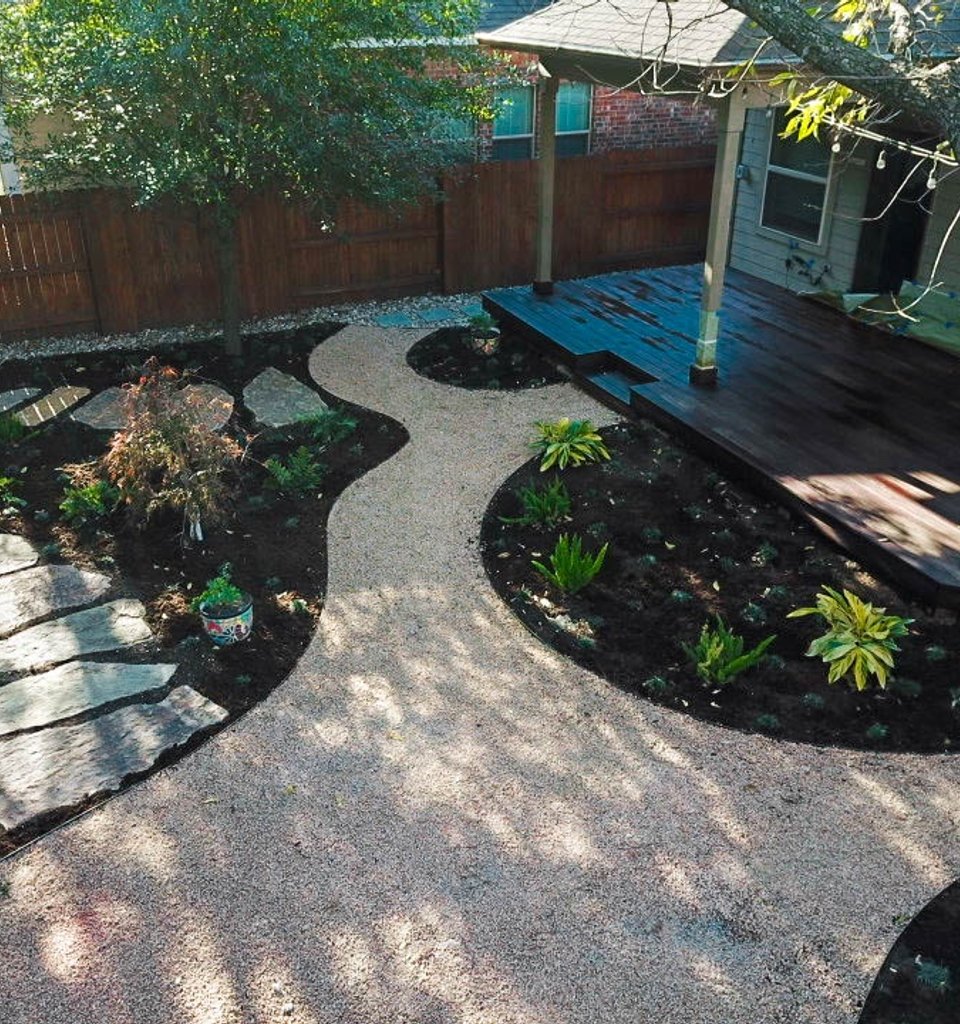 Riverplace Shaded Garden Escape
Frequently Asked Questions
Xeriscape is a planted, layered, water-wise landscape built on seven design principles. Zero-scape, often spelled that way by mistake, usually means a yard covered in rock with little or no plant life. A true xeriscape in Austin uses native masses like cenizo, agarita, gulf muhly, and sculptural agaves, with gravel and decomposed granite as accents, not as the whole yard.
Yes. Texas state law, the Texas Property Code, prevents HOAs from banning drought-resistant landscaping outright, though they can require a clean, designed look. We submit plant lists, layouts, and material samples to your HOA for approval before installation. Most Austin HOAs approve our xeriscape plans because they read as designed front yards, not bare gravel.
Most Austin homeowners who replace traditional turf with a full xeriscape cut outdoor water use by half or more. Savings vary with lot size, old irrigation patterns, and how much practical turf you keep. Austin Water publishes residential water-use targets, and we size your plant zones and drip emitters to land well under them.
No. Hill Country xeriscaping is layered and green for most of the year. Think soft gulf muhly grass moving in the wind, salvia and cenizo in bloom, agarita and yucca for structure, and limestone or decomposed granite paths tying it together. It looks like Central Texas, not Phoenix.
Yes. The fourth xeriscape principle is practical turf, meaning lawn only where you actually use it. We design smaller patches of buffalo grass or native bermuda where kids and dogs play, then replace the rest with planted beds, mulch zones, and decomposed granite. You keep the function without watering grass you never walk on.
Yes, but a different kind. We install pressure-regulated drip lines with point-source emitters at each plant, on a smart controller that adjusts for Austin weather. New xeriscape plants need regular water for the first one to two seasons to establish roots. After that, most zones run only during dry stretches.
We choose plants rated for our actual USDA zone, including hard freezes like February 2021. Native species such as agarita, cenizo, gulf muhly, salvia greggii, and most yuccas came through Uri and recovered. We avoid borderline tropicals on exposed sites, group cold-sensitive plants near south-facing walls, and mulch beds three to four inches deep to insulate roots.
Call (737)-321-7812 or fill out the contact form on our site. We schedule a free on-site visit, walk your property, talk through goals and budget, and follow up with an itemized xeriscape proposal that covers plan, soil prep, plants, drip irrigation, mulch, and finish materials.