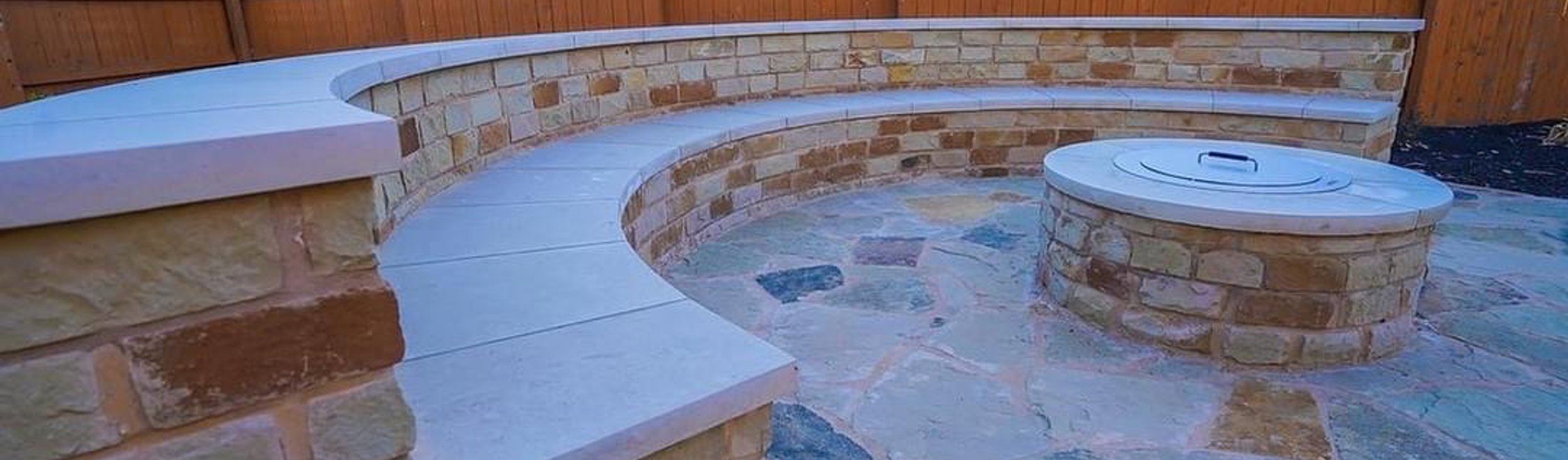


Patio Construction in Austin, TX
Pavers, flagstone, stone, and concrete patios engineered for Austin clay, Hill Country drainage, and full Texas sun. Locally owned, 20+ years building outdoor spaces across the greater Austin area.
Patio construction in Austin is not a one-size-fits-all install. Expansive clay moves with every wet/dry cycle, caliche pockets sit inches below the topsoil, and a Hill Country thunderstorm can drop two inches in an hour. Thrive Landscape and Design builds patios the way Austin actually demands: site-evaluated, base-engineered, and drainage-planned away from your house. Whether you want a clean concrete paver patio off the kitchen, a flagstone landing under a live oak, or a poured concrete slab for a covered outdoor kitchen, we design and build it to last in this climate, not a generic one. For over 20 years we’ve been turning Austin backyards into spaces our clients actually use, from Westlake to Pflugerville.
Learn More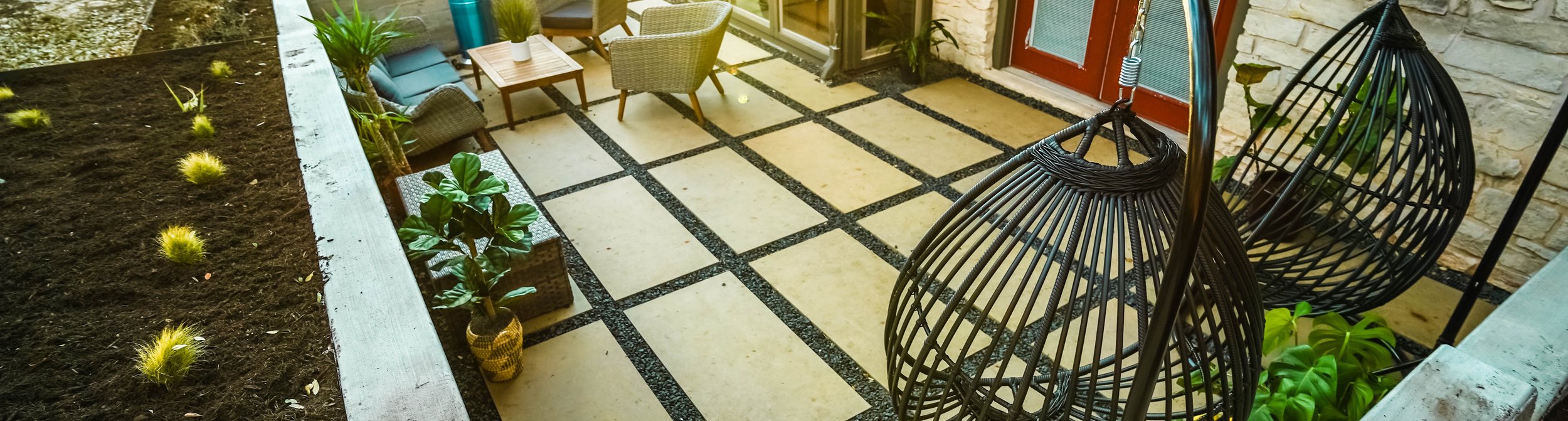
- 500+ Projects Completed
- 19+ Years Experience
- 5/5 Average Rating
Choose The Right Patio For Your Yard
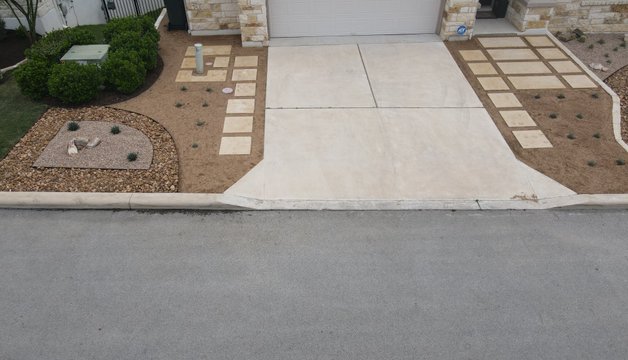
Paver Installation
Interlocking concrete pavers in classic and modern profiles. Easy to repair, color-stable, and built on an engineered base.
Learn More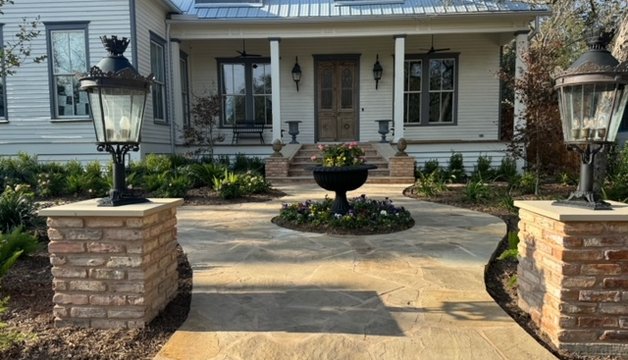
Walkways & Pathways
Flagstone and paver walkways that link your patio to the rest of the yard and stay level through Texas weather.
Learn More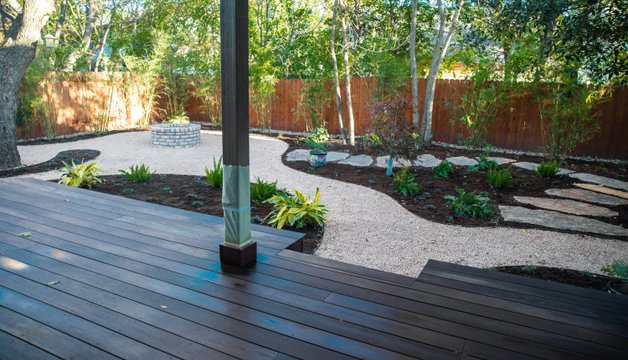
Fire Pits
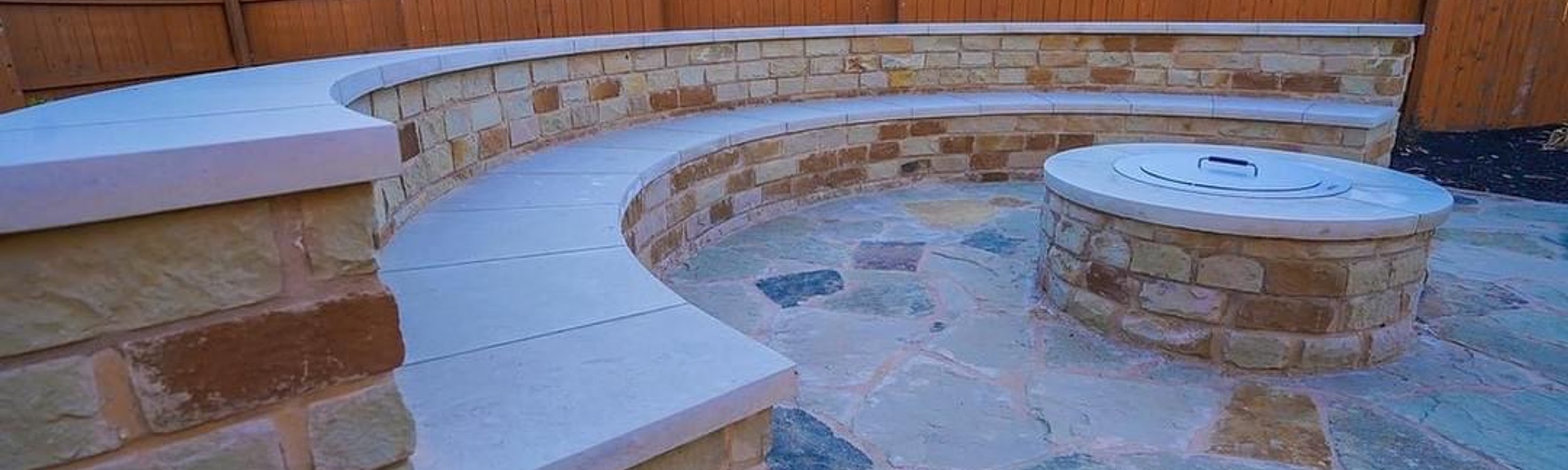
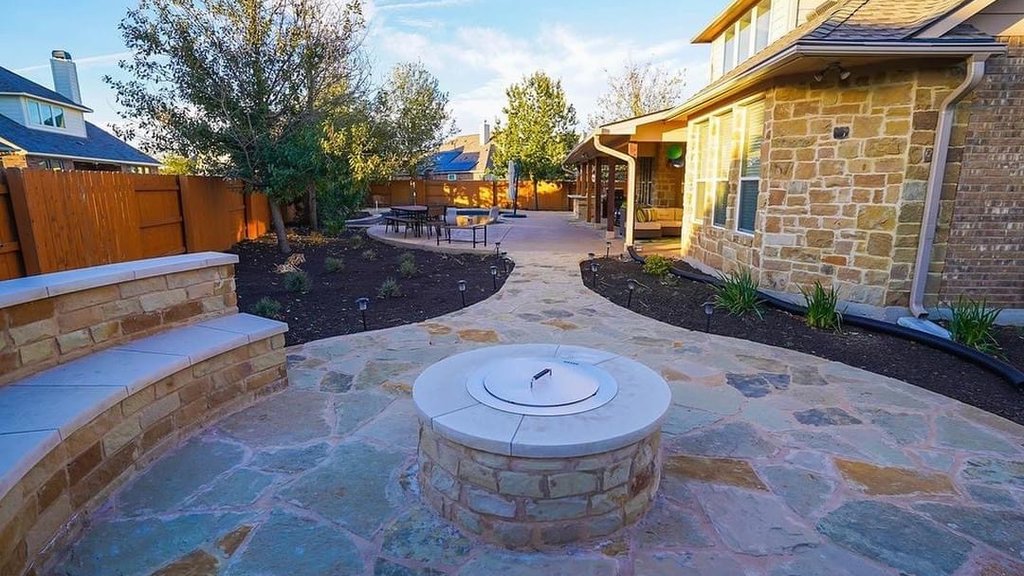
Wood-burning and gas fire pits built into your patio with seating walls and code-safe clearances.
Learn More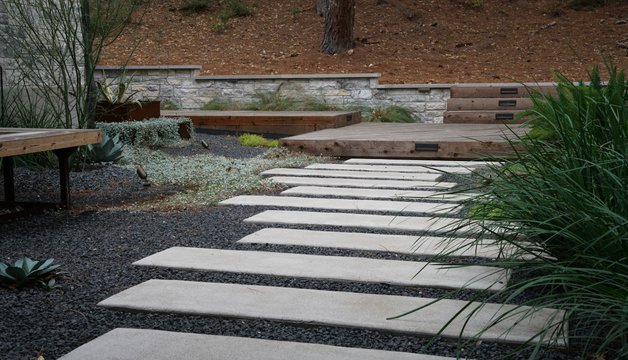
All Paving Services
Driveways, walkways, pool decks, and full patio builds. See everything our paving contractor team offers.
Learn More


Our Process
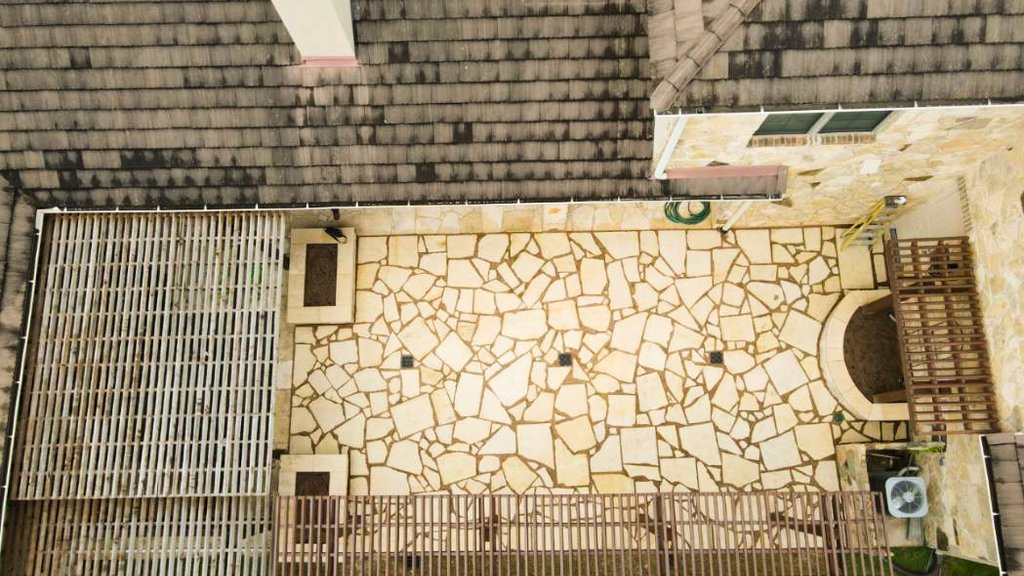
Site Evaluation & Layout
We walk your yard, find the high and low points, measure door thresholds and slider heights, and check sun and shade. We mark the patio outline on the ground so you can stand in it, see the size, and walk the circulation paths before any digging starts. If you’re inside the Edwards Aquifer Recharge Zone, we calculate your impervious cover budget up front.
Excavation & Base Preparation
We over-excavate to remove soft clay and caliche pockets, then lay woven geotextile fabric to separate the base from the native soil. A 4 to 6 inch compacted decomposed granite or crushed limestone base goes in next, in lifts, with a plate compactor on every layer. Drainage is graded away from the house at a minimum 1/8 inch per foot.
Install Pavers, Stone, Or Concrete
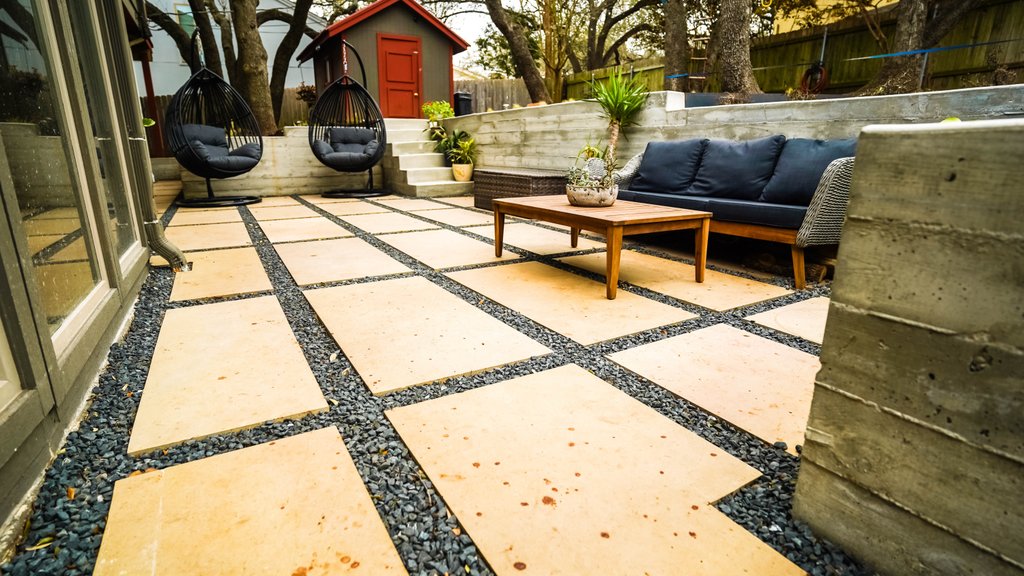
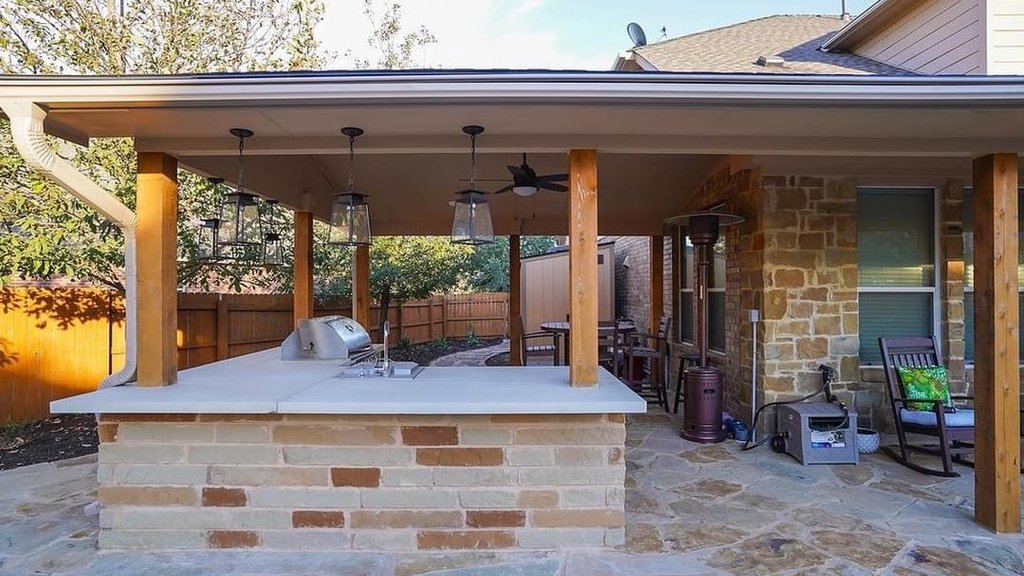
Concrete pavers are set on a 1-inch sand setting bed in your chosen pattern. Flagstone gets hand-fit and bedded for tight, even joints. Poured concrete is reinforced with rebar or fiber, control-jointed inside the first 24 hours, and finished to spec, broom, stamped, or exposed aggregate. Step-downs and landings are built where the grade calls for them.
Edge Restraint & Polymeric Sand
A rigid edge restraint locks the perimeter so pavers don’t creep over time. Joints are filled with polymeric sand, swept, misted, and activated so they harden in place, lock out weeds, and resist ants and washout in heavy rain. Concrete patios are sealed with a UV-stable, breathable sealer. We do a final walk-through with you before we leave the job site.
Austin Patio Construction Reviews
Travis, Luis and the crew did an amazing job on our front yard landscaping. Travis had a vision that we could've never come up with on our own. They were communicative, hard working and had incredible attention to detail. We were really impressed with our experience and will… Read more

We’ve been very impressed with Travis and his team at Thrive Landscaping. From the initial design consultation through revisions and installation, the entire process was smooth, thorough, and high quality. We needed an HOA-compliant design that improved drainage and reduced… Read more
Travis was very responsive on the pricing . Luis and the crew did an amazing job and fixed a lot of problems that the prior firm had created. Very pleasant group and seem to want to please clients.
Great people providing outstanding service. Our yard has never looked better. And best of all, they stand behind their work. If something needs attention after the job is finished, they’re right on it.
After interviewing several companies, we chose Thrive Landscape to create some hardscaping for our back yard. They installed stone paving for our patio and pool area, a gravel area for our fire ring, and a raised gravel pad for a greenhouse. Everything looks great! We had a good… Read more
Thrive replaced some dying plants in a white rock bed and left it clean and beautiful. You would never know they had been in the rock bed at all - no dirt, no disruption - they left it better than they found it!
Our neighbor a few houses down had Thrive do his property and we liked how it looked, so we decided to contact them to see what it would cost to do our house. Wanted to get rid of the sand burrs and decided to do stone, rock and mulch for the whole yard in front of the house. I… Read more
We have used Thrive landscape for several projects over the past two years. They have delivered outstanding service, careful attention to detail, and impeccable service and care after the project was complete. Travis Odom is outstanding, and his vision helped us transform our… Read more
We were very pleased with Thrive from the initial bid to the completion of the project. We had our front yard and backyard landscaped. Communication was excellent and when a couple issues occurred they were quickly resolved. The onsite crew was great to work with and were… Read more
Excellent service and advice. Knowledgeable, on time, communicative owner, and crew. This is the place you want to call for your landscaping needs! We are extremely satisfied with the outcome and will use the service again. Thank you Travis and crew.
I was really pleased with Thrive. Travis arrived exactly on time for the quote, had a great design, and was able to start quickly once the plans were approved by my HOA. The crew was polite and worked quickly. They left the whole worksite very neat, and my front yard now looks… Read more
Had grass that was dead, Travis and his team transformed my backyard in a few days!
I am a repeat customer of Travis's. He recently transformed my front yard. The design was perfect for what we wanted to accomplish and the crew did high quality work which included clean-up. I will keep coming back to him in the future.
Thrive is a very professional and excellent business - they did a wonderful job on my project and I couldn't be more pleased with the end results. Will definitely use them again!
I had an outstanding experience with Thrive. Quality, honesty, value and customer service were phenomenal! Exceeded my expectations!
Swapped out black stone that were killing my plants with mulch. Added a bunch of plants and sod. Also got my irrigation and stone walkway complete. I say it is all looking great.
I don't know where to begin. Travis and his team provided an amazing landscape design, strategy, and results on our backyard for my 50th birthday celebration. Travis was patient and very detailed with his quote and made sure he covered every detail with me. Once we decided to… Read more
I’ve done two projects with these guys to include a landscaping project where I added sod, metal planters, and plants. The second was a fence repair and both turned out great. They were fairly priced, scheduled quickly, executed on time, and worked through my lunch list at the… Read more
We chose Thrive Landscaping after a friend of ours used them for their own backyard and we could not be happier with our decision. Travis and team were incredibly professional, thorough and communicative the entire time. They added new grass, flowers, gravel and lights to our… Read more
Travis with Thrive Landscape & Design did an amazing job redesigning our backyard! They were hard-working, timely, responsive and appreciated their craftsmanship they put into the project. The space looks better than we imagined — highly recommend!
Wow! Travis and his team did an amazing job refreshing our back yard! They were professional, prompt, respectful and above all had an eye for detail! It was an absolute pleasure working with them to create our dream back yard! I highly recommend Thrive Landscape and DESIGN… Read more
Our project was the tear-out, re-design and rebuild of a fairly substantial deck. Great experience with Travis Odom and Thrive Landscape. Travis is congenial, professional and great to work with. The guys on site did excellent work. We’re very happy with the finished product and… Read more
Mr Travis Odom made an excellent, unique, and original cedar fence design that we ended up using.
Great design and construction for my landscaping project. Travis and his crew were very attentive and detailed. They also took on board our feedback and we’re very willing to evolve their designs.
Travis did a great job fixing the drainage along the side of my house! Was very responsive, timely, and reasonably priced. Would reach out to again for any future landscaping needs.
Travis was very responsive and did an excellent job designing our difficult yard. We LOVE the end result and can’t wait to do phase two. Can’t say enough how happy we are with the design!
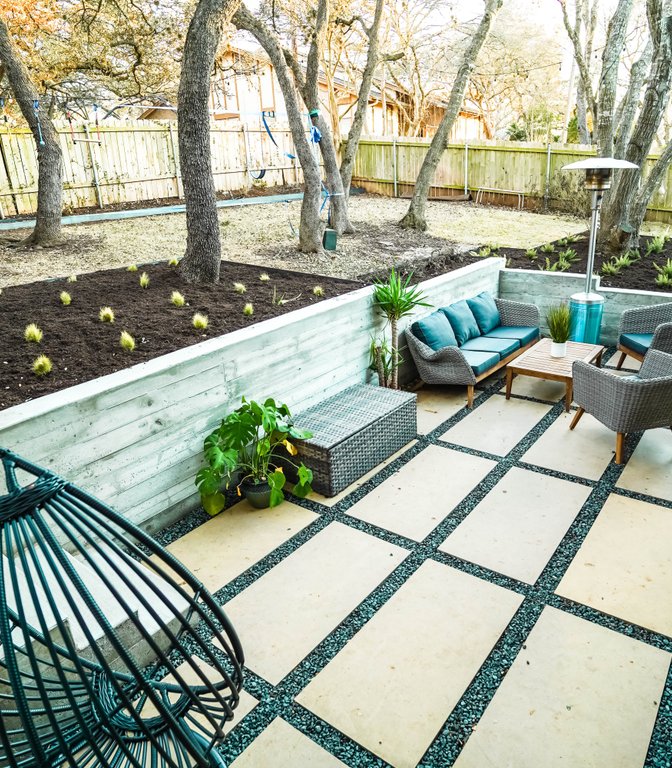
Signs You Need A New Patio
Built for Austin clay, sun, and storms
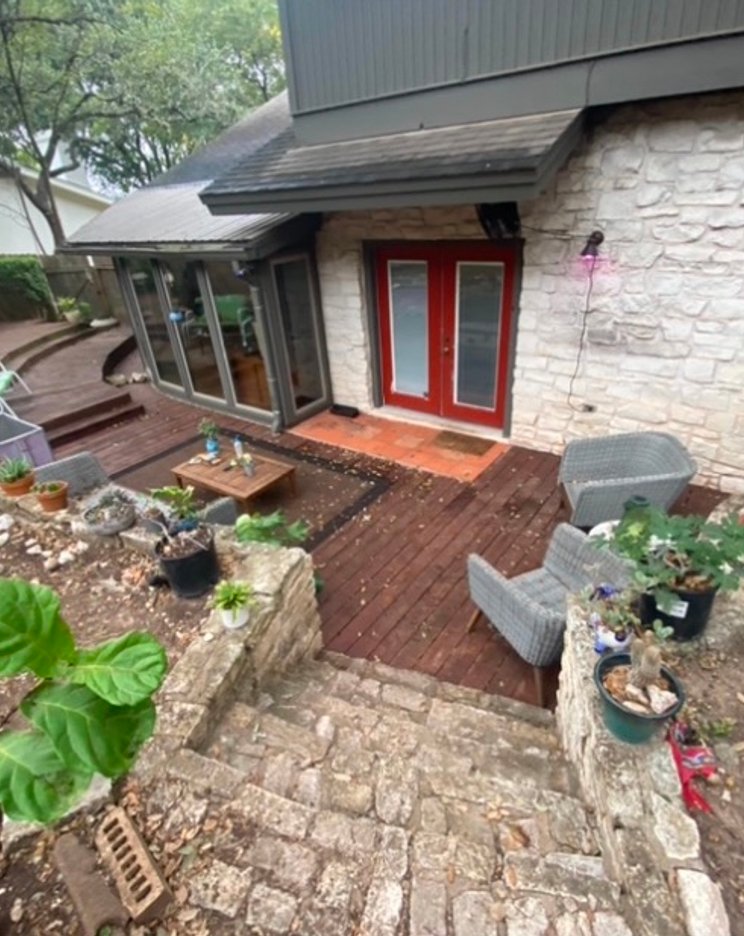
A patio that’s pitching water toward the house, lifting at the joints, or just too small for how you actually use the backyard is more than a cosmetic problem. Here’s what we typically see right before clients call us.
Request A QuoteVisible cracks across a concrete slab or pavers that have lifted and tripped at the joints usually mean the base failed in our clay, not the surface material.
If you see standing water 30 minutes after rain, or runoff streaks against your siding, the patio is graded wrong and needs to be rebuilt or re-pitched.
If a dining table and four chairs leaves no walking room, the patio was never sized for real use. A 14 x 16 minimum gives you furniture plus circulation.
If you have to step down 6+ inches from a French door or slider, or the patio sits 10 feet from the back door, it stops getting used. We tie new builds straight to the threshold.
Why Choose Thrive Landscape and Design?
Engineered For Austin Soil
4 to 6 inch compacted base over geotextile fabric on expansive clay. We design for the soil under your yard, not a generic spec sheet.
Drainage Planned First
Every patio pitches away from the house. We size for Hill Country thunderstorms that drop 2 inches in an hour, not for a calm day.
Heat-Smart Materials
Lighter Lueders and Cordova Cream stay cooler than dark stamped concrete in full Texas sun. We help you pick a surface that’s walkable barefoot in July.
Impervious Cover Aware
We check the City of Austin Watershed Protection rules and use permeable pavers when needed to keep your project inside the limit west of MoPac.
Austin’s Go-To For Patio Construction
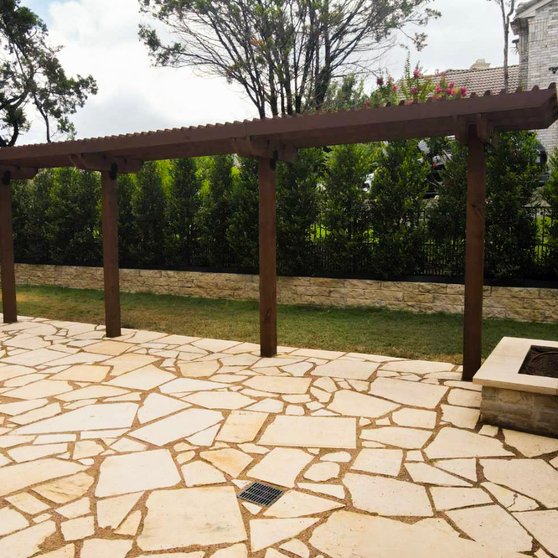
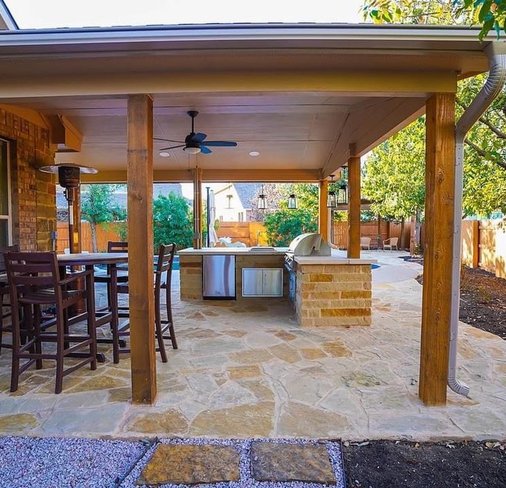
We build paver, flagstone, stone, and concrete patios across the greater Austin area, from West Austin live-oak yards to flatter Round Rock and Pflugerville lots. Every project starts with a free on-site visit.
- Lakeway
- Driftwood
- Westlake Hills
- Round Rock
- Lake Point
- Bee Cave
- Shoal Creek
- River Place
- Cedar Park
- Steiner Ranch
- Pflugerville
- & more
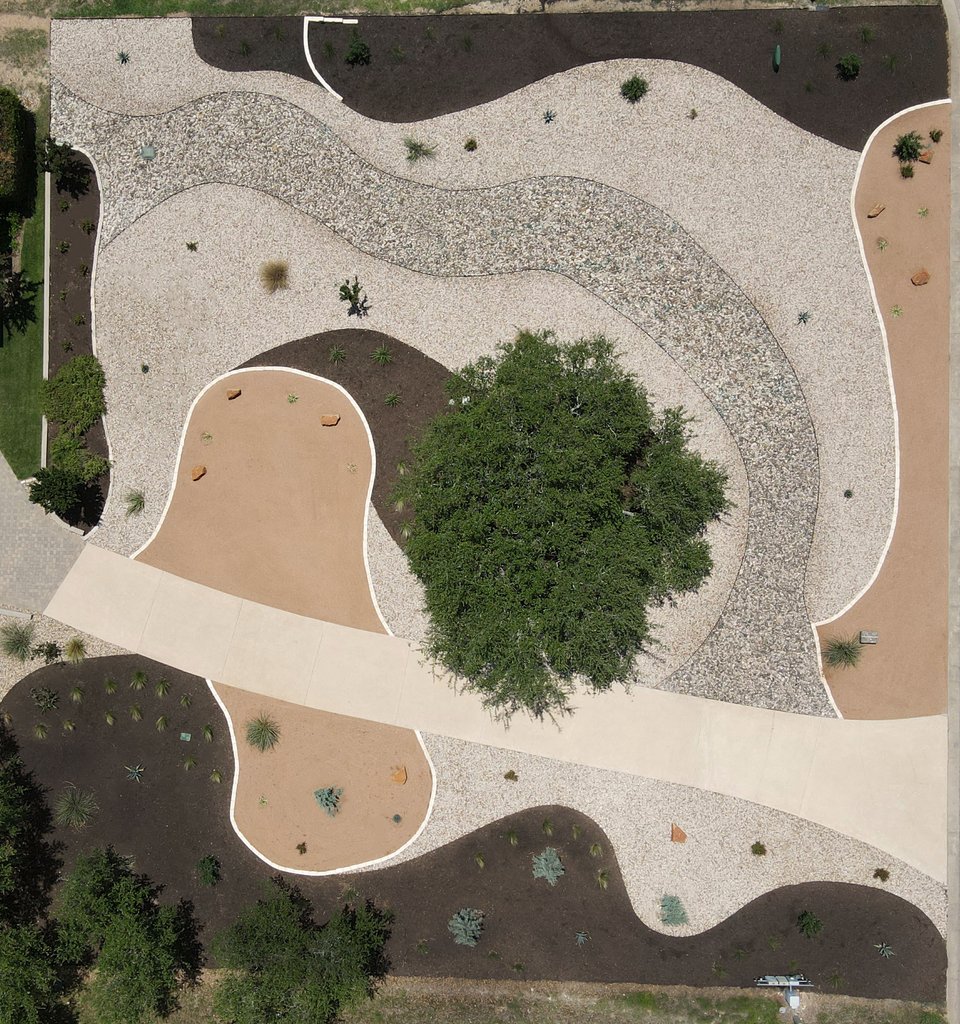 Dripping Springs Hill Country Xeriscape
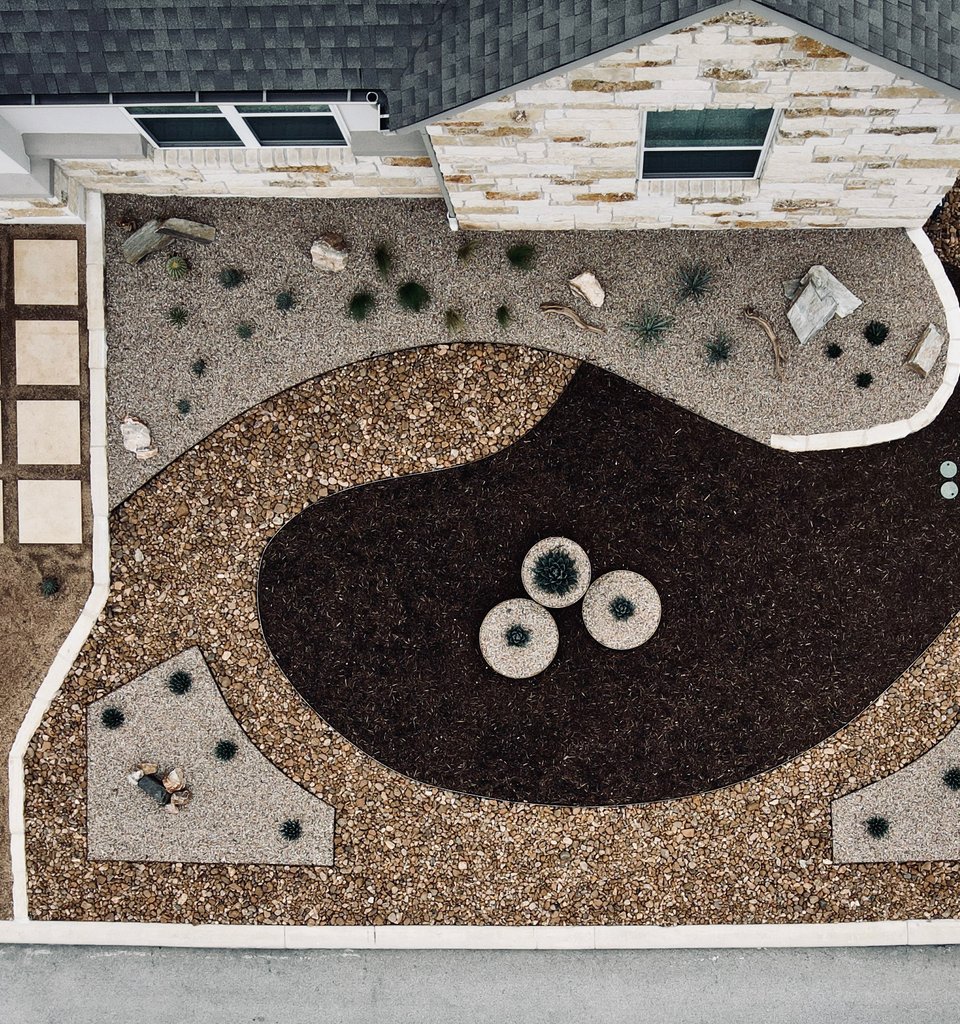 Spicewood Front Xeriscape
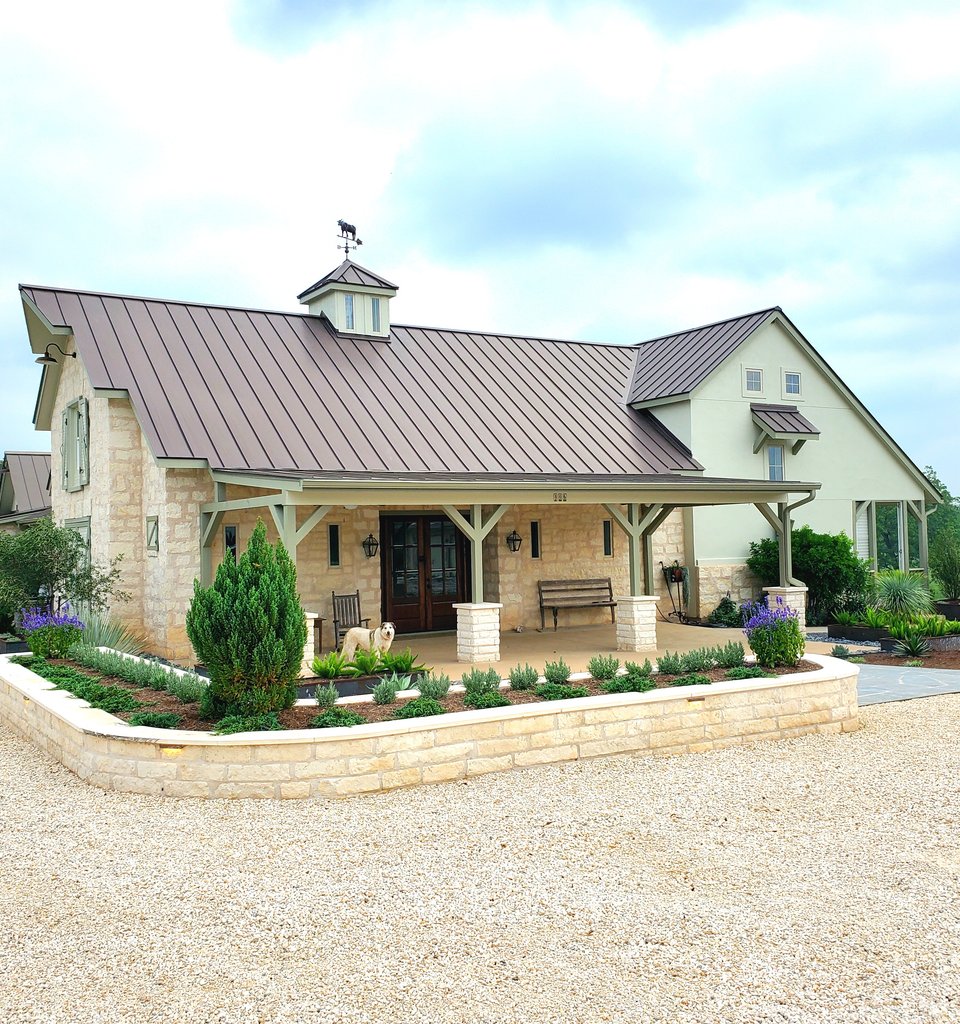 Smithville Ranch
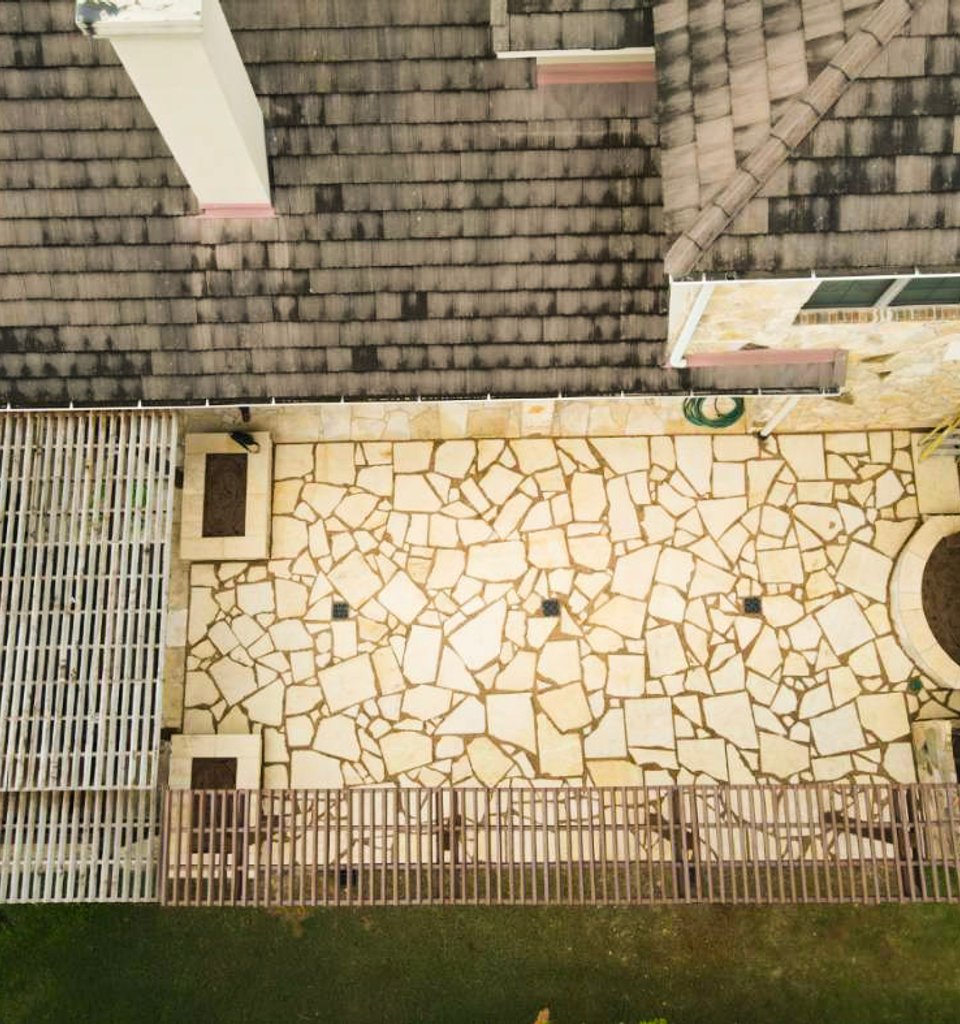 Lakeway Trellis & Patio
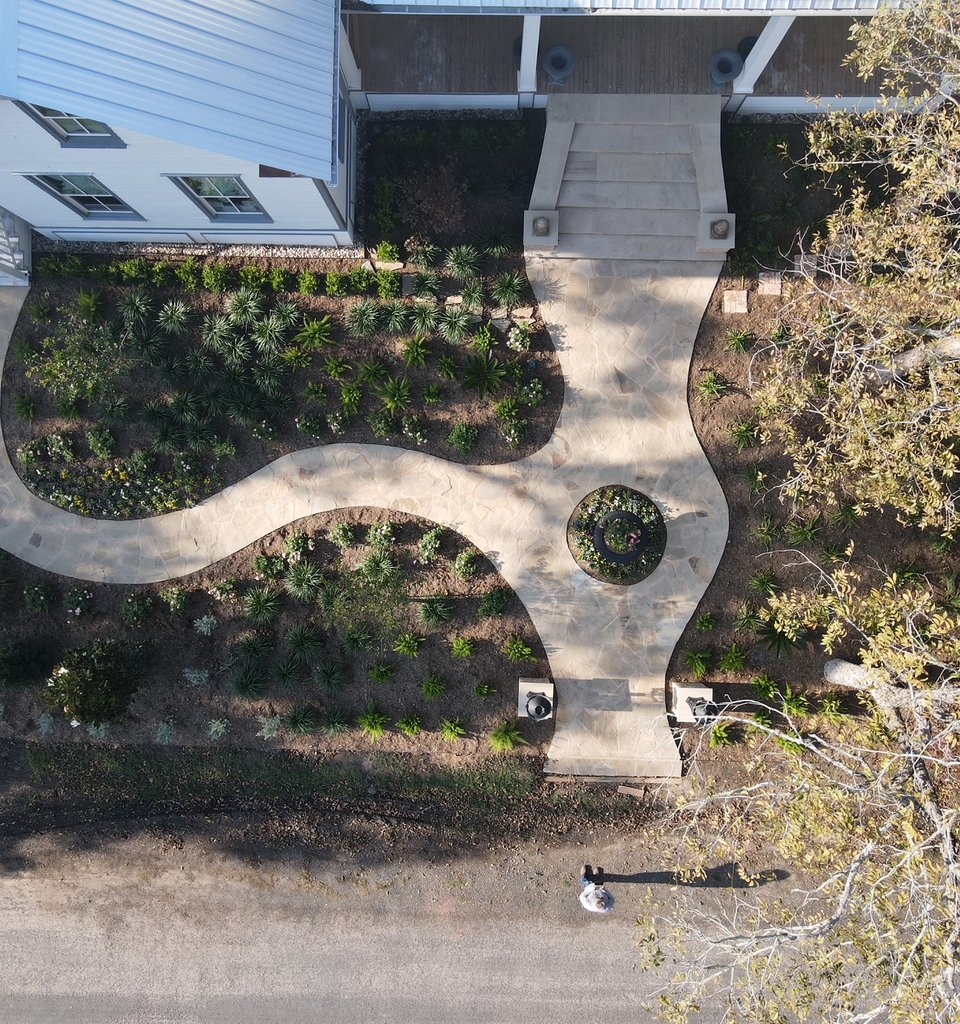 Fayetteville Garden District Style
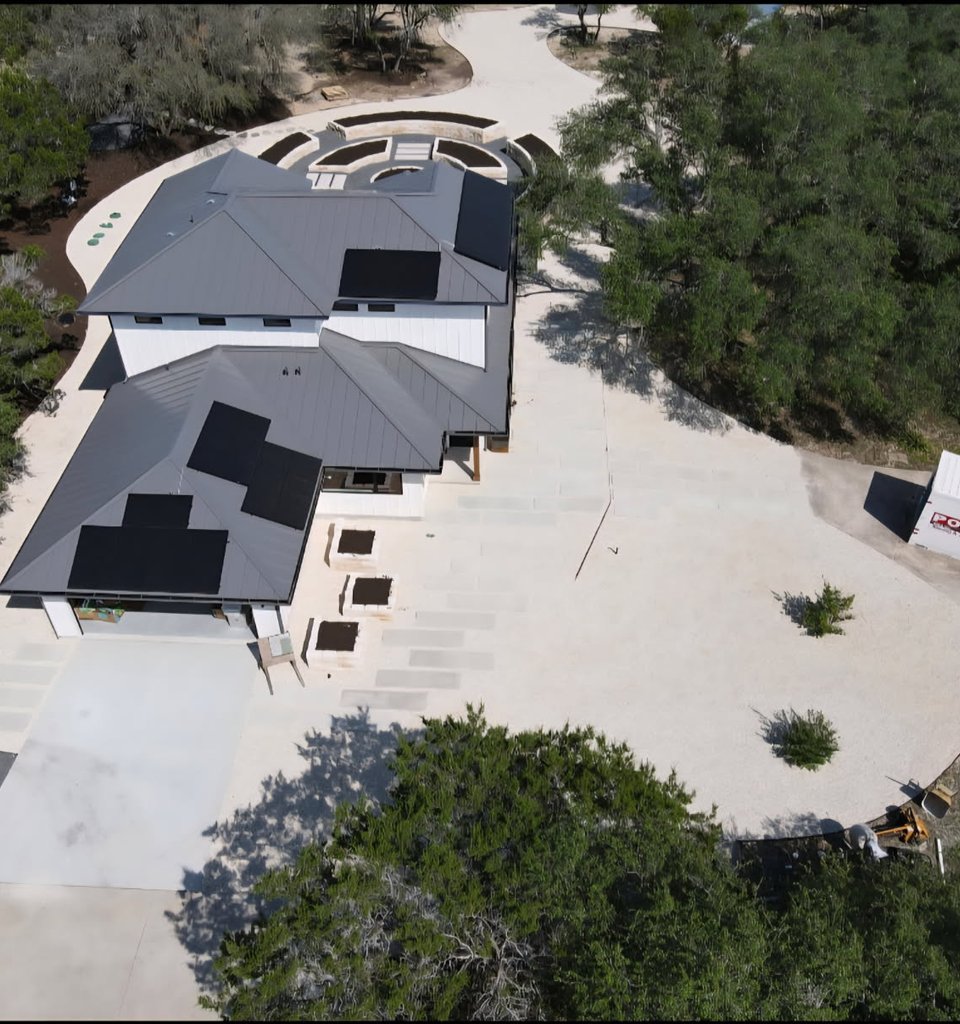 Driftwood Garden Estate
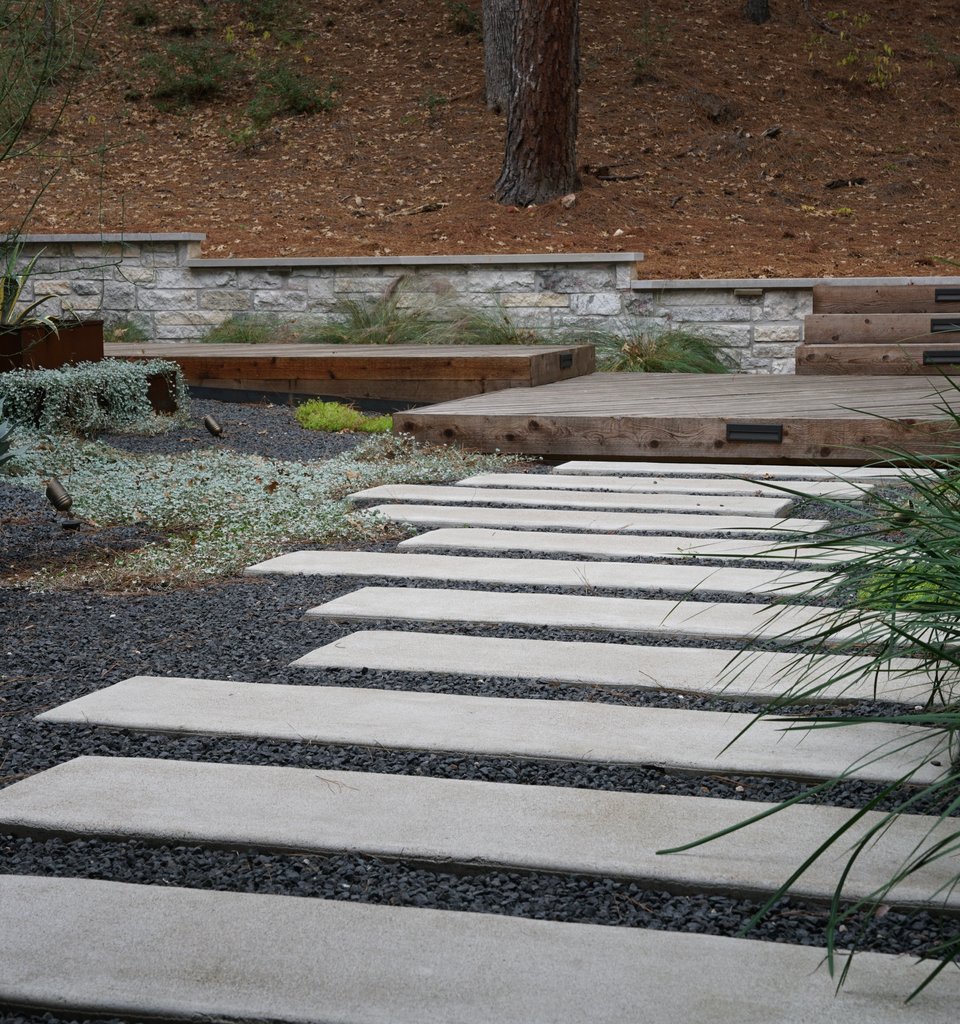 Bastrop Lost-Pines Courtyard Design
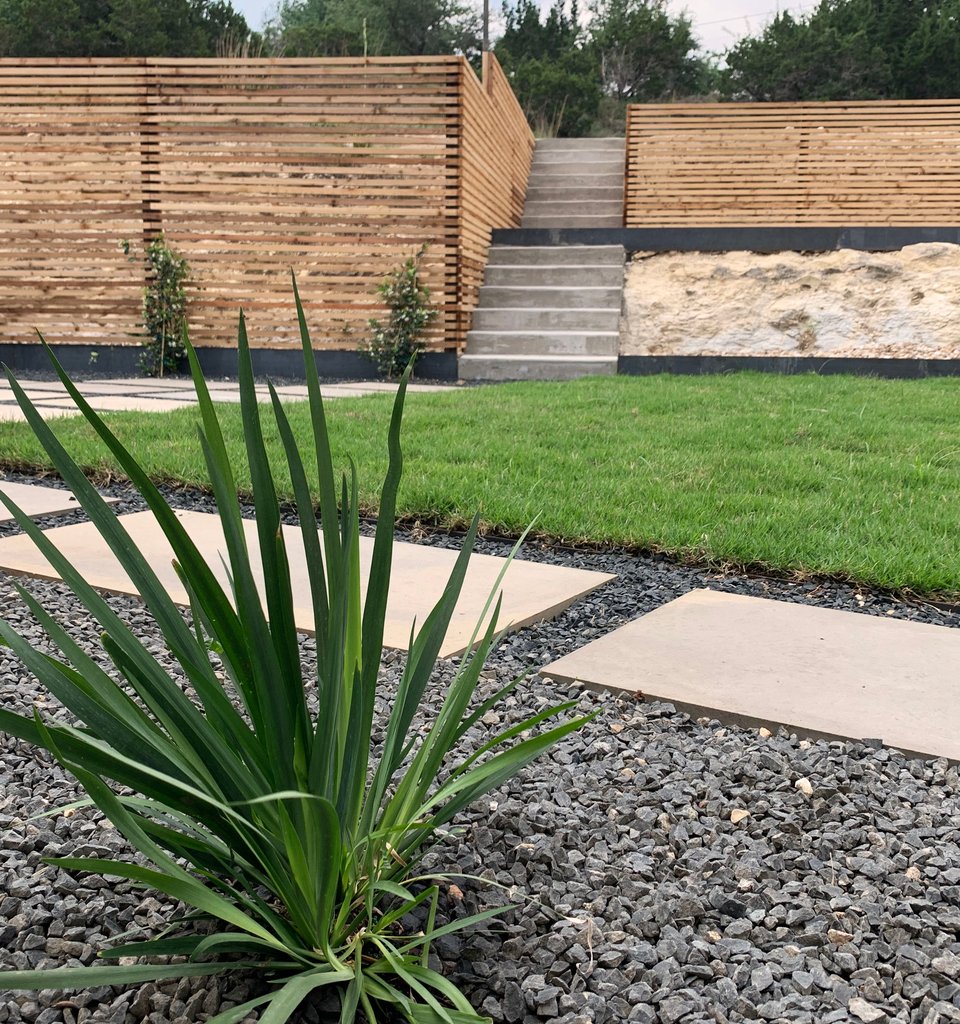 Westlake Hills Modern Terrace
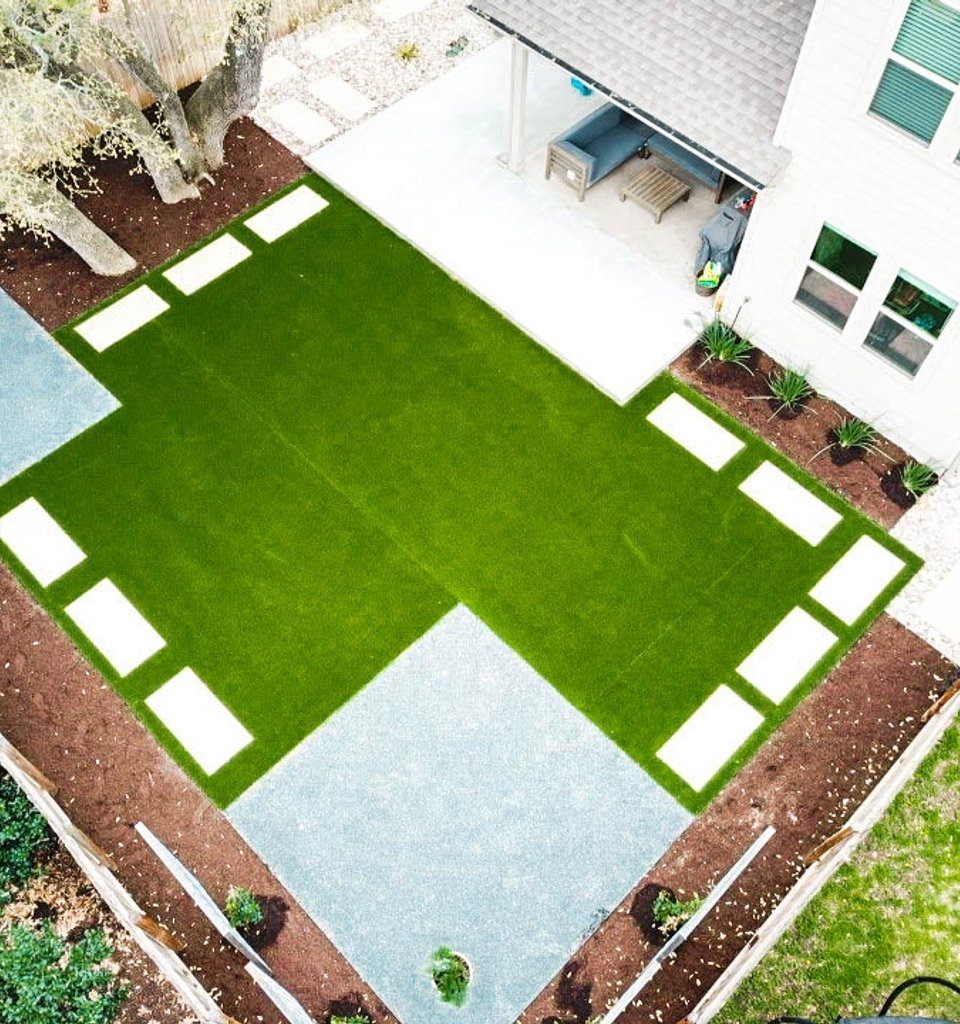 Round Rock Turf Checkered Garden
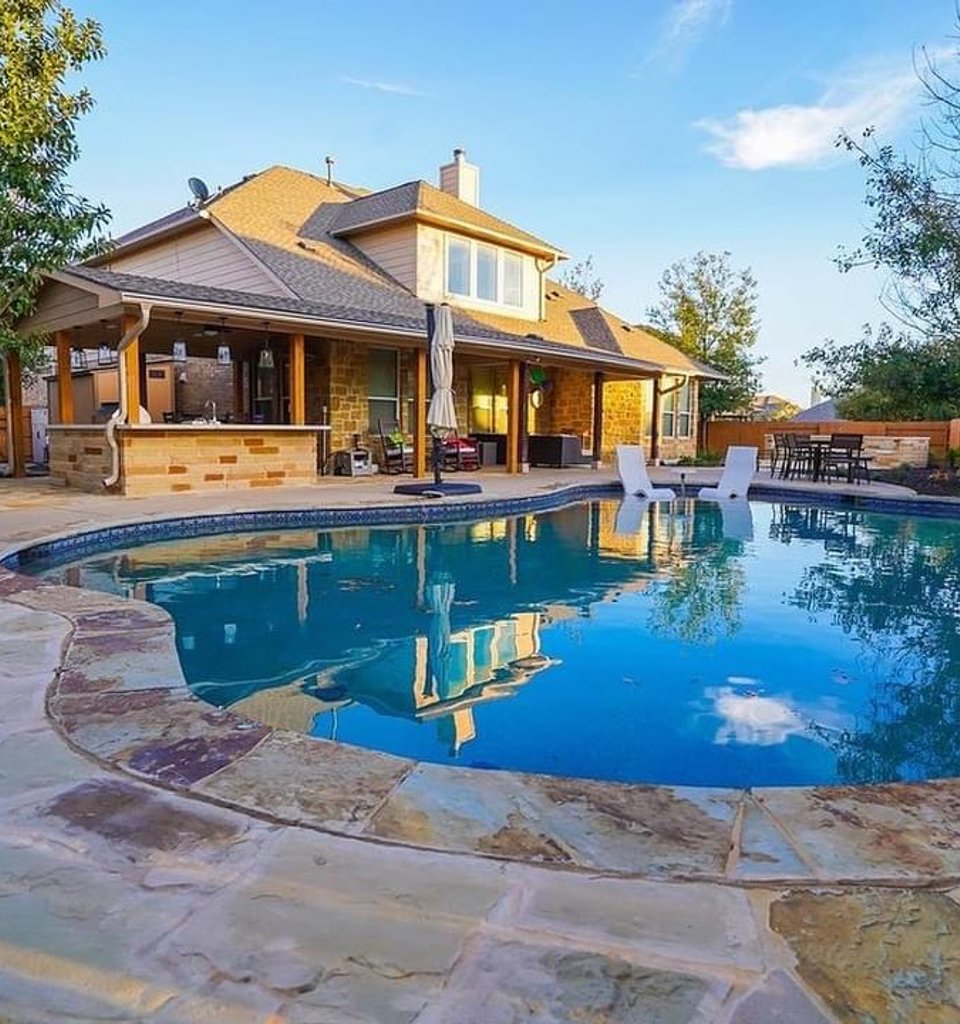 Steiner Ranch Outdoor Kitchen & Pool Retreat
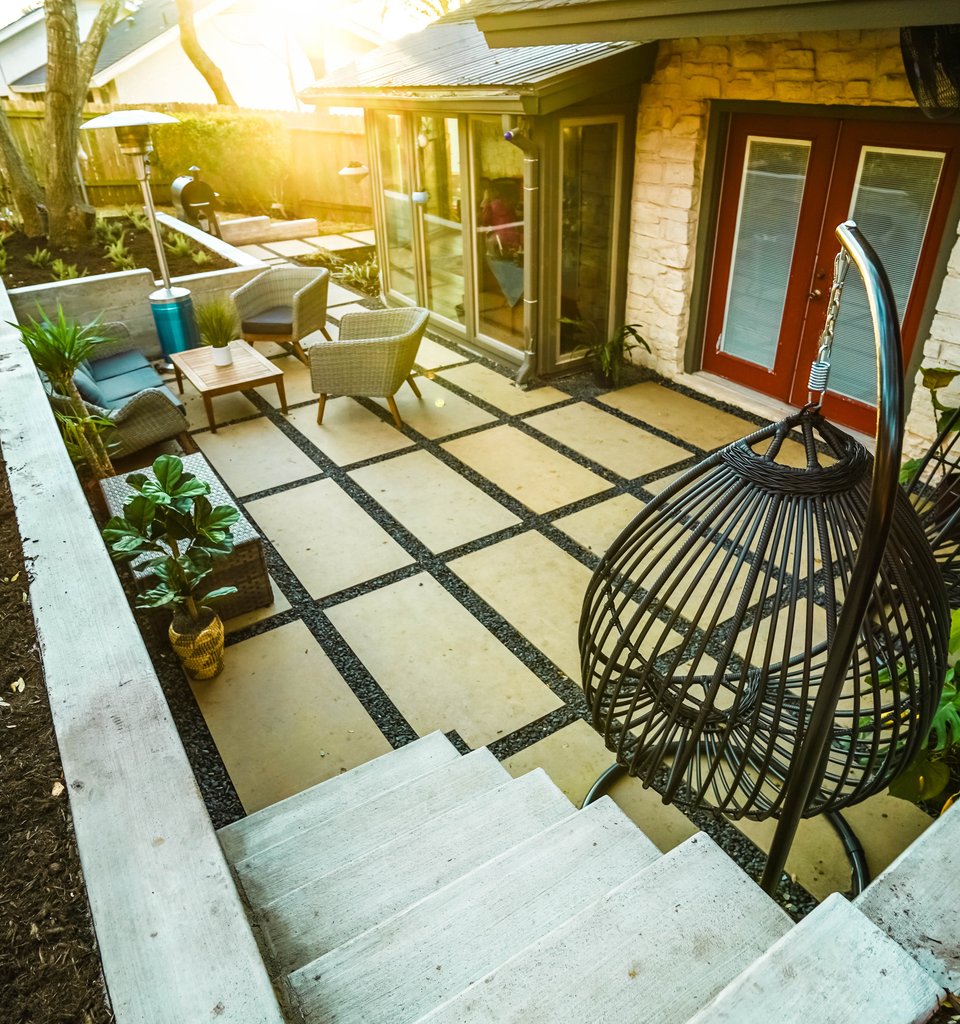 Shoal Creek Terrace Revival
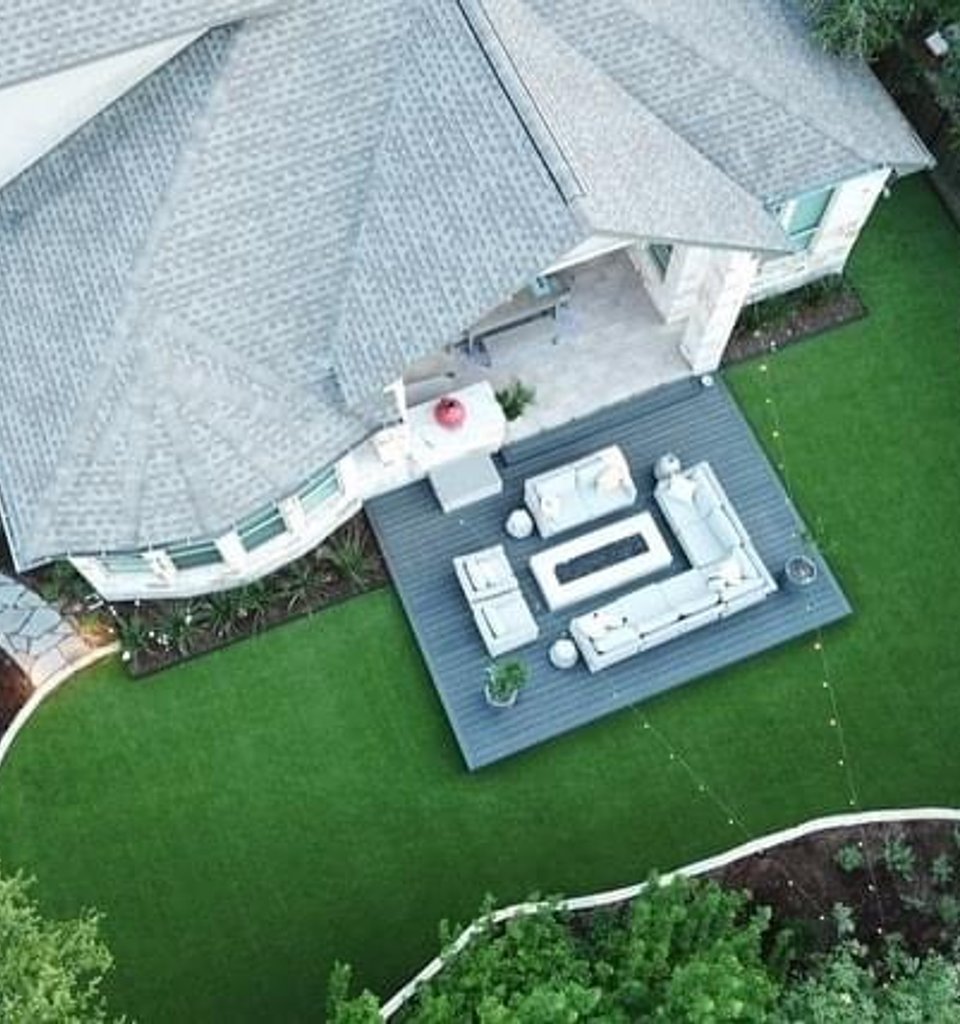 Bee Cave Backyard Under the Oaks
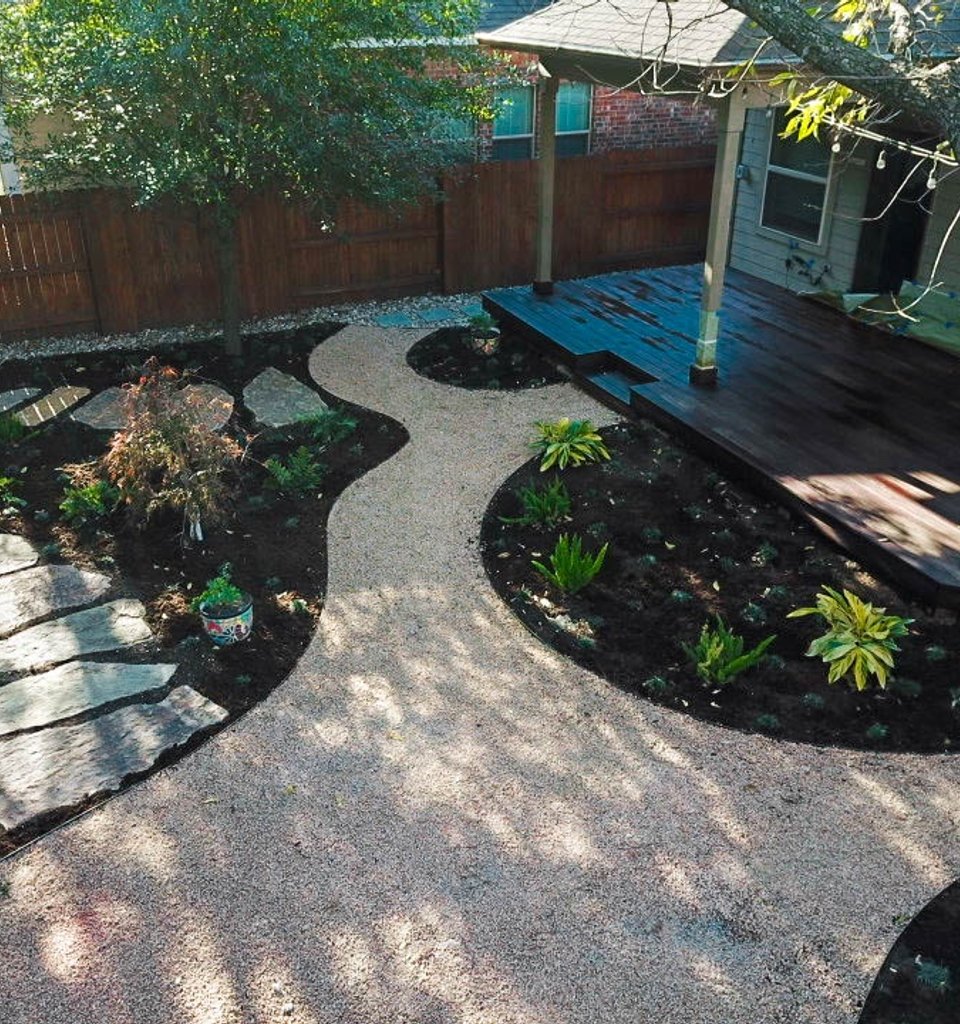 Riverplace Shaded Garden Escape
Patio Construction FAQs
It depends on your yard and your priorities. Concrete pavers give you the cleanest, most uniform look and are easy to repair one stone at a time. Texas flagstone (Lueders, Oklahoma, or Cordova Cream) blends naturally with Hill Country homes and stays cooler underfoot than dark concrete. Poured concrete is the most affordable per square foot, but it will move with our expansive clay and can crack without proper joints. We walk every site, look at how the soil drains, and recommend the material that fits the house, the sun exposure, and the budget.
A flat ground-level patio in your backyard usually does not require a building permit, but it almost always counts toward your lot’s impervious cover limit. If the patio includes a roof, a structural pergola attached to the house, or sits in a setback or drainage easement, a permit is likely required. We pull the current rules from City of Austin Development Services before we design, so you don’t get surprised at inspection.
Austin caps how much of your lot can be covered by hard, water-shedding surfaces. The cap is tighter west of MoPac inside the Edwards Aquifer Recharge Zone. A standard concrete or mortared stone patio counts as 100% impervious. Permeable pavers with open joints over an engineered base are often credited at a lower rate, which can keep a larger patio inside the limit. We measure your existing cover and design the patio around what you have left.
All concrete cracks, the question is whether it cracks where you planned for it. We use a 4-inch minimum pour with fiber reinforcement or rebar, cut control joints inside 24 hours, and place expansion joints against the house and any column. Stamped concrete in Austin also benefits from a lighter integral color, since dark gray and charcoal can hit surface temperatures over 140°F in July and accelerate surface checking. We finish with a UV-stable sealer rated for our sun.
For paver and flagstone patios on Austin’s expansive clay, we install a 4 to 6 inch compacted decomposed granite or crushed limestone base over a woven geotextile fabric, then a 1-inch sand setting bed. The fabric stops the base from migrating into the clay during wet/dry cycles, which is what causes settling and lippage two or three years in. Caliche pockets get over-excavated and replaced so the patio sits on a uniform base, following ICPI best practices.
Yes, and that’s a detail we plan from day one. Patios should finish about 1 inch below the door threshold so water sheets away from the house, never toward it. For downhill yards we use a single step-down or a low landing so the transition feels intentional. We also field-verify door swing, weep holes, and any existing flashing so the new patio doesn’t trap water against your slab or siding.
Often, yes. Permeable pavers let stormwater pass through open joints into an aggregate reservoir under the patio, which slows runoff and can soak in instead of sheeting toward the house or the street. On Austin lots, this matters for two reasons: it helps during 2-inch-plus Hill Country thunderstorms when downspouts overwhelm yards, and it can earn you credit against impervious cover limits in the Recharge Zone. We size the reservoir for your soil and rainfall, not a generic number.
Call us at (737)-321-7812 or fill out the contact form on this page. We’ll schedule a free on-site visit, walk the yard, look at drainage and door locations, and talk through materials and sizing. You get a written, itemized quote, no high-pressure sales, no surprise add-ons.