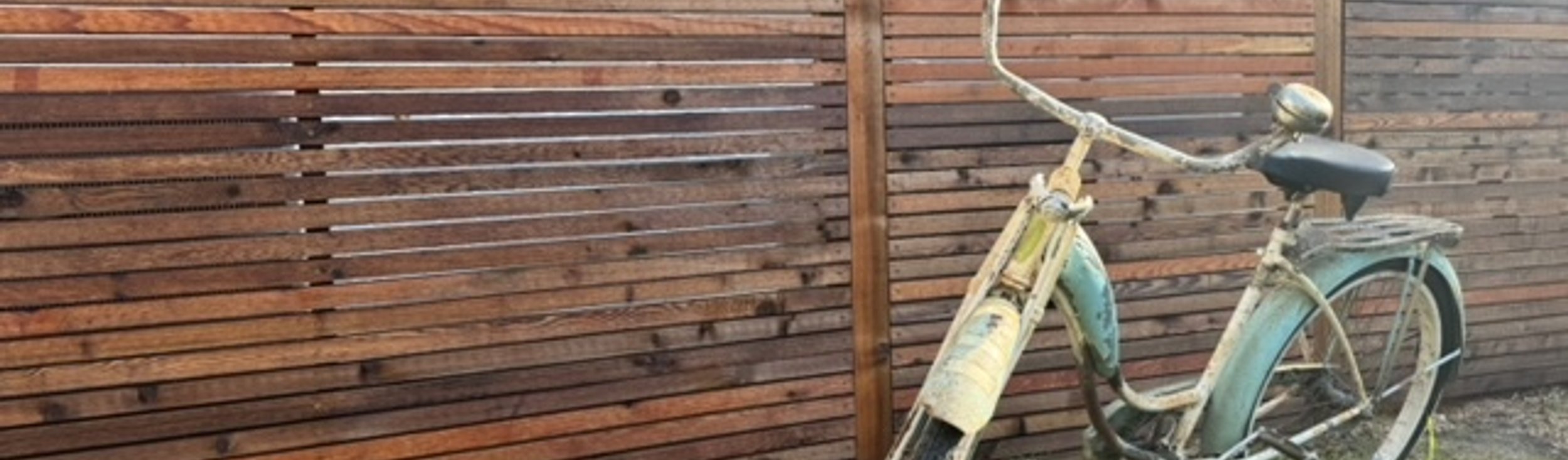

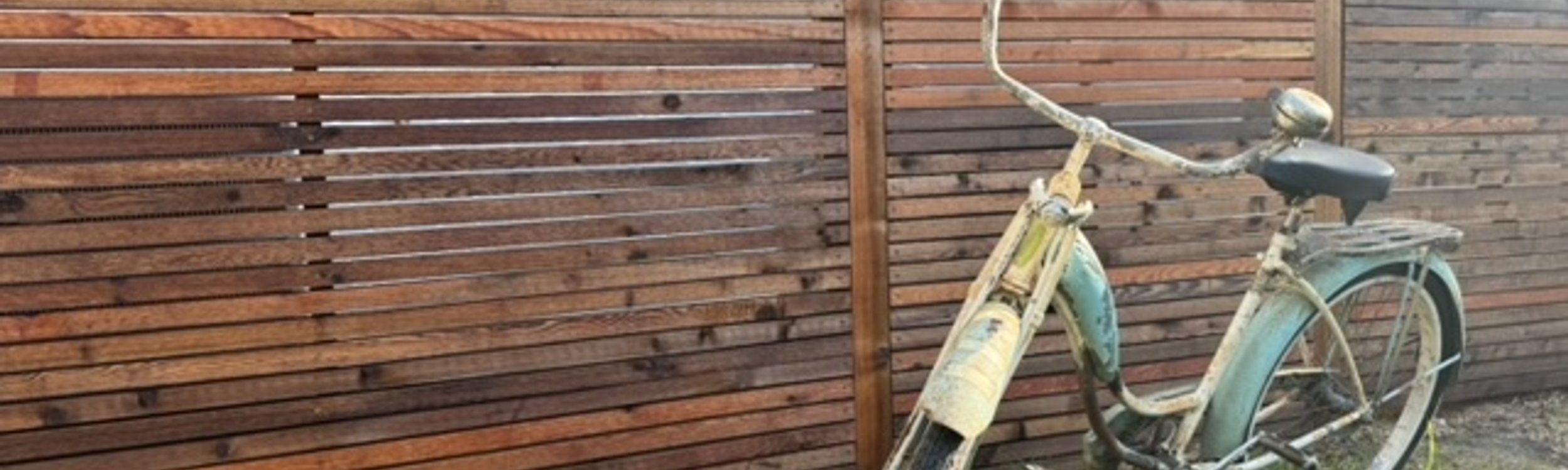

Wood Fence Installation in Austin, TX
Cedar, treated pine, board-on-board, and shadowbox wood fences built for Austin’s heat, UV, and clay soils. Locally owned, with over 20 years installing fences across the greater Austin area.
Wood fence is the most common residential fence type in Austin, and for good reason. A well-built cedar fence frames your property, gives you privacy, keeps kids and dogs in, and weathers to a soft silver that fits the Hill Country. Thrive Landscape and Design installs cedar, Eastern Red Cedar, and pressure-treated southern pine fences across the greater Austin, TX area. We set posts in concrete, work through the caliche and limestone our soil hands us, and finish every fence with the kind of trim work that holds up to Texas heat. Standard residential builds run six feet on side and back lines, four feet in front to meet typical Austin setbacks, with options for board-on-board, side-by-side, shadowbox, and dog-ear pickets. Authoritative wood durability research from the USDA Forest Products Lab and species guidance from Texas A&M Forest Service back every material recommendation we make.
Learn More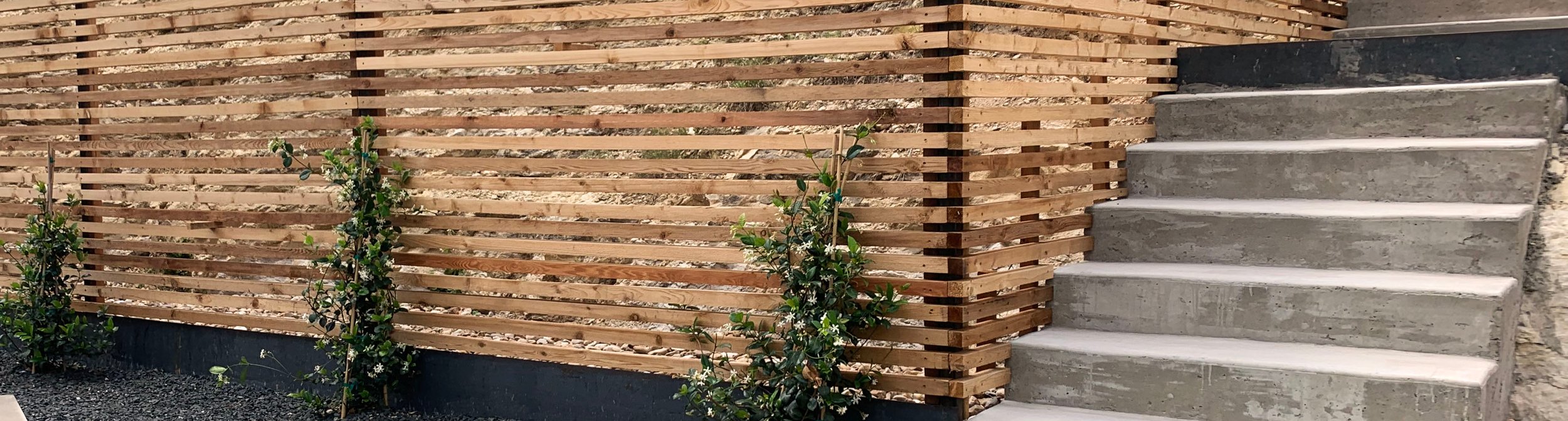
- 500+ Projects Completed
- 19+ Years Experience
- 5/5 Average Rating
Explore Our Full Fence Lineup
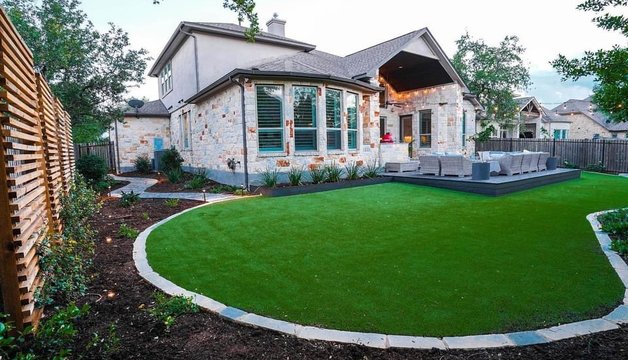
Privacy Fences
Six-foot board-on-board privacy fences that block sight lines around Austin backyards.
Learn More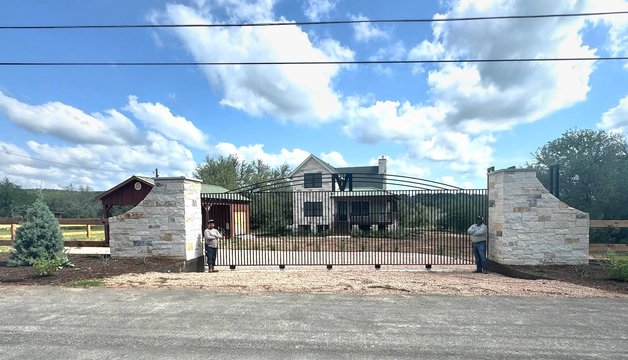
Custom Fences
Caps, trim, mixed materials, and one-off fence designs tailored to your Austin property.
Learn More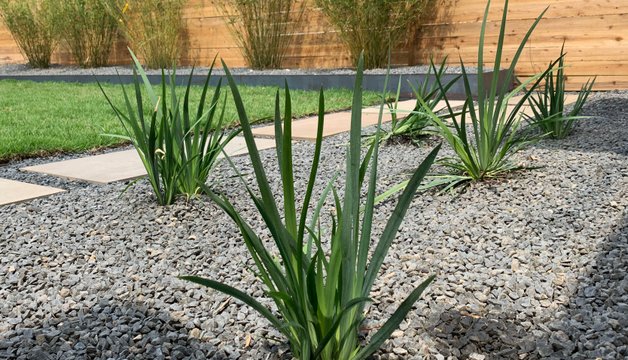
Vinyl Fences
Low-maintenance vinyl fences that never need staining and hold up to Austin sun and storms.
Learn More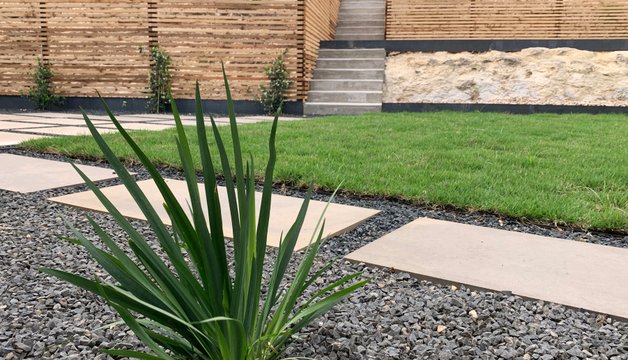
All Fence Services
See the full range of fence styles, materials, and repair services we offer in Austin.
Learn More


Our Process
Survey & Layout
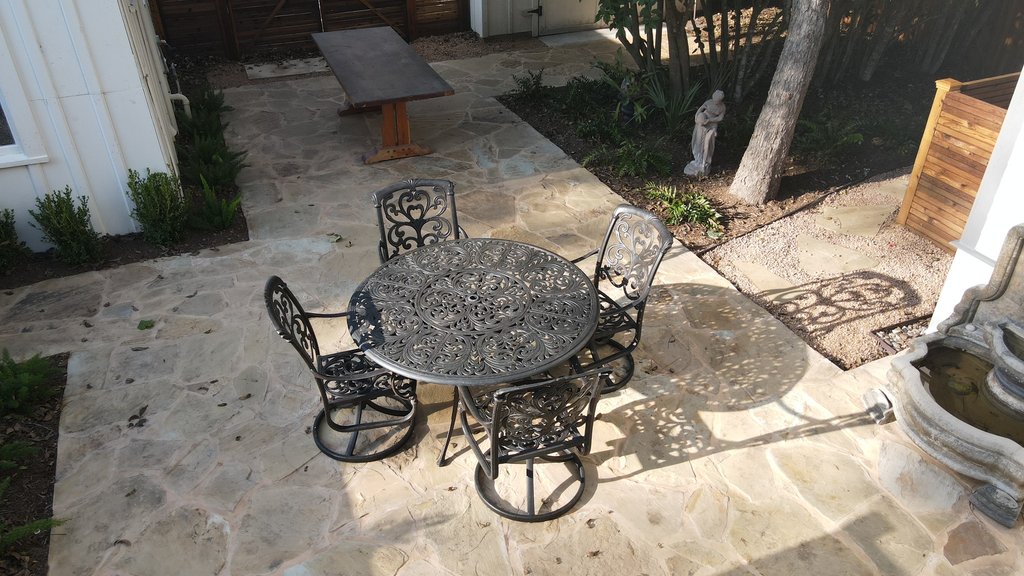
We walk the property line with you, mark gate placements, and check height restrictions against your HOA and local setback rules. Where survey pins are unclear, we coordinate locator services. The City of Austin Development Services is our reference for any permit or right-of-way questions. You get a marked layout and an itemized quote before any post hole is dug.
Post Set
Posts are the failure point on most Austin fences, so this step matters most. We dig 24 to 30 inches deep, drill through caliche or limestone where needed, set 4x4 cedar, treated, or galvanized steel posts in concrete footings, and plumb every post twice. Steel posts are our recommendation for clay-heavy lots, especially in areas with seasonal soil movement.
Picket Install
Rails go up first, then pickets in your chosen style: board-on-board, side-by-side, shadowbox, or dog-ear. We use ring-shank or coated screws to hold pickets through years of expansion and contraction. Pickets are spaced and trimmed to a consistent height, with gates squared and hung on heavy-duty hardware rated for daily use.
Trim & Seal
Top caps, kick boards, and trim go on last for a finished look that also protects end grain. We haul off all debris and walk the fence line with you. If you choose our stain and seal upgrade, we return inside the six-month window to apply a penetrating, UV-rated sealer so your fence holds color and resists cupping for years to come.
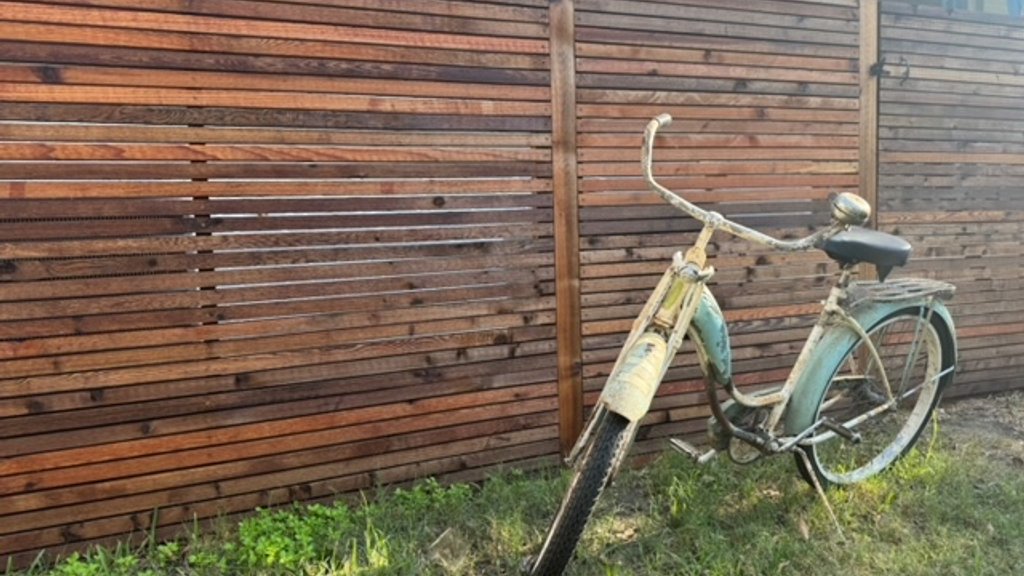
Professional Wood Fence Installation
Travis, Luis and the crew did an amazing job on our front yard landscaping. Travis had a vision that we could've never come up with on our own. They were communicative, hard working and had incredible attention to detail. We were really impressed with our experience and will… Read more

We’ve been very impressed with Travis and his team at Thrive Landscaping. From the initial design consultation through revisions and installation, the entire process was smooth, thorough, and high quality. We needed an HOA-compliant design that improved drainage and reduced… Read more
Travis was very responsive on the pricing . Luis and the crew did an amazing job and fixed a lot of problems that the prior firm had created. Very pleasant group and seem to want to please clients.
Great people providing outstanding service. Our yard has never looked better. And best of all, they stand behind their work. If something needs attention after the job is finished, they’re right on it.
After interviewing several companies, we chose Thrive Landscape to create some hardscaping for our back yard. They installed stone paving for our patio and pool area, a gravel area for our fire ring, and a raised gravel pad for a greenhouse. Everything looks great! We had a good… Read more
Thrive replaced some dying plants in a white rock bed and left it clean and beautiful. You would never know they had been in the rock bed at all - no dirt, no disruption - they left it better than they found it!
Our neighbor a few houses down had Thrive do his property and we liked how it looked, so we decided to contact them to see what it would cost to do our house. Wanted to get rid of the sand burrs and decided to do stone, rock and mulch for the whole yard in front of the house. I… Read more
We have used Thrive landscape for several projects over the past two years. They have delivered outstanding service, careful attention to detail, and impeccable service and care after the project was complete. Travis Odom is outstanding, and his vision helped us transform our… Read more
We were very pleased with Thrive from the initial bid to the completion of the project. We had our front yard and backyard landscaped. Communication was excellent and when a couple issues occurred they were quickly resolved. The onsite crew was great to work with and were… Read more
Excellent service and advice. Knowledgeable, on time, communicative owner, and crew. This is the place you want to call for your landscaping needs! We are extremely satisfied with the outcome and will use the service again. Thank you Travis and crew.
I was really pleased with Thrive. Travis arrived exactly on time for the quote, had a great design, and was able to start quickly once the plans were approved by my HOA. The crew was polite and worked quickly. They left the whole worksite very neat, and my front yard now looks… Read more
Had grass that was dead, Travis and his team transformed my backyard in a few days!
I am a repeat customer of Travis's. He recently transformed my front yard. The design was perfect for what we wanted to accomplish and the crew did high quality work which included clean-up. I will keep coming back to him in the future.
Thrive is a very professional and excellent business - they did a wonderful job on my project and I couldn't be more pleased with the end results. Will definitely use them again!
I had an outstanding experience with Thrive. Quality, honesty, value and customer service were phenomenal! Exceeded my expectations!
Swapped out black stone that were killing my plants with mulch. Added a bunch of plants and sod. Also got my irrigation and stone walkway complete. I say it is all looking great.
I don't know where to begin. Travis and his team provided an amazing landscape design, strategy, and results on our backyard for my 50th birthday celebration. Travis was patient and very detailed with his quote and made sure he covered every detail with me. Once we decided to… Read more
I’ve done two projects with these guys to include a landscaping project where I added sod, metal planters, and plants. The second was a fence repair and both turned out great. They were fairly priced, scheduled quickly, executed on time, and worked through my lunch list at the… Read more
We chose Thrive Landscaping after a friend of ours used them for their own backyard and we could not be happier with our decision. Travis and team were incredibly professional, thorough and communicative the entire time. They added new grass, flowers, gravel and lights to our… Read more
Travis with Thrive Landscape & Design did an amazing job redesigning our backyard! They were hard-working, timely, responsive and appreciated their craftsmanship they put into the project. The space looks better than we imagined — highly recommend!
Wow! Travis and his team did an amazing job refreshing our back yard! They were professional, prompt, respectful and above all had an eye for detail! It was an absolute pleasure working with them to create our dream back yard! I highly recommend Thrive Landscape and DESIGN… Read more
Our project was the tear-out, re-design and rebuild of a fairly substantial deck. Great experience with Travis Odom and Thrive Landscape. Travis is congenial, professional and great to work with. The guys on site did excellent work. We’re very happy with the finished product and… Read more
Mr Travis Odom made an excellent, unique, and original cedar fence design that we ended up using.
Great design and construction for my landscaping project. Travis and his crew were very attentive and detailed. They also took on board our feedback and we’re very willing to evolve their designs.
Travis did a great job fixing the drainage along the side of my house! Was very responsive, timely, and reasonably priced. Would reach out to again for any future landscaping needs.
Travis was very responsive and did an excellent job designing our difficult yard. We LOVE the end result and can’t wait to do phase two. Can’t say enough how happy we are with the design!
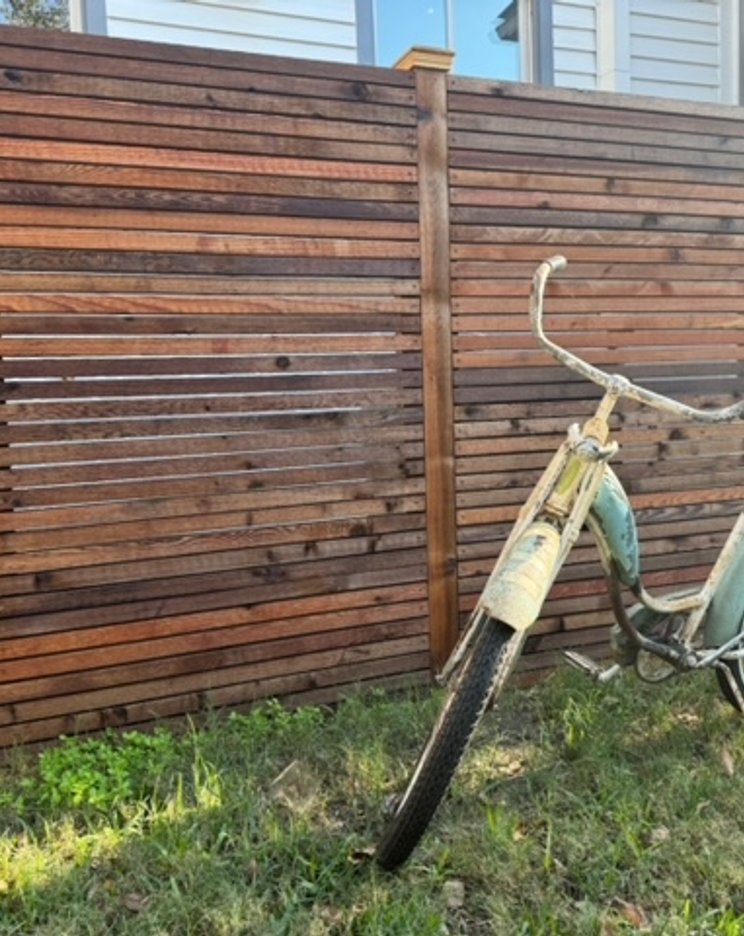
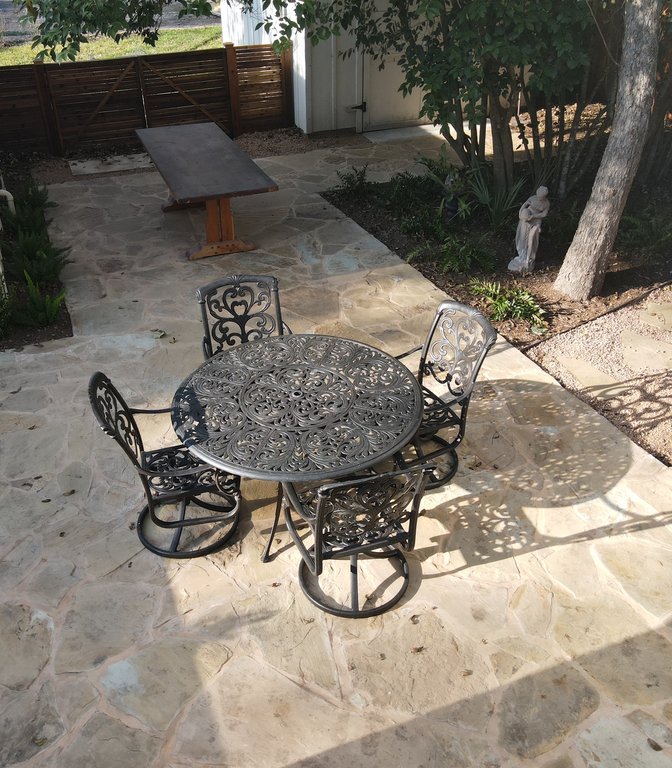
Signs Your Wood Fence Needs Replacing
When Repair Stops Making Sense
Austin’s heat and clay soils are hard on wood fences. If you are seeing more than one of these issues across long runs of fence, replacement usually costs less than chasing repairs.
Request A QuoteOnce posts work loose in our clay, the whole run starts to lean. If multiple posts are wobbly, replacement with steel posts is the long-term fix.
Unsealed pickets cup and split under Texas UV. Scattered bad boards can be swapped, but widespread warping means the wood is at the end of its service life.
Soft, dark wood near the ground line is rot. Once it spreads to rails and posts, the structure cannot hold pickets reliably, and patches keep failing.
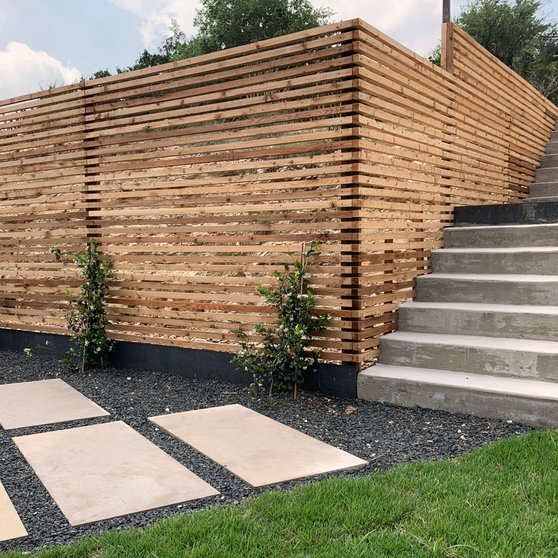
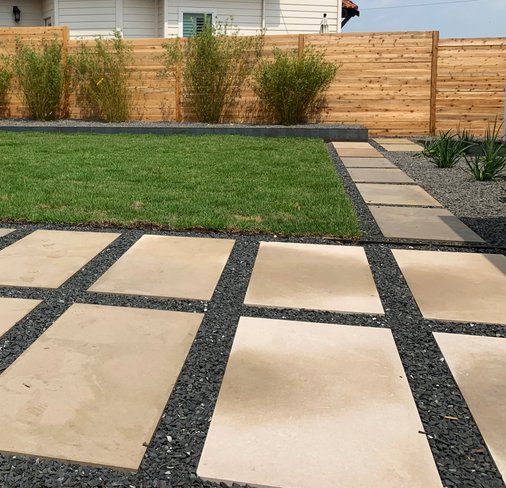
Why Choose Thrive Landscape and Design?
Built For Austin Soils
We set posts deep, drill through caliche and limestone, and offer galvanized steel post systems so your fence stays plumb in our clay-heavy ground.
Cedar & Treated Options
Western Red Cedar, locally grown Eastern Red Cedar, or pressure-treated southern pine. We walk you through cost, life span, and look so you choose with eyes open.
Style Options That Last
Board-on-board, side-by-side, shadowbox, and dog-ear pickets, plus caps, kick boards, and trim for an upgraded look that hides hardware and protects end grain.
Stain & Seal Inside 6 Months
We offer a UV-rated stain and seal service inside the six-month window after install, which is when sealing pays the most dividends in fence life.
Austin’s Go-To For Wood Fence Installation
We install cedar, treated, and custom wood fences across Austin and the surrounding Hill Country, with full attention to local soil, setback, and HOA requirements.
- Lakeway
- Driftwood
- Westlake Hills
- Round Rock
- Lake Point
- Bee Cave
- Shoal Creek
- River Place
- Cedar Park
- Steiner Ranch
- Pflugerville
- & more
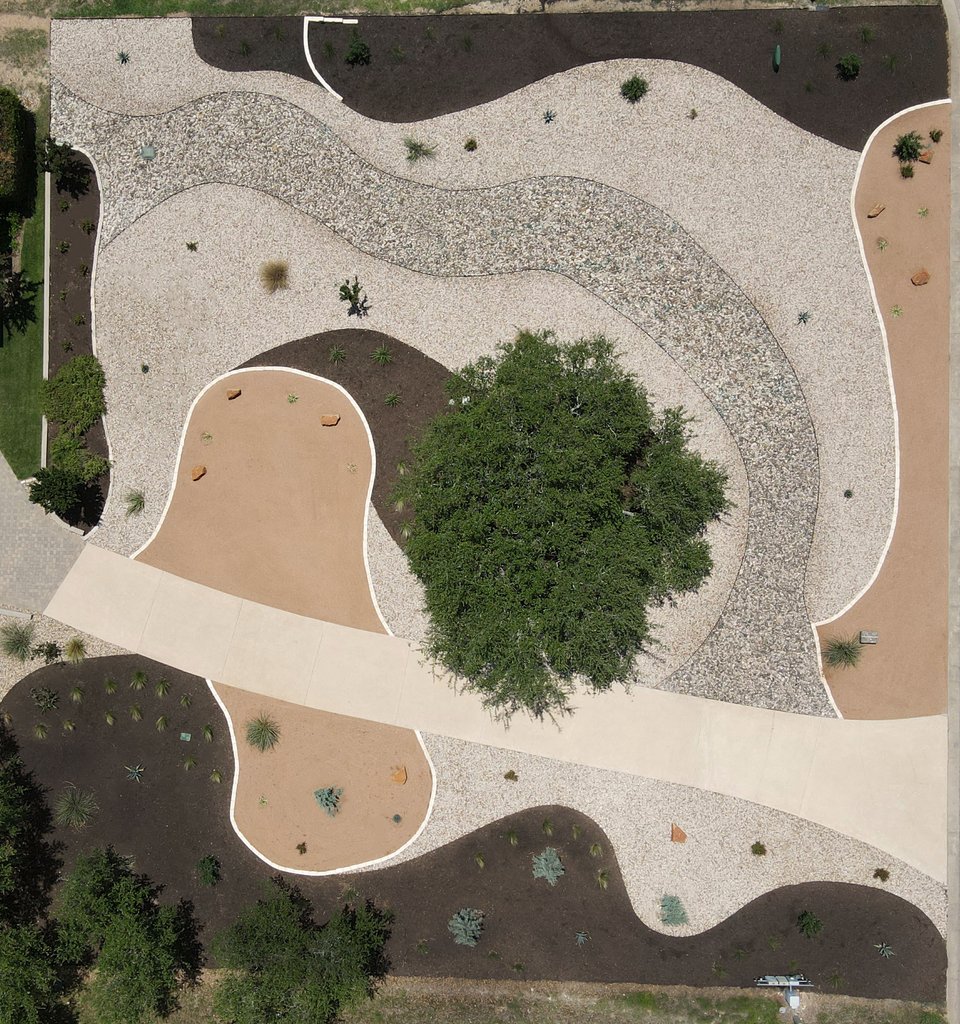 Dripping Springs Hill Country Xeriscape
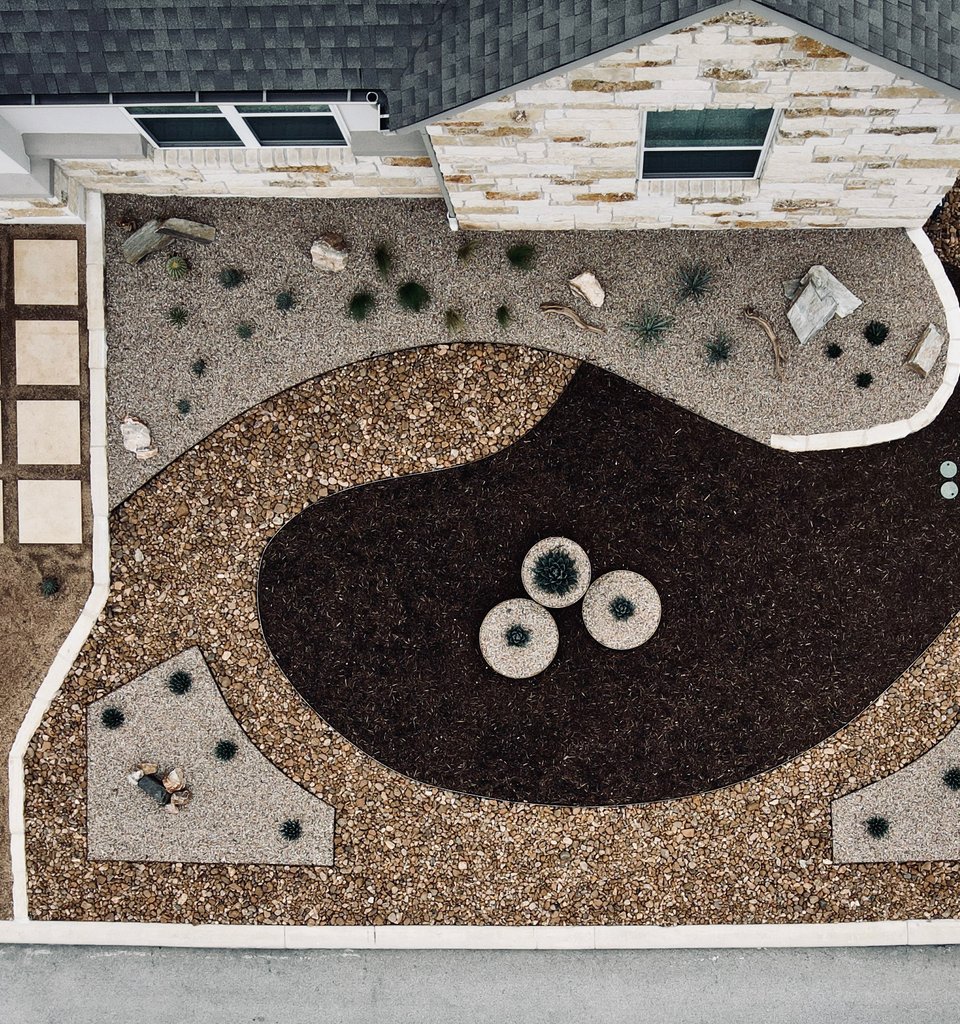 Spicewood Front Xeriscape
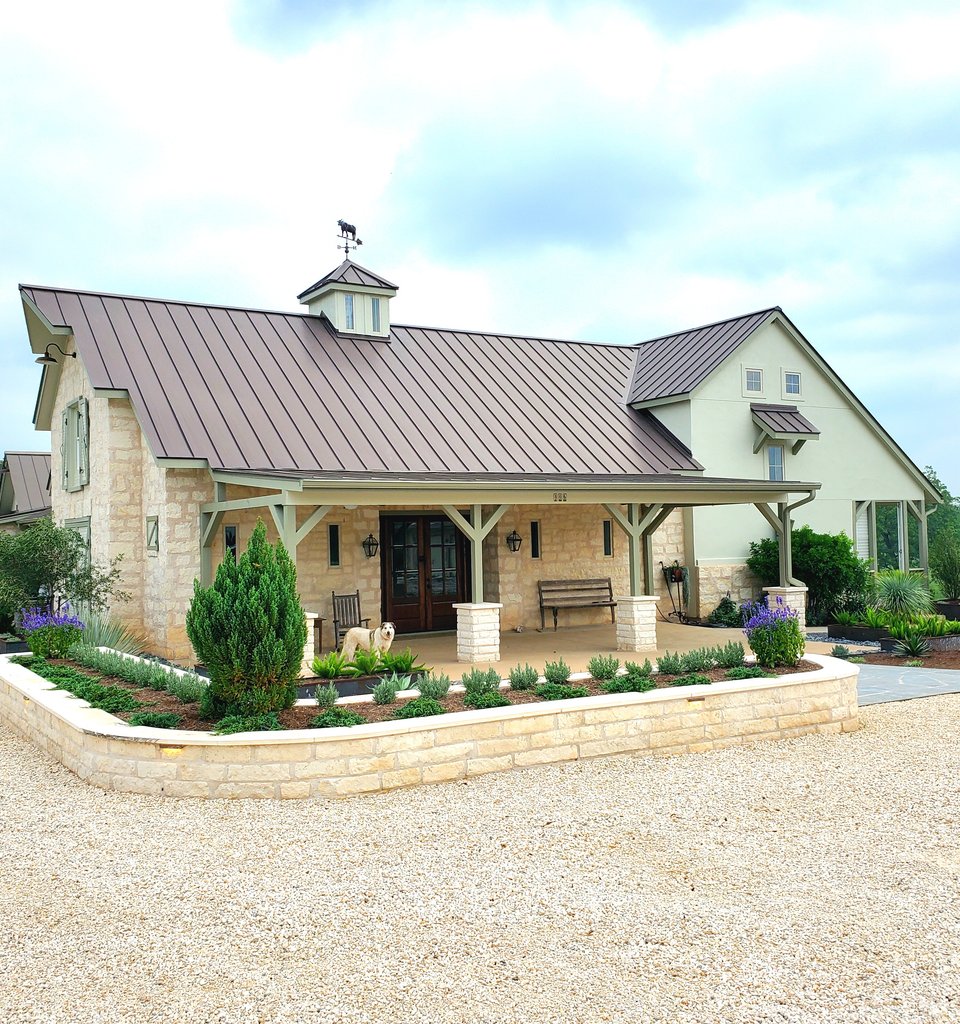 Smithville Ranch
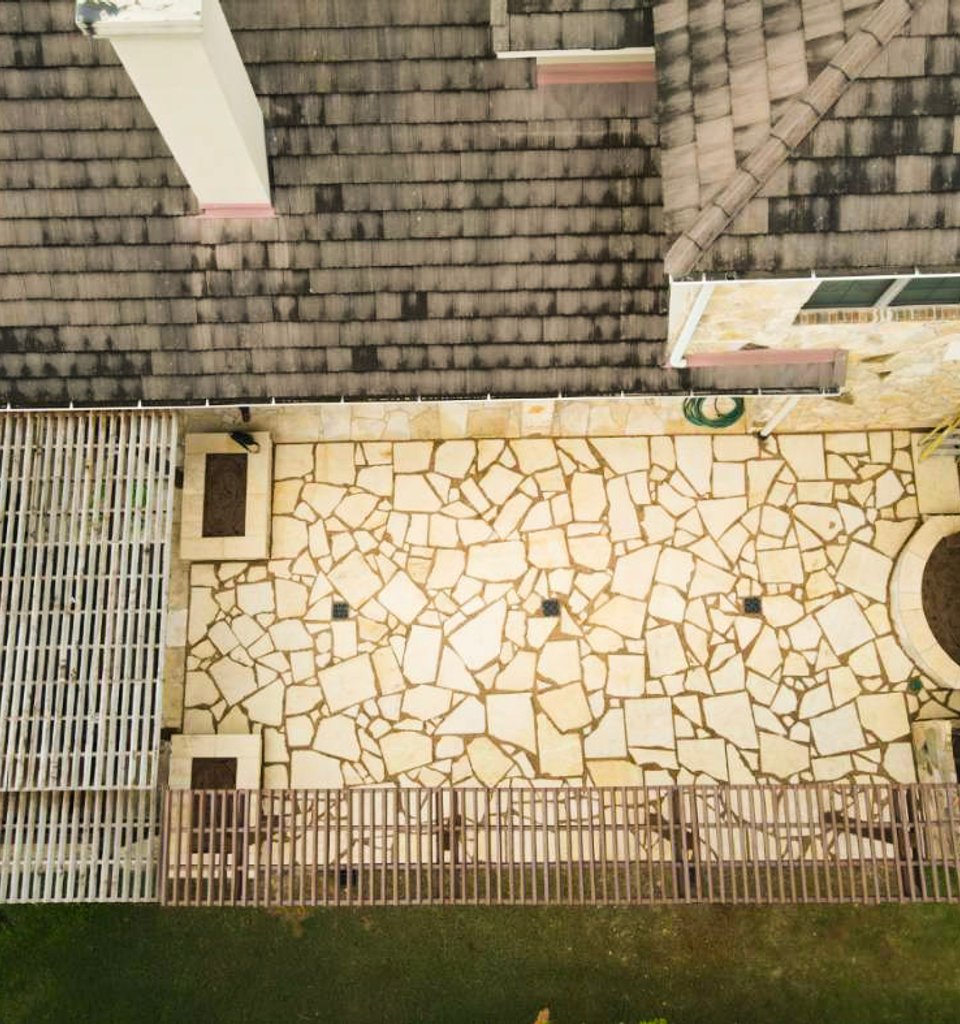 Lakeway Trellis & Patio
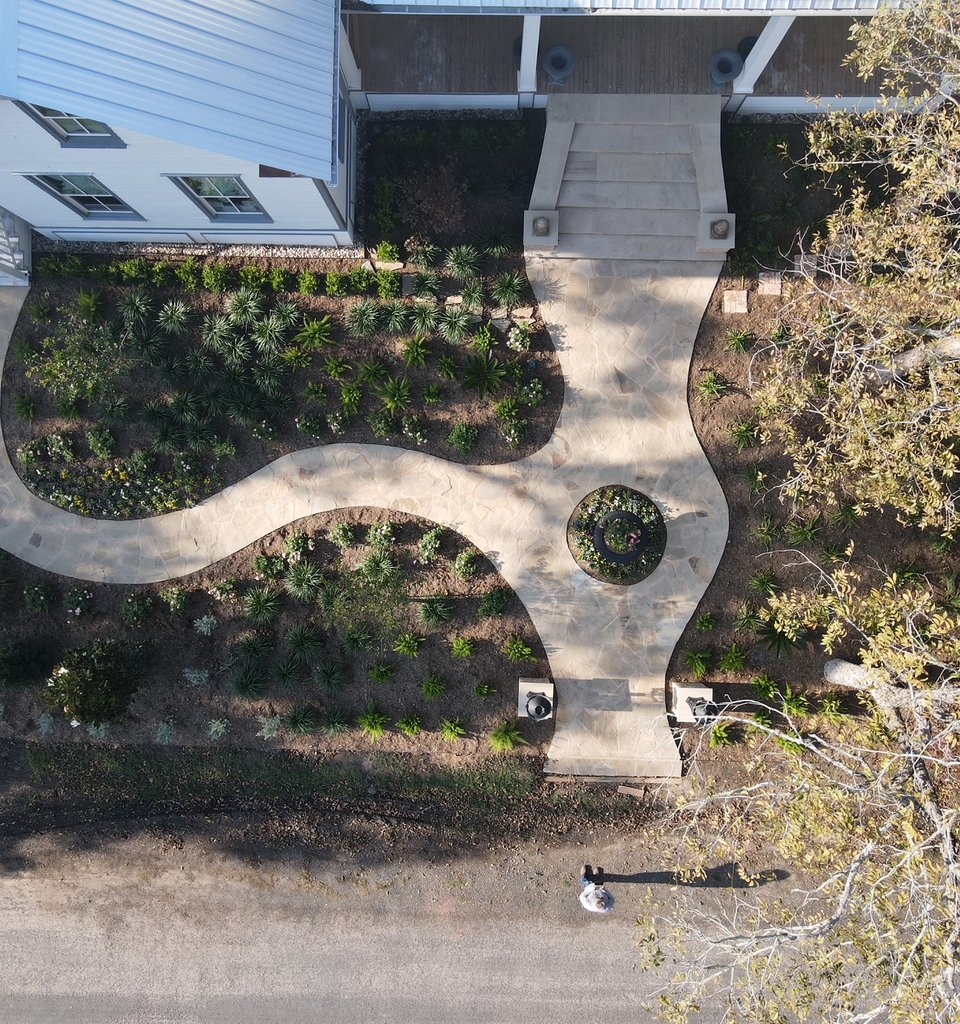 Fayetteville Garden District Style
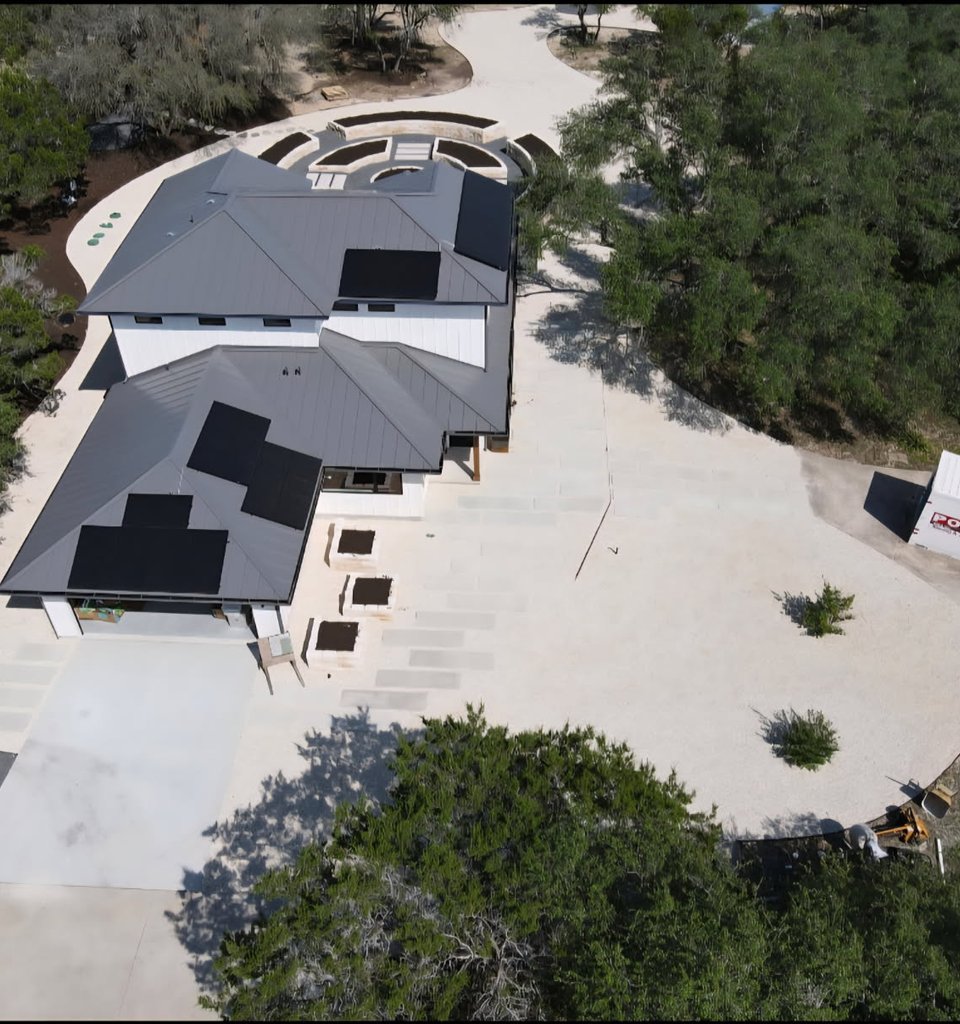 Driftwood Garden Estate
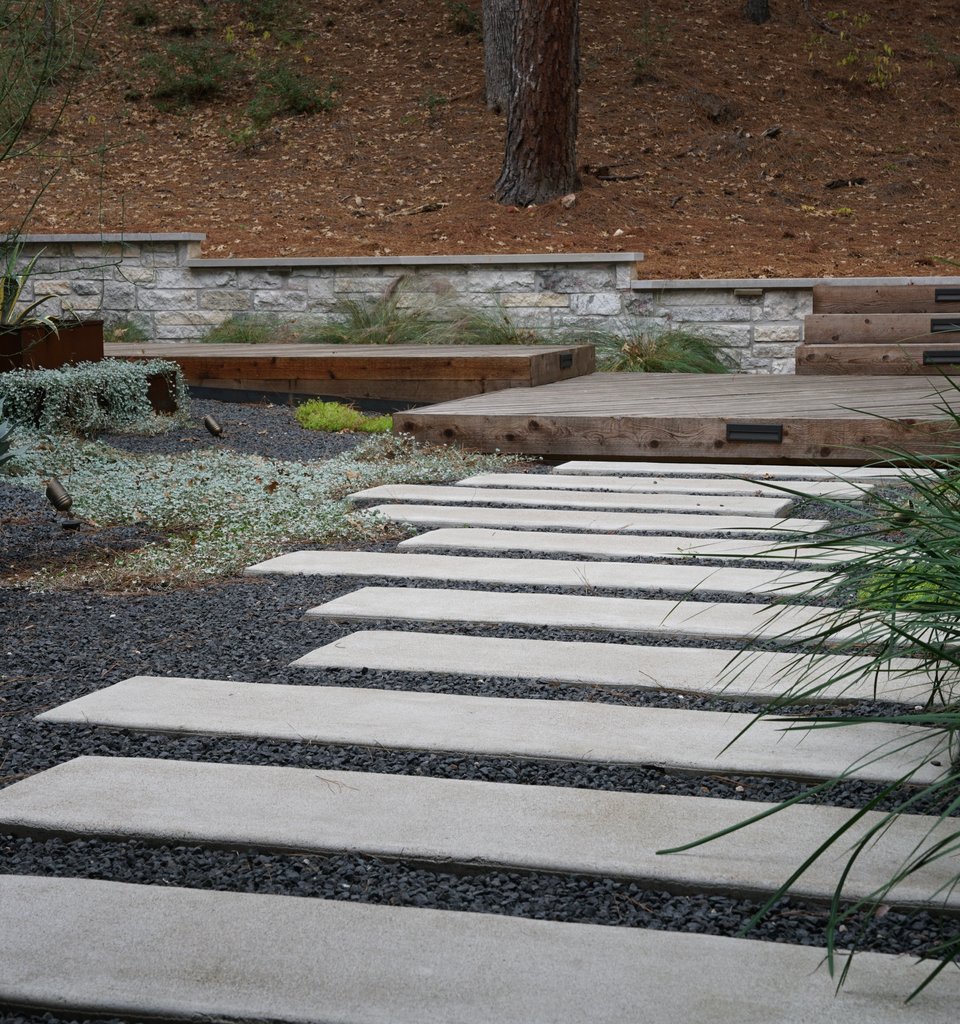 Bastrop Lost-Pines Courtyard Design
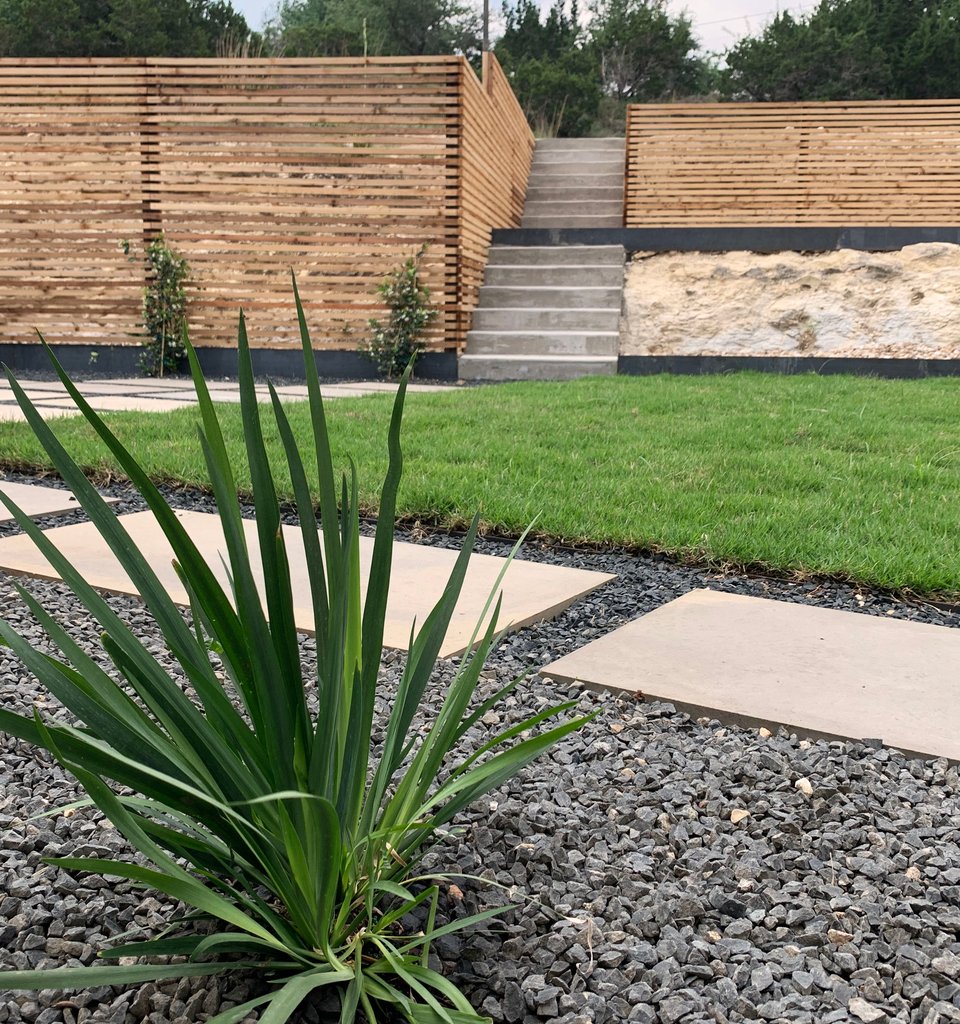 Westlake Hills Modern Terrace
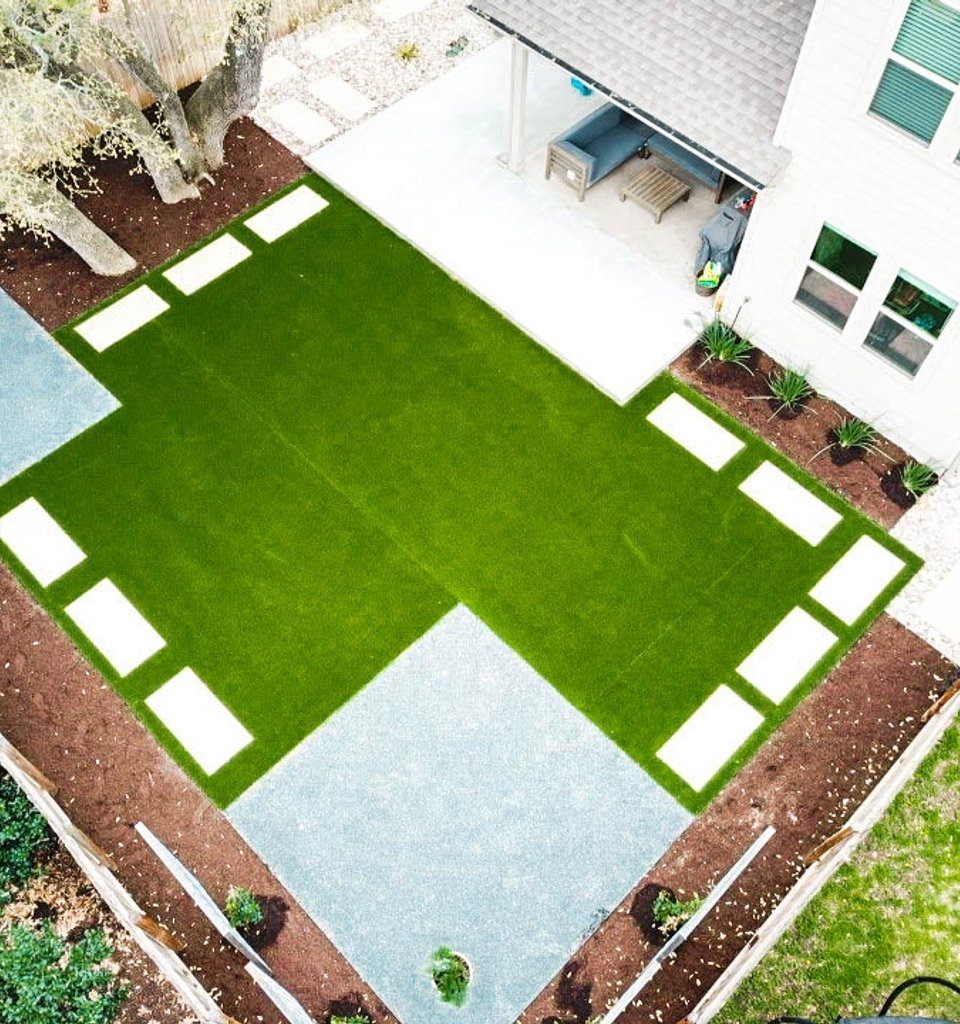 Round Rock Turf Checkered Garden
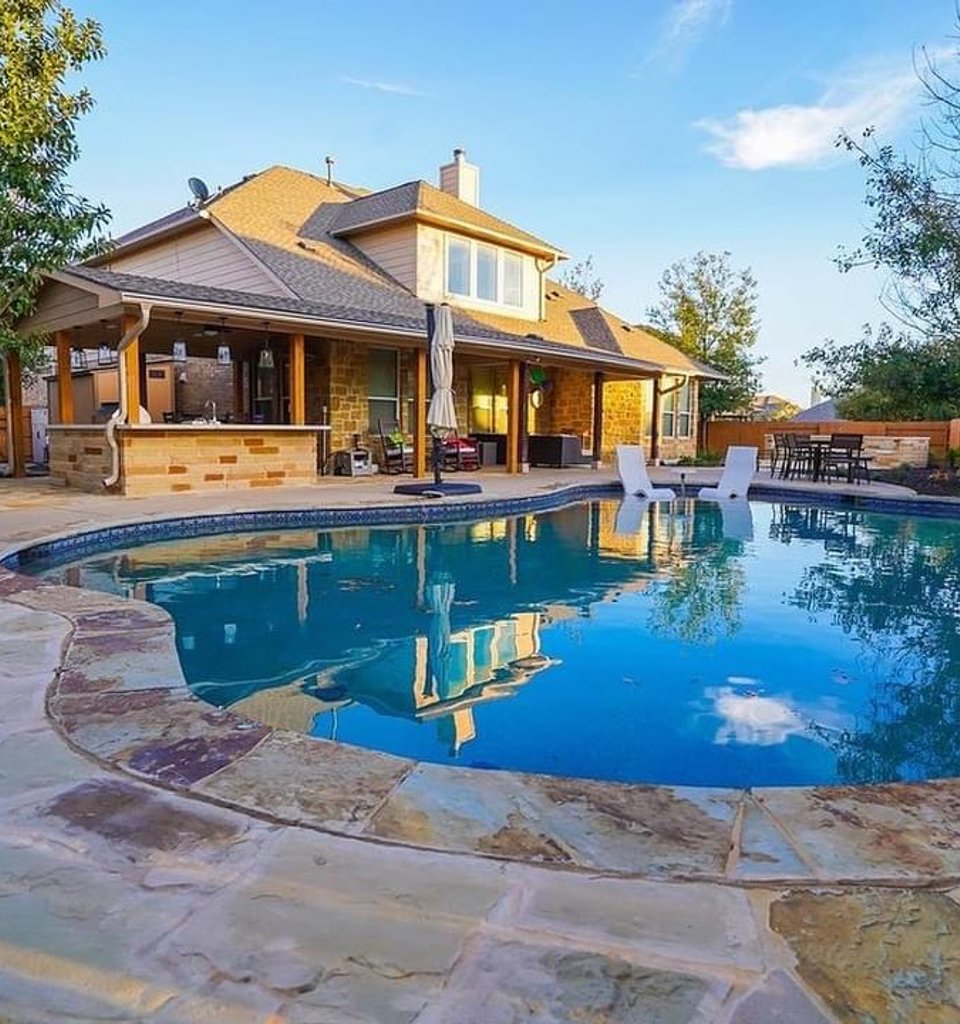 Steiner Ranch Outdoor Kitchen & Pool Retreat
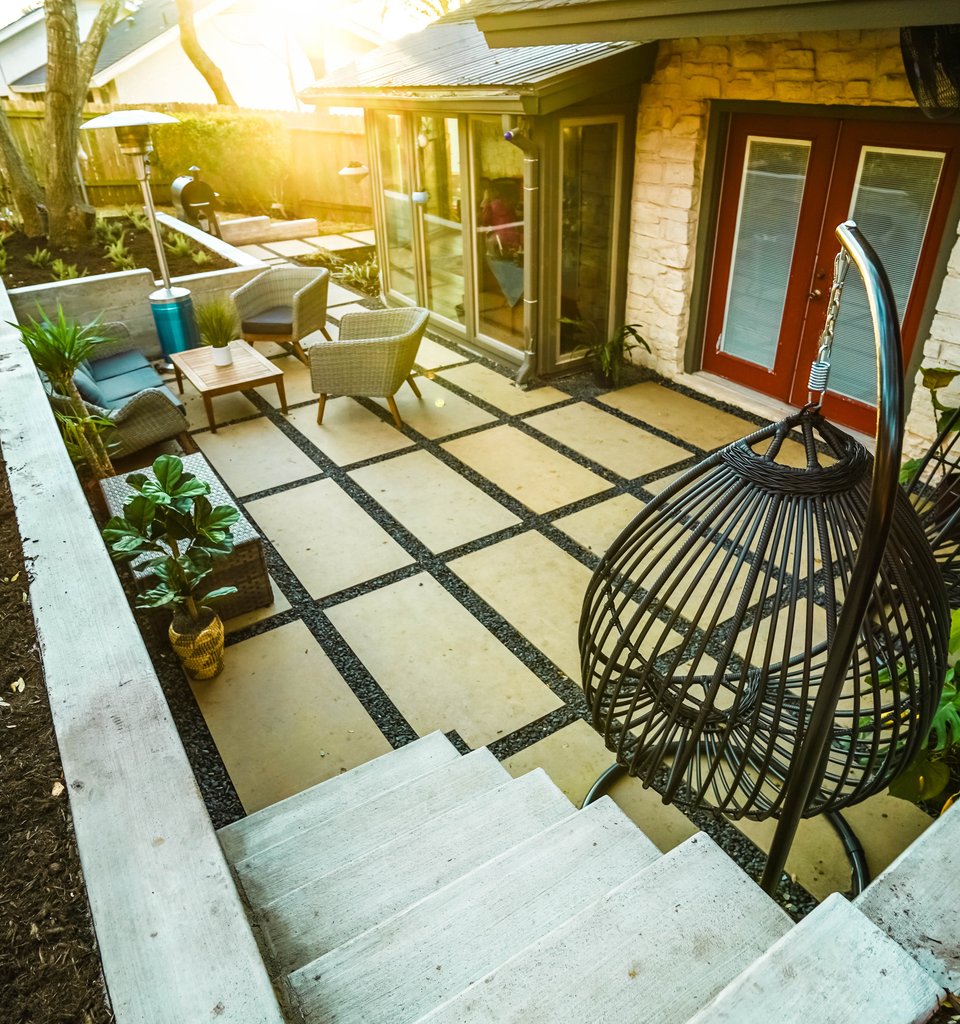 Shoal Creek Terrace Revival
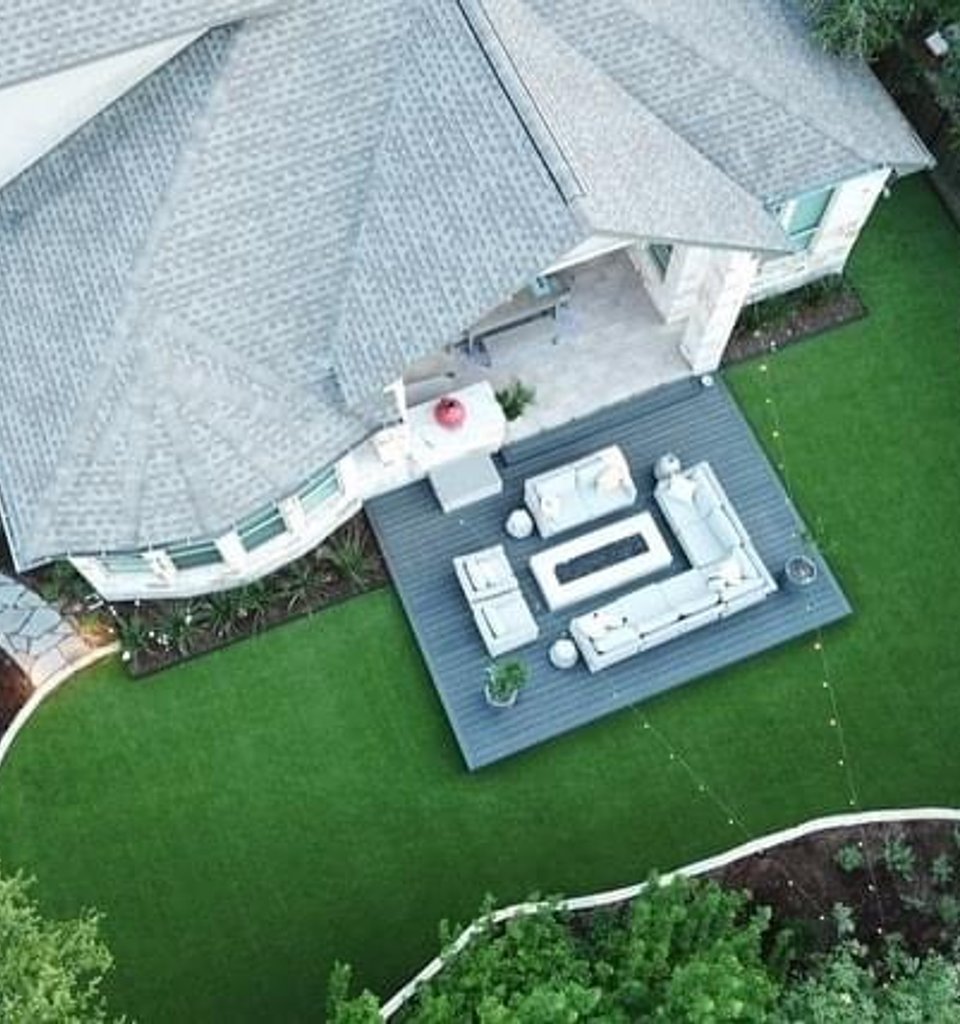 Bee Cave Backyard Under the Oaks
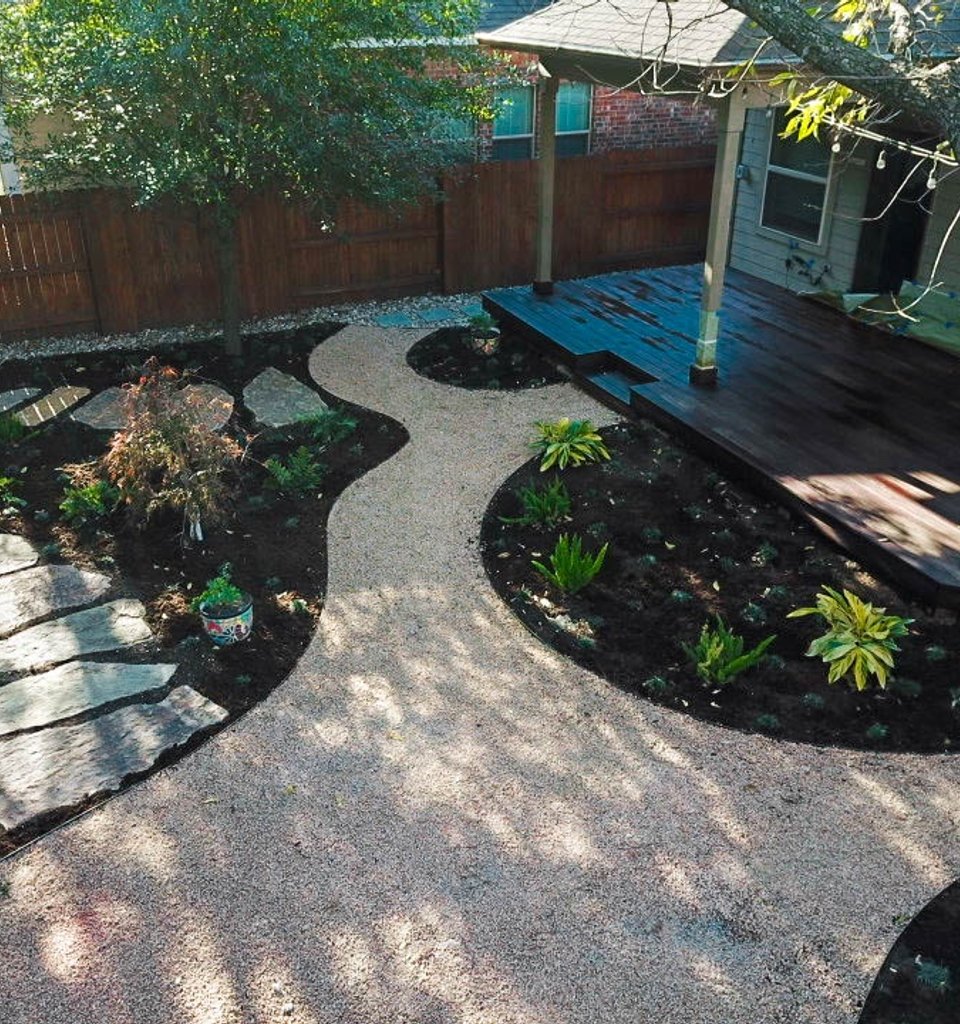 Riverplace Shaded Garden Escape
Frequently Asked Questions
A properly built Western Red Cedar fence in Austin lasts about 15 to 20 years with regular maintenance. Eastern Red Cedar runs similar. Pressure-treated southern pine usually lasts 10 to 12 years before pickets warp or rot. The single biggest factor is the posts. Galvanized steel posts outlast wood posts in our clay soils, and sealing the fence within six months of install adds years to its life.
Cedar looks better, resists rot naturally, repels insects, and ages to a soft gray if left untreated. Pressure-treated southern pine costs less up front but tends to warp and twist in Austin heat, and the green tint takes a year or more to fade. For most Austin homeowners, Western Red Cedar is the better long-term value. If budget is tight, treated pine pickets on steel posts is a solid compromise.
Posts are the failure point on Austin fences. Our clay soils swell and shrink with rain and drought, which works wood posts loose over time. Galvanized steel posts shrugged off in a sleeve under the picket line stay tight for the life of the fence, often 25 plus years. Wood posts are cheaper and look traditional, but plan on replacing them before the pickets. We offer both and explain the tradeoffs during your quote.
Side-by-side pickets butt up next to each other for a clean, economical privacy fence. Board-on-board overlaps pickets across the rails, hiding any gaps that open up when the wood dries and shrinks. Board-on-board uses more material and costs more, but it stays private year after year. Shadowbox alternates pickets on each side of the rails and looks the same from both sides, which is great for shared fence lines.
Yes. We offer stain and seal as an add-on, and we strongly recommend doing it within six months of install. Texas UV is brutal on bare cedar. Sealing locks in the color, slows cupping, and pushes the life of the fence years longer. We use penetrating oil-based stains rated for high UV exposure.
Standard residential post holes go 24 to 30 inches deep, with concrete footings flared at the base. Where we hit caliche or limestone, we use a rock auger or jackhammer to break through enough material to seat the post and lock it with concrete. Skipping that step is why so many Austin fences lean within a few years. We do not shortcut post-setting in rock.
Some movement is normal. Wood is a living material and Austin summers are punishing. Cedar moves less than pine, and a sealed fence moves less than an unsealed one. We use kiln-dried pickets where possible and stagger fasteners to keep boards flat. The biggest defense against warping and cupping is sealing the fence within the first six months of installation.
Call us at (737)-321-7812 or fill out the contact form on this page. We schedule free on-site quotes within one business day. You will get an itemized estimate that covers picket species, post type, height, gate count, and stain options, with no pressure to decide on the spot.