

Drip Irrigation Installation in Austin, TX
Drip irrigation is the most water-wise way to keep beds, trees, and native xeriscape alive on Austin’s once-a-week schedule. We put water right at the root, so almost none is lost to heat or overspray. Veteran-owned, 5.0-star rated, with TCEQ-licensed irrigators and over 20 years of design-build work across the greater Austin area.
Beds and trees do not want a sprinkler. They want water at the root. Drip irrigation delivers a slow, steady trickle straight to the root zone, so the water soaks in instead of blowing away in the wind or evaporating in the Texas sun. That makes drip irrigation the most water-efficient way to keep flower beds, raised beds, shrubs, trees, and native xeriscape thriving on Austin’s once-a-week schedule. Thrive Landscape and Design is a veteran-owned, design-build landscaper with over 20 years building water-wise irrigation across Travis, Williamson, and Hays counties, and we hold a 5.0 Google rating from 70+ reviews. Our drip irrigation system installation is handled by TCEQ-licensed irrigators, so the work meets state code and the right backflow protection. We design the zones, set the emitters to each plant, convert tired spray zones to drip, and tune the run times for your watering day. Want to check the rules first? See the City of Austin watering schedule for your assigned day.
Learn More
- 500+ Projects Completed
- 20+ Years Experience
- 5.0 Google Rating
Explore Our Full Irrigation Lineup
Sprinkler Installation
Full in-ground systems zoned by hydrozone, with matched heads for the lawn, a backflow preventer, and freeze protection built in.
Learn More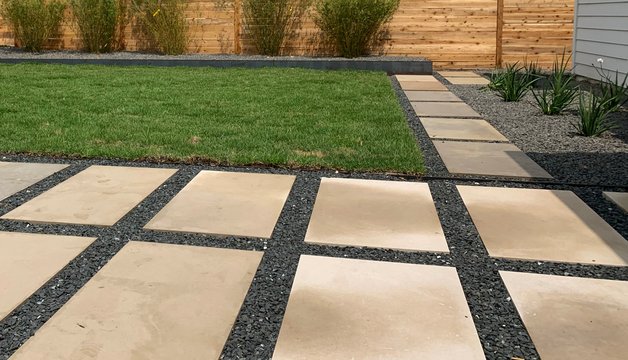
Smart Irrigation
A weather-based controller that adjusts run times to rain and heat, skips a cycle after a storm, and keeps you on Austin’s schedule.
Learn More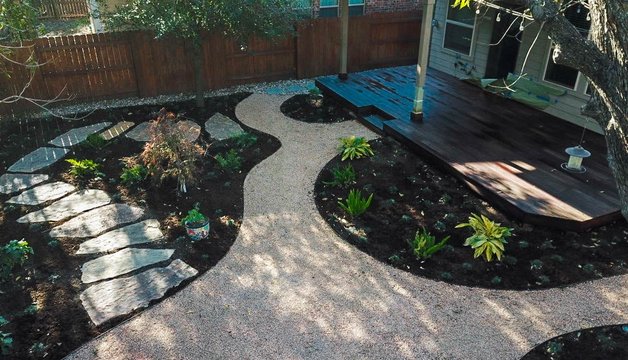
Irrigation Repair
Broken heads, leaking valves, cut wires, and dead zones fixed fast. We troubleshoot any system, drip or spray, no matter who installed it.
Learn More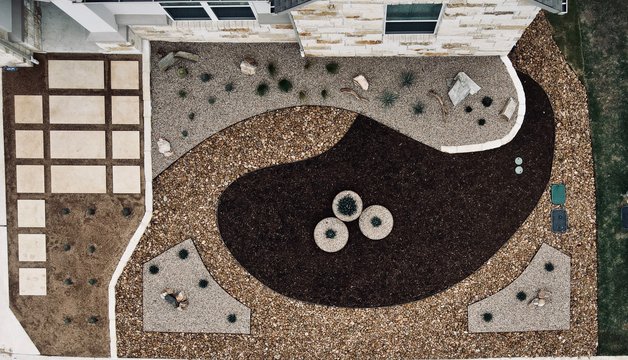
All Irrigation Services
See the full range of sprinkler, drip, smart, and repair work we do across Austin and the Hill Country.
Learn More
Our Process
Free On-Site Design Visit
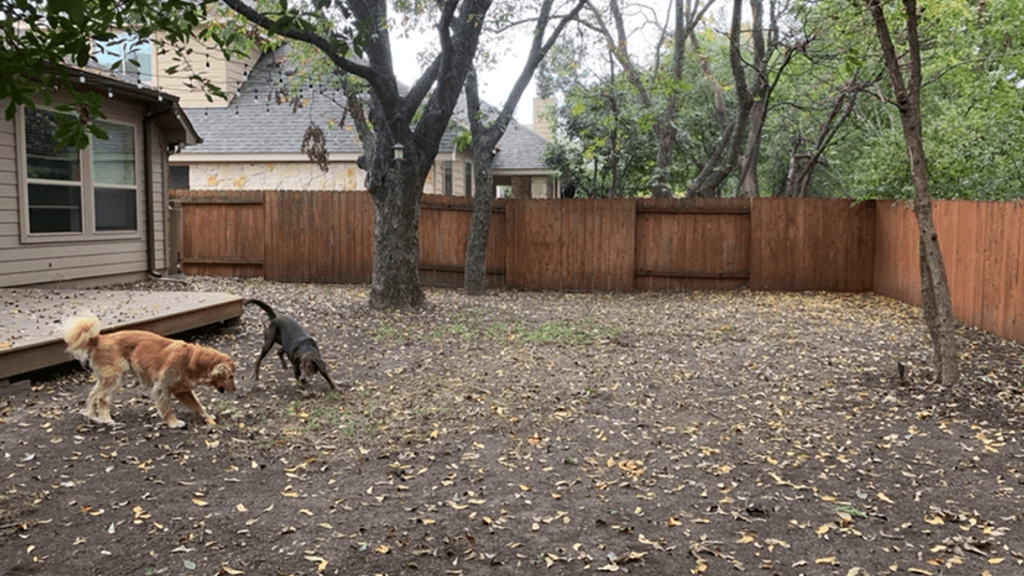
We walk the yard with you and map the beds, trees, and xeriscape that need water. We read the soil, note the sun and shade, and group plants with similar needs. You get an honest drip irrigation layout and a clear, itemized written estimate, with no pressure to decide on the spot.
Zone Mapping & System Tie-In
We split the yard into hydrozones so each bed gets only what it needs. Every drip zone gets its own valve, a pressure regulator, and a filter, since drip runs at low pressure. We tie the drip into your water supply with the right TCEQ-required backflow protection, whether it is a new system or an add-on to your sprinkler lines.
Install & Emitter Placement
We run the drip line and tubing through each bed and set an emitter at every plant’s root zone. Thirsty plants get more flow, tough natives get less. Trees get slow-release bubblers or rings that soak the root flare. Then we tuck the lines under the mulch so the bed looks clean and the line stays protected.
Test, Flush & Adjust
We pressurize the zone, flush the line clean, and check every emitter to confirm each plant is getting water. We look for leaks, clogs, and dry spots, and we fine-tune flow where a plant needs more or less. This is where a drip system either works for years or fails early, so we do not skip it.
Schedule & Walk-Through
We program your controller to your assigned watering day and set drip run times for a slow, deep soak. Then we walk the system with you, show you the valves and shutoff, and explain how to care for it. You end with beds and trees on a water-wise schedule that fits Austin’s once-a-week rules.
Water-Wise Drip Irrigation
Travis, Luis and the crew did an amazing job on our front yard landscaping. Travis had a vision that we could've never come up with on our own. They were communicative, hard working and had incredible attention to detail. We were really impressed with our experience and will… Read more

We’ve been very impressed with Travis and his team at Thrive Landscaping. From the initial design consultation through revisions and installation, the entire process was smooth, thorough, and high quality. We needed an HOA-compliant design that improved drainage and reduced… Read more
Travis was very responsive on the pricing . Luis and the crew did an amazing job and fixed a lot of problems that the prior firm had created. Very pleasant group and seem to want to please clients.
Great people providing outstanding service. Our yard has never looked better. And best of all, they stand behind their work. If something needs attention after the job is finished, they’re right on it.
After interviewing several companies, we chose Thrive Landscape to create some hardscaping for our back yard. They installed stone paving for our patio and pool area, a gravel area for our fire ring, and a raised gravel pad for a greenhouse. Everything looks great! We had a good… Read more
Thrive replaced some dying plants in a white rock bed and left it clean and beautiful. You would never know they had been in the rock bed at all - no dirt, no disruption - they left it better than they found it!
Our neighbor a few houses down had Thrive do his property and we liked how it looked, so we decided to contact them to see what it would cost to do our house. Wanted to get rid of the sand burrs and decided to do stone, rock and mulch for the whole yard in front of the house. I… Read more
We have used Thrive landscape for several projects over the past two years. They have delivered outstanding service, careful attention to detail, and impeccable service and care after the project was complete. Travis Odom is outstanding, and his vision helped us transform our… Read more
We were very pleased with Thrive from the initial bid to the completion of the project. We had our front yard and backyard landscaped. Communication was excellent and when a couple issues occurred they were quickly resolved. The onsite crew was great to work with and were… Read more
Excellent service and advice. Knowledgeable, on time, communicative owner, and crew. This is the place you want to call for your landscaping needs! We are extremely satisfied with the outcome and will use the service again. Thank you Travis and crew.
I was really pleased with Thrive. Travis arrived exactly on time for the quote, had a great design, and was able to start quickly once the plans were approved by my HOA. The crew was polite and worked quickly. They left the whole worksite very neat, and my front yard now looks… Read more
Had grass that was dead, Travis and his team transformed my backyard in a few days!
I am a repeat customer of Travis's. He recently transformed my front yard. The design was perfect for what we wanted to accomplish and the crew did high quality work which included clean-up. I will keep coming back to him in the future.
Thrive is a very professional and excellent business - they did a wonderful job on my project and I couldn't be more pleased with the end results. Will definitely use them again!
I had an outstanding experience with Thrive. Quality, honesty, value and customer service were phenomenal! Exceeded my expectations!
Swapped out black stone that were killing my plants with mulch. Added a bunch of plants and sod. Also got my irrigation and stone walkway complete. I say it is all looking great.
I don't know where to begin. Travis and his team provided an amazing landscape design, strategy, and results on our backyard for my 50th birthday celebration. Travis was patient and very detailed with his quote and made sure he covered every detail with me. Once we decided to… Read more
I’ve done two projects with these guys to include a landscaping project where I added sod, metal planters, and plants. The second was a fence repair and both turned out great. They were fairly priced, scheduled quickly, executed on time, and worked through my lunch list at the… Read more
We chose Thrive Landscaping after a friend of ours used them for their own backyard and we could not be happier with our decision. Travis and team were incredibly professional, thorough and communicative the entire time. They added new grass, flowers, gravel and lights to our… Read more
Travis with Thrive Landscape & Design did an amazing job redesigning our backyard! They were hard-working, timely, responsive and appreciated their craftsmanship they put into the project. The space looks better than we imagined — highly recommend!
Wow! Travis and his team did an amazing job refreshing our back yard! They were professional, prompt, respectful and above all had an eye for detail! It was an absolute pleasure working with them to create our dream back yard! I highly recommend Thrive Landscape and DESIGN… Read more
Our project was the tear-out, re-design and rebuild of a fairly substantial deck. Great experience with Travis Odom and Thrive Landscape. Travis is congenial, professional and great to work with. The guys on site did excellent work. We’re very happy with the finished product and… Read more
Mr Travis Odom made an excellent, unique, and original cedar fence design that we ended up using.
Great design and construction for my landscaping project. Travis and his crew were very attentive and detailed. They also took on board our feedback and we’re very willing to evolve their designs.
Travis did a great job fixing the drainage along the side of my house! Was very responsive, timely, and reasonably priced. Would reach out to again for any future landscaping needs.
Travis was very responsive and did an excellent job designing our difficult yard. We LOVE the end result and can’t wait to do phase two. Can’t say enough how happy we are with the design!
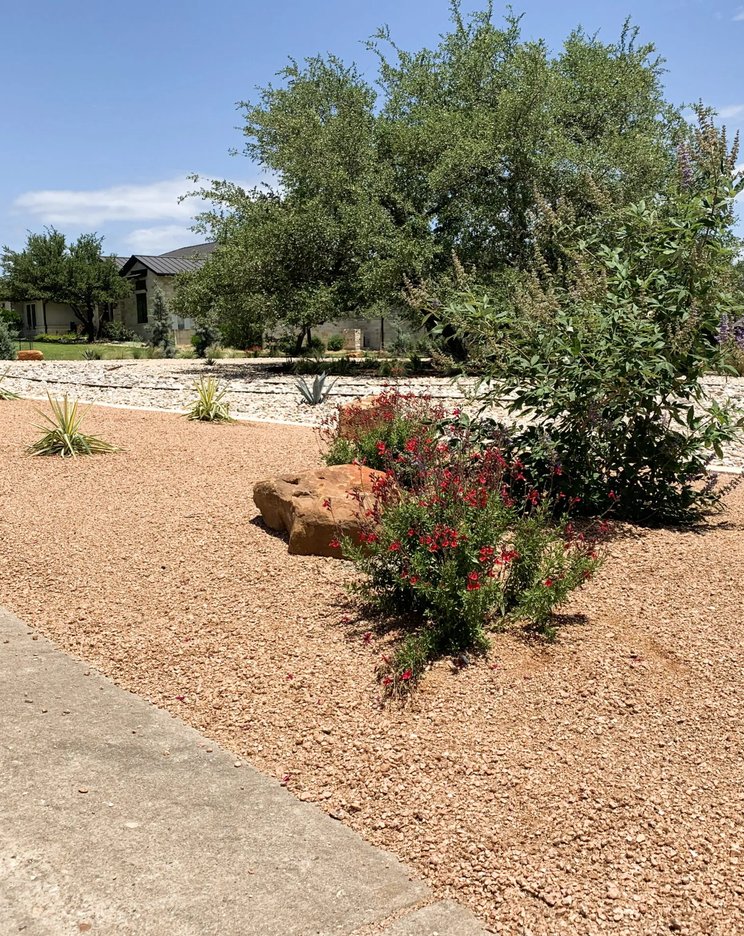
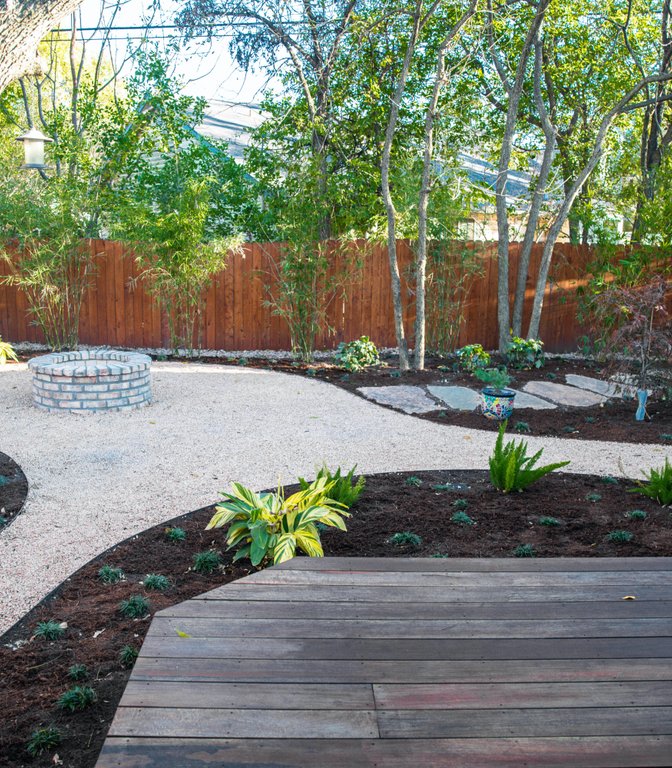
Beds, Trees & Xeriscape
Root-Zone Watering For Central Texas Plants
Drip irrigation shines anywhere plants grow in a defined bed. Here is where we use it most on an Austin lot, and why each one wins on a once-a-week schedule. Every zone runs at low pressure with its own filter and regulator.
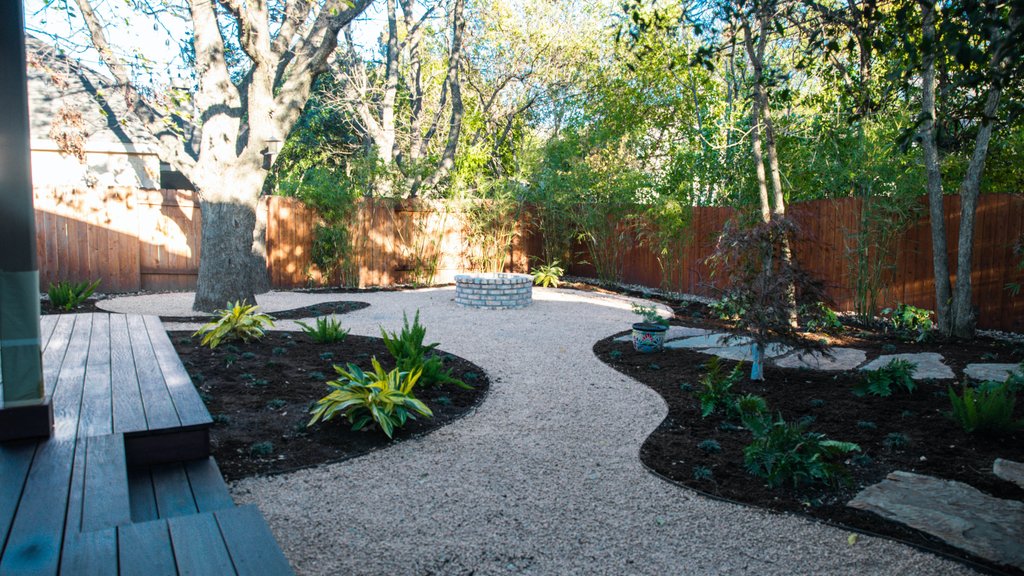
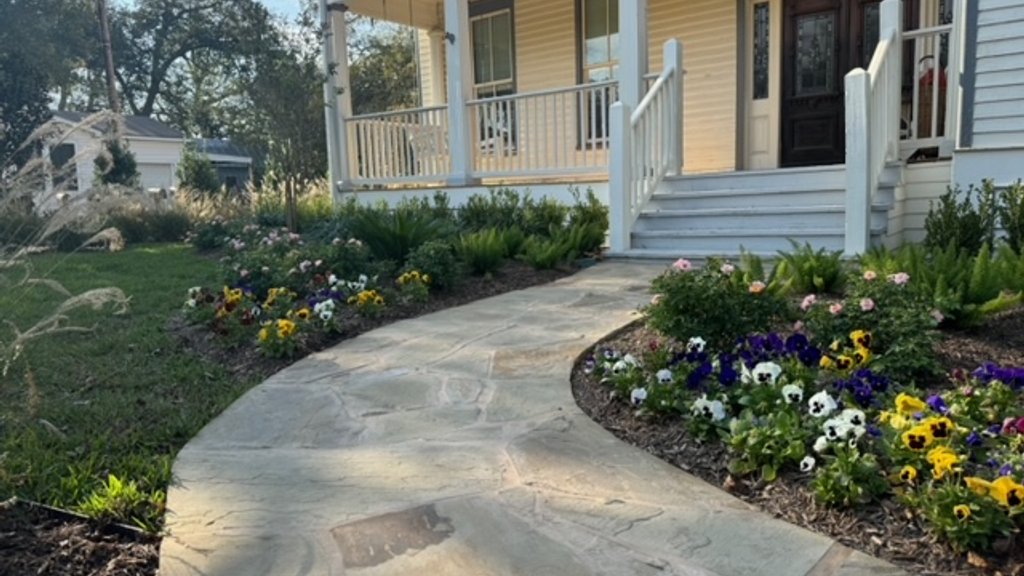
Request A QuoteDrip line runs through the bed and sets an emitter at each plant, so water hits the roots and not the mulch or the fence. It keeps foliage dry to fight disease and skips the bare ground between plants. This is the upgrade most homeowners feel first.
Trees and large shrubs do best on slow-release bubblers or drip rings that soak the root flare deeply. A slow, deep watering pushes roots down, which builds a stronger, more drought-tough tree than a quick spray ever could.
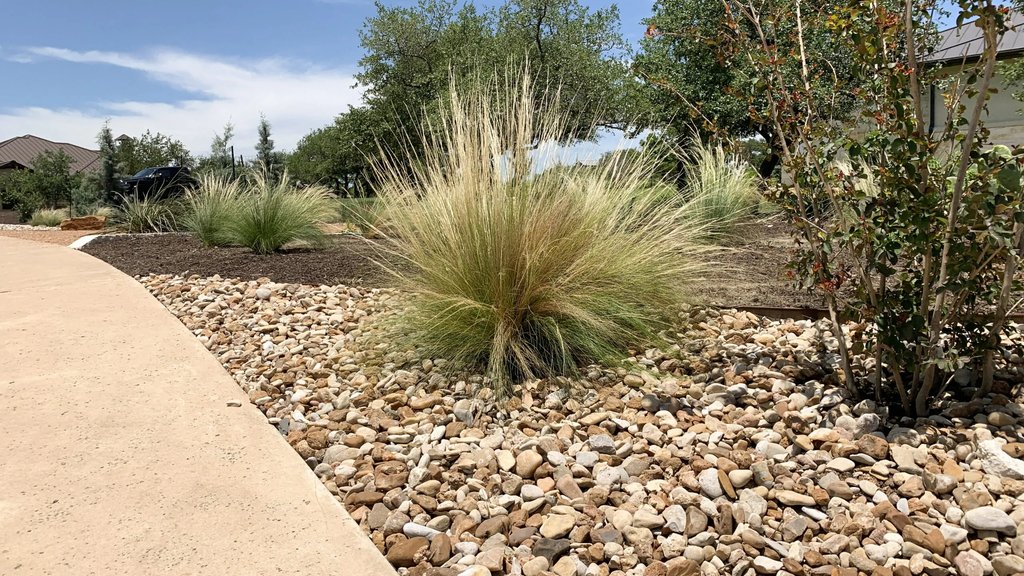
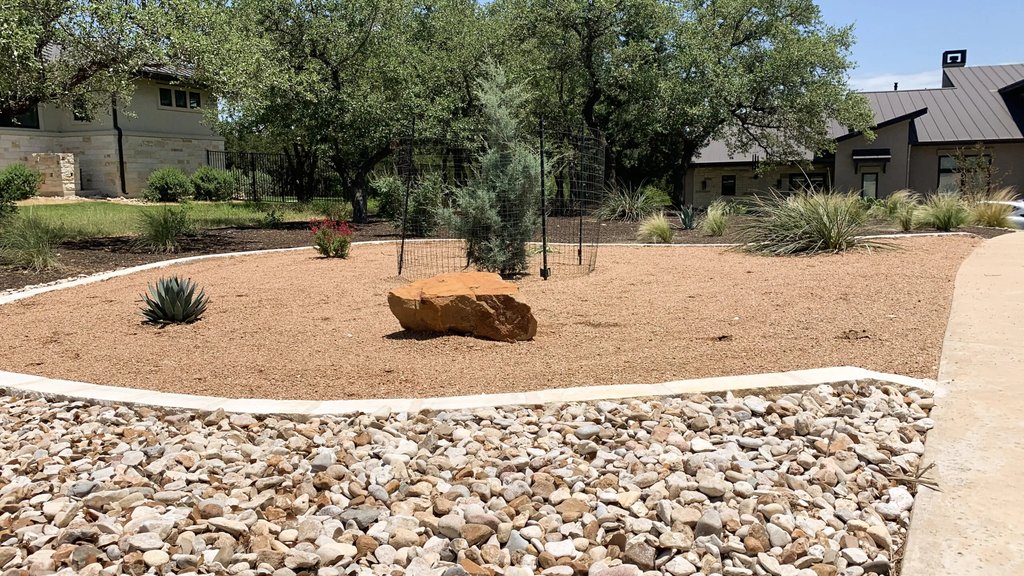
Drip pairs perfectly with native and drought-tolerant xeriscape. It waters each plant directly and skips the gravel and pathways between them. New plants get a steady soak to establish, then you can dial the system back as they settle in.
On Austin’s expansive clay, soil that swings from bone-dry to soaked can stress a foundation. Drip along the foundation beds keeps soil moisture steadier than a spray head that floods one day and dries out the next. We plan it with your grading so water moves away from the house.
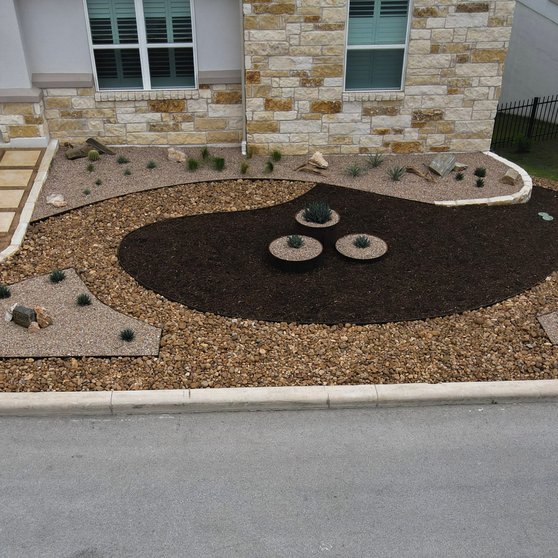
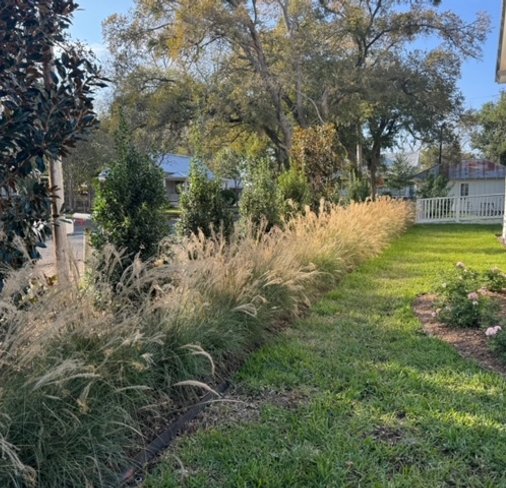
Why Choose Thrive Landscape and Design?
Most Water-Efficient Delivery
Drip puts water at the root zone, so there is no evaporation loss, no wind drift, and no overspray. It is the most water-wise way to keep beds and trees alive on one watering day a week.
TCEQ-Licensed Irrigators
Texas requires a TCEQ-licensed irrigator for any irrigation work, drip included. We pull the right backflow protection and build to state code, so your system is legal and safe.
Spray-To-Drip Conversions
Already have spray heads in the beds? We convert tired spray zones to drip with the right regulator and filter, so the same valve waters roots instead of leaves and pavement.
Veteran-Owned, 20+ Years
We are a veteran-owned, design-build landscaper with over 20 years in Central Texas and a 5.0 Google rating from 70+ reviews. You work with the team that designs and builds your system.
Drip Irrigation Across Austin & the Hill Country
We design and install drip irrigation across Austin and the surrounding Hill Country, from native xeriscape in Dripping Springs to garden beds in Round Rock and shaded yards in River Place, all built water-wise for the once-a-week schedule and our clay and caliche soils.
Frequently Asked Questions
Yes. Drip is the most water-efficient way to water beds, trees, and natives. It drops water right at the root zone, so almost none is lost to evaporation, wind drift, or overspray. Spray heads throw water into the air, where the sun and wind steal a large share first. On Austin’s year-round, once-a-week schedule, that efficiency lets a single deep watering day carry your beds through the week.
Cost depends on the size of the area, how many zones it needs, and whether we add drip to an existing system or build from scratch. Drip irrigation cost is often driven by the number of zones, since each needs a valve, a pressure regulator, and a filter. Converting one spray zone is the most affordable start. A full bed, tree, or xeriscape design costs more. We give an itemized, on-site estimate for free.
Yes, and it is one of the best upgrades for a bed full of plants. We cap the old spray heads, add a conversion kit at the valve with a regulator and filter, and run drip line through the bed to each plant. The same zone now waters roots instead of leaves and the fence. A spray-to-drip conversion cuts waste, keeps foliage dry to fight disease, and is gentler on mulch.
Drip is ideal for flower beds, raised beds, shrubs, trees, foundation plantings, and native or drought-tolerant xeriscape. Anywhere plants grow in a defined bed, drip waters each root zone and skips the bare gravel between them. Trees do best on slow-release bubblers that soak the root flare. Turf is the one spot we usually keep matched spray, since lawns need even coverage.
Drip moves water through low-pressure tubing with emitters spaced along it. Each emitter releases a slow trickle at the base of a plant, so water soaks into the root zone instead of spraying through the air. That slow rate matches how fast our clay can absorb water, which cuts runoff. Because the water never goes airborne, the heat and wind cannot evaporate it first. You get healthier plants on less water.
Yes. Texas requires anyone who installs, repairs, or maintains an irrigation system, including drip, to be a TCEQ-licensed irrigator or to work directly under one. Drip ties into the same water supply as the rest of the system, so it needs the right backflow protection and has to meet state rules. Our work is handled by TCEQ-licensed irrigators. If a drip quote comes in suspiciously cheap, ask whether the installer is licensed.
Austin runs a year-round, once-a-week conservation schedule that assigns each address a watering day. Drip zones run longer than spray zones, because the goal is a slow, deep soak that reaches the full root zone. A typical bed might run thirty minutes to over an hour on the watering day, depending on the plants and soil. A smart controller can skip the cycle after a good rain. We set your run times during the install.
The terms overlap a lot. Micro irrigation is the umbrella for any low-volume, low-pressure system, and drip is the most common type within it. Classic drip uses tubing with emitters under the mulch. Other micro options include micro-sprays and bubblers for groundcovers and tree rings. They all share one goal: deliver a small amount of water close to the plant with little waste. We pick the right mix for each plant during design.