

If you have lived through a single August in Austin, you already know the problem: a traditional lawn here is a money pit. Triple-digit heat scorches it brown, the city's watering rules limit how often you can run the sprinklers, and the bill climbs anyway. More and more homeowners across Central Texas are reaching the same conclusion and looking for a smarter way to cover the ground, and the answer almost always starts with hardscape.
Water-wise hardscape is the backbone of nearly every low-water yard we build in Austin and the Hill Country. Done thoughtfully, materials like decomposed granite, gravel, and flagstone do the heavy lifting a thirsty lawn used to: they define space, handle foot traffic, and stay good-looking through the worst of summer without a single drop of irrigation. Here is how we use them, and how to get them right on Central Texas soil.
What "water-wise hardscape" actually means
Water-wise hardscape is simply replacing the turf you never use with durable, low-maintenance surfaces that earn their space. The goal is not to pave the whole yard. It is to cut the high-water lawn down to the part you actually walk on and play on, then hand the rest of the ground over to paths, patios, gravel beds, and planting areas that thrive on rainfall alone.
The best water-wise yards in Austin are a balance: hard surfaces for structure and movement, softened by drought-tough native plants and mulch. Get that balance right and you end up with a landscape that looks more finished, not less, and one that asks for a fraction of the water. This is the hardscape side of the broader approach we cover in our guide to xeriscaping in Austin.
Decomposed granite: the Austin workhorse
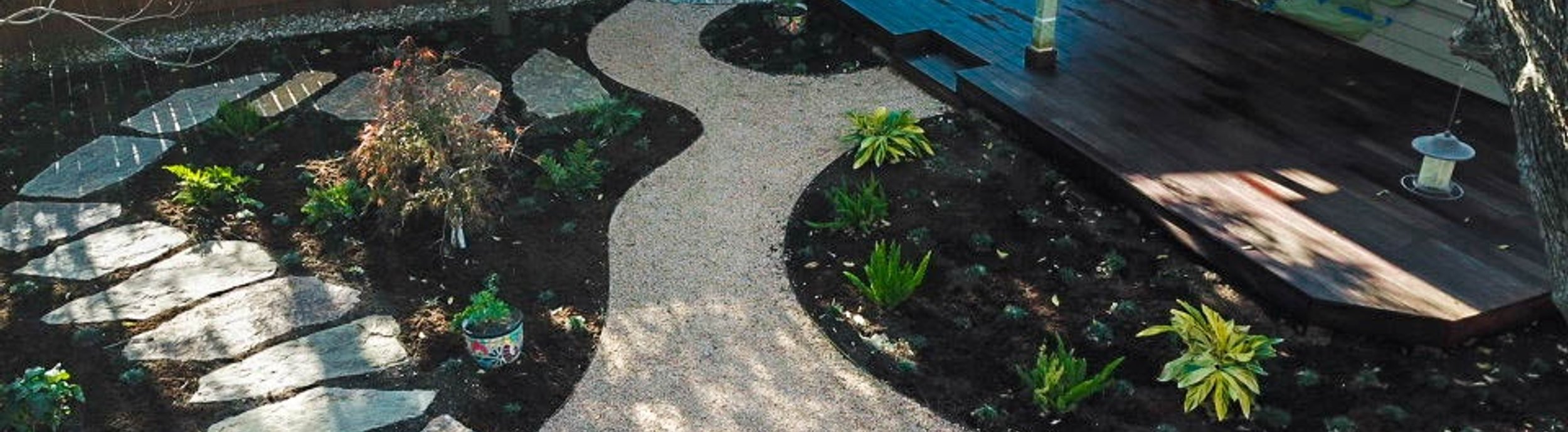
If there is one material that defines a Hill Country yard, it is decomposed granite, or DG for short. It is exactly what it sounds like: granite that has broken down into a mix of coarse sand and fine gravel. The Hill Country northwest of Austin is famous granite country. The pink granite around Marble Falls and Llano is the same stone the Texas Capitol was built from, and a lot of the decomposed granite sold here carries that warm tan-and-pink color that looks completely at home against our limestone and native stone.
DG is popular here for good reason. It is affordable, it drains well, it stays cooler underfoot than concrete, and it reads as natural rather than manufactured. We use it for:
- Pathways and walkways that wind through planting beds
- Casual patios and seating areas under a shade tree
- Side yards and dog runs where grass never had a chance
- Fire pit and gathering spots that need a stable, informal floor
- Mulch-style ground cover in low-traffic xeriscape beds
You can see it doing all of those jobs in projects like our River Place shaded garden escape, where decomposed granite ties the deck, fire pit, and native beds together into one cohesive space.
Getting the install right
DG looks simple, but a good one and a bad one are not the same project. The difference is what happens before the granite ever goes down. We start with a compacted base and proper grading so water sheds off the surface instead of pooling and washing channels through it, which is a real concern given how hard it can rain here. Steel or stone edging holds everything in place so the granite does not migrate into your beds and lawn over time.
For paths and patios that see daily traffic, we mix in a stabilizer that binds the fines into a firm, almost paved surface while still letting water soak through. Skip that step on a high-use area and you get loose grit tracked onto every shoe and pair of socks in the house. Two to three inches over a solid base is the sweet spot for most residential work.
Gravel, crushed stone, and dry creek beds
Decomposed granite is the soft, walkable end of the spectrum. Larger gravel and crushed stone handle the jobs DG cannot. We reach for them when we need surfaces that stay put on a slope, beds that never need watering, and drainage features that do real work.
A few distinctions worth knowing:
- Crushed gravel has angular edges that lock together, so it stays in place on inclines and around foundations.
- River rock is smooth and rounded, perfect for decorative beds and the bottoms of drainage swales where you want water to move.
- Decomposed granite is the finest and most walkable, which is why it wins for paths and patios.
Austin's feast-or-famine rainfall makes drainage more than an afterthought. When a storm dumps two inches in an hour onto our clay and caliche soils, that water has to go somewhere. A well-placed gravel dry creek bed channels runoff away from the house and turns a problem area into a feature. When the issue is bigger, gravel works hand in hand with subsurface solutions like French drains to keep water off your foundation. Because gravel and DG are permeable, they also let rain soak into the ground instead of sheeting off the way it does over concrete.
Flagstone and pavers: the destination surfaces
Loose materials are the connective tissue of a yard. For the spots where people actually gather, such as the dining patio, the grill station, or the landing outside the back door, we usually step up to a flagstone patio or pavers. Set in a bed of decomposed granite or with gravel joints, flagstone gets you a solid, level surface that still breathes and drains, plus that timeless Hill Country look.
Pairing a flagstone patio with DG paths and gravel beds is one of our favorite moves because every surface is permeable, every surface is low-water, and they layer into something that feels designed rather than patched together. When that gathering space becomes the heart of the yard, it is the start of a true outdoor living space, complete with a fire pit, seating walls, and shade.
The balance rule: rock still needs plants
Here is the mistake we get called to fix more than any other: the all-rock yard. Someone rips out the lawn, covers everything in gravel, and ends up with a hot, glaring moonscape that actually raises the temperature around the house. Bare rock soaks up sun and radiates heat. The fix is not less hardscape. It is more plants.
We use stone and granite to frame and connect, then let drifts of grasses and perennials soften every edge. The native and adapted plants that thrive in the Central Texas heat are built for exactly this: cenizo, salvia, gulf muhly, and red yucca shrug off the reflected heat that would cook a thirstier plant. A two-to-three-inch layer of mulch in the planting beds keeps roots cool and locks in moisture, and the few plants that do need water get it efficiently through drip irrigation instead of a wasteful spray head. That combination of permeable hardscape, tough plants, drip lines, and mulch is the whole recipe behind our drought-tolerant landscaping work.
Austin will help pay for it
One of the best reasons to go this route right now is that the city rewards it. Austin Water's WaterWise Landscape Rebate pays residential customers to convert thirsty turf into the kind of low-water landscape we have been describing. Rock gardens and decomposed granite areas qualify, gravel paths qualify, and stone patios qualify, along with native plant beds and the drip conversions that go with them.
It is worth noting what does not qualify: artificial turf and permeable concrete are both excluded from the rebate. That is one more reason we steer most Austin homeowners toward DG, gravel, and native beds over a slab of fake grass. You get a better-looking, cooler, more permeable yard, and you may get money back for it. Programs and amounts change, so check the current guidelines before you start, but the incentive has made the switch an easy call for a lot of our clients.
Mistakes we see again and again
- No edging. Without a hard border, decomposed granite and gravel slowly creep into beds and lawn until the clean lines disappear.
- Skipping the base. Granite laid straight on native soil ruts, pools, and washes out in the first big storm.
- No drainage plan. On our clay and caliche, water has to be told where to go. Grade first, then place stone.
- Going too thin. A skim coat of DG never firms up. Build it to depth over a compacted base.
- All rock, no green. The hottest, harshest yards are the ones with no plants to soften them.
Maintenance is light, not zero
A water-wise hardscape is about as low-maintenance as a yard gets, but it is not no-maintenance. Decomposed granite paths benefit from a fresh top-dressing every few years as foot traffic wears them down, and an occasional raking keeps the surface even. A few weeds will find their way into any gravel area, so a quick pass now and then keeps things tidy. Compared to mowing, edging, fertilizing, and watering a lawn all summer, it is a rounding error.
Ready to trade the lawn for something that lasts
A thoughtfully built water-wise hardscape is the rare upgrade that saves water, cuts maintenance, and looks better through an Austin summer than the lawn it replaced. The key is design: getting the balance of stone and plant right, planning for drainage, and building each surface to last.
If you are tired of fighting your grass, browse our portfolio to see decomposed granite, gravel, and flagstone at work in real Central Texas yards, then learn more about our design-build and xeriscaping services. When you are ready, request a free quote and we will walk your property and map out a water-wise landscape that fits how you actually live outside.