

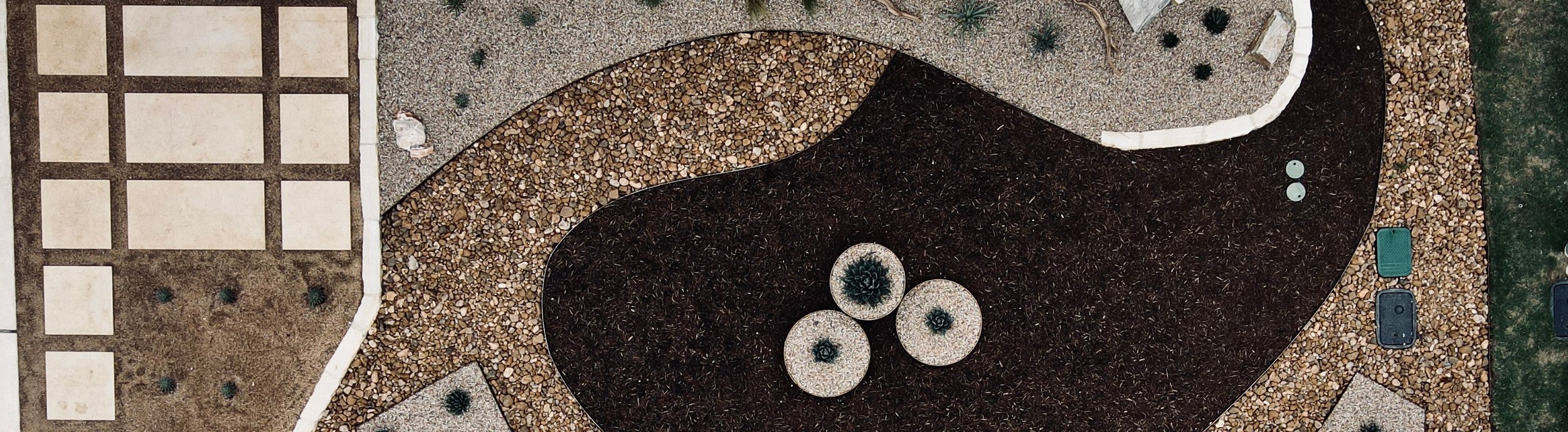

Austin summers are long, bright, and unforgiving on a traditional lawn. Between triple-digit afternoons and the watering restrictions that come and go across Central Texas, a thirsty yard is a constant battle — and an expensive one. Xeriscaping is the way out. Done well, a xeriscape isn't a gravel desert; it's a layered, living landscape that looks better the hotter it gets, and asks for a fraction of the water.
Here's how we approach a water-wise yard for our Austin and Hill Country clients.
What xeriscaping actually means
Xeriscaping is landscape design built around water conservation. The goal is a yard that thrives on rainfall and minimal supplemental watering once it's established. That comes down to a handful of principles: thoughtful design, healthy soil, efficient irrigation, the right plants in the right places, mulch, modest turf areas, and sensible maintenance.
None of that requires giving up color or softness. Some of the most striking landscapes we build are also the most drought-tolerant.
Start with a plan, not a plant list
The biggest water savings come from design decisions, not individual plants. Before anything goes in the ground, we map how water and sun move across your property — where it pools after a storm, which beds bake in full afternoon sun, and where shade from the house or oaks creates cooler microclimates.
That map lets us group plants by how much water they need, a practice called hydrozoning. Thirstier plants go together in one zone near the house; tough, sun-loving natives go in the hottest, driest spots. You water each zone for what it actually needs instead of soaking the whole yard to satisfy its thirstiest corner.
Choose plants that belong here
The heart of a successful xeriscape is native and adapted plants that evolved for Central Texas heat and limestone soils. Once established, they shrug off the summer with little to no extra water.
A few of our go-to performers:
- Texas sage (cenizo) — silvery foliage and purple blooms that pop after rain
- Salvia greggii (autumn sage) — months of color and a magnet for hummingbirds
- Gulf muhly and other ornamental grasses — movement, texture, and a pink fall show
- Red yucca and agave — bold architectural shapes that need almost nothing
- Blackfoot daisy and damianita — low, cheerful groundcovers for hot edges
We get into specifics in our guide to native and adapted plants for the Central Texas heat. For a full bed makeover, our planting installation and xeriscaping services handle everything from soil prep to the finished design.
Use gravel, decomposed granite, and hardscape with intention
Reducing high-water turf is one of the fastest ways to cut your irrigation bill. That doesn't mean paving everything — it means replacing the lawn you never use with surfaces that earn their space. Decomposed granite paths, gravel beds, and flagstone or paver patios define the yard, handle foot traffic, and keep dust and mud down.
The key is balance. A xeriscape that's all rock reads as harsh and actually runs hotter. We use stone to frame planting beds and connect spaces, then let drifts of grasses and perennials soften every edge.
Water smart, not often
Even drought-tolerant plants need consistent water while their roots establish in the first year. The trick is delivering it efficiently. Drip irrigation puts water at the root zone where plants use it, instead of spraying it into the hot air where much of it evaporates.
Pair that with a smart irrigation controller that adjusts to the weather and skips a cycle after rain, and you've eliminated most of the waste that comes with a conventional sprinkler system. Many Austin homeowners see their summer water bills drop significantly after the switch.
Mulch is non-negotiable
A two-to-three-inch layer of mulch over every planting bed is the cheapest water-saving move you can make. It shades the soil, slows evaporation, moderates root temperature, and suppresses weeds that would otherwise compete for moisture. We top-dress beds as part of regular mulching so the soil never bakes bare.
Maintenance keeps it water-wise
A xeriscape is low-maintenance, not no-maintenance. Light seasonal pruning, refreshing mulch, and checking the irrigation for clogs or leaks keep the system efficient and the plants healthy. The payoff is a yard that gets fuller and more established every year while using less water than the one it replaced.
Ready to lose the thirsty lawn?
A well-designed xeriscape is the rare upgrade that saves money, cuts maintenance, and looks better through an Austin summer than what it replaced. If you're tired of fighting your lawn, take a look at our recent projects for inspiration, then request a free quote — we'll walk your property and design a water-wise landscape that fits how you actually live outside.