

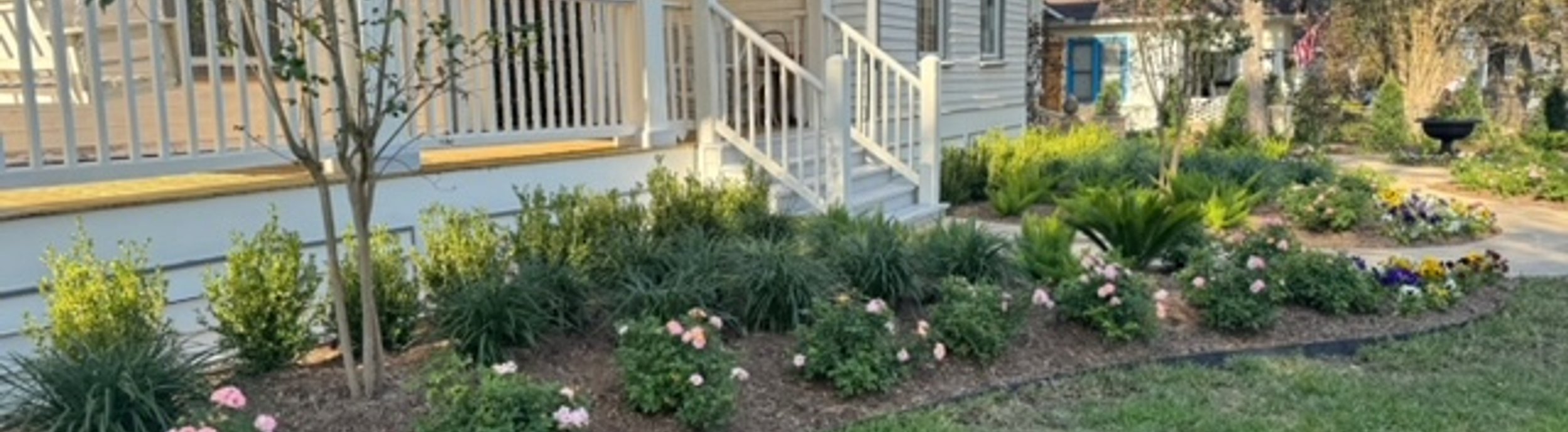

The plants that struggle in Central Texas are usually the ones that were never meant to be here. The plants that thrive are the ones that evolved for our heat, our limestone soils, and our feast-or-famine rainfall. Build your beds around those, and you get a landscape that looks good on little water and shrugs off the worst of an Austin August.
Here are seven of our favorite natives and well-adapted plants for Hill Country yards — a mix of perennials, grasses, shrubs, and trees you can layer into almost any design.
Drought-tough perennials
1. Salvia greggii (Autumn Sage)
This is one of the hardest-working perennials in Central Texas. Autumn sage blooms in red, pink, coral, or white from spring well into fall, asks for almost no water once established, and pulls in hummingbirds and butterflies all season. A light shearing midsummer keeps it tidy and flowering.
2. Blackfoot Daisy
A low, mounding native covered in small white daisies for most of the year. Blackfoot daisy loves the hottest, rockiest, most neglected spot in the yard — exactly where thirstier plants give up. It's perfect tumbling over the edge of a bed or a low wall.
3. Lantana
For sheer toughness and nonstop color, lantana is hard to beat. The spreading varieties make excellent groundcover, the upright ones fill a bed fast, and pollinators swarm the flower clusters. It thrives in full sun and heat that wilts everything around it.
Ornamental grasses for texture and movement
4. Gulf Muhly
Most of the year Gulf muhly is a fine green clump. Every fall it explodes into a cloud of pink-purple plumes that catches the late light and stops people in their tracks. It's drought-tolerant, deer-resistant, and adds movement that static plants can't.
5. Lindheimer Muhly (Big Muhly)
A larger native grass that forms graceful, silvery fountains four to five feet tall. It's a fantastic backdrop plant or a soft, informal screen, and it stays handsome from spring through winter with no supplemental water once settled in.
Structural shrubs and trees
6. Texas Sage (Cenizo)
Cenizo is the quintessential Hill Country shrub — silvery-gray foliage, purple blooms that burst out after a rain, and an iron constitution. It makes a beautiful informal hedge and practically never needs watering once established. Give it full sun and good drainage and leave it alone.
7. Texas Mountain Laurel
If you want a small evergreen tree with presence, this is it. Glossy dark leaves year-round, and in early spring, cascades of purple flowers that smell like grape soda. It's slow-growing but worth the wait, and it handles drought and limestone beautifully.
How to put them together
Picking great plants is half the job. Placing them well is the other half.
- Group by water needs. Keep the few thirstier plants together and let the tough natives anchor the hot, dry zones. You'll water far less overall.
- Layer for depth. Trees and tall grasses in back, shrubs in the middle, perennials and groundcovers up front. Layering reads as lush even when every plant is drought-tolerant.
- Plant in fall when you can. Fall planting lets roots establish through the mild months so plants are ready before summer hits. Spring works too, with attention to watering that first season.
- Mulch every bed. A few inches of mulch keeps roots cool and soil moist — see our note on mulching.
For larger specimens and structural anchors, our tree and shrub planting service sources healthy, well-formed plants and gets them in the ground right. And if you'd rather hand off the whole design, our planting installation team will build the layered, water-wise beds for you.
Build a yard that belongs here
Native and adapted plants are the foundation of every low-maintenance landscape we design. Pair them with smart layout and efficient irrigation and you get a yard that looks its best exactly when everything else in the neighborhood is wilting. Browse our portfolio to see these plants at work, or get a free quote and we'll design beds tailored to your soil, light, and style.