

You finally get the patio set up, sit down with a cold drink, and look up, right into your neighbor's upstairs window. We hear this on almost every backyard consult in Austin. A two-story home goes up on the next lot, a new unit appears behind the house next door, and the 6 foot fence that came with your house stops doing its job.
The good news is that you rarely need a taller fence around the whole yard. You need the right fix in the right spot. Here is how we plan privacy as part of backyard design across Austin and the Hill Country, and which fences, screens, and plants actually hold up here.
What is the best way to get backyard privacy in Austin?
Start with the sightline, not a shopping list. Before we sketch anything, we sit where you sit: the patio chairs, the hot tub, the kitchen window. Then we mark exactly where the view comes from. Most privacy problems are one of three kinds:
- Ground level. A neighbor's yard, an alley, or a street seen through a gap or a low fence. A solid privacy fence fixes this.
- From above. An upstairs window, deck, or balcony looking down. No fence fixes this. A screen, a pergola, or a tree placed near your seating can.
- Noise and movement. Traffic, a busy sidewalk, a barking dog. Dense evergreen planting hides movement and softens noise, but it will not silence a busy road.
The best results we build use layers: a sound fence at the property line, one or two screens close to where you sit, and evergreen plants to soften all of it.
How do you block the view from a two-story neighbor?
Move the screen closer to you. A window about 15 feet up looks right over a 6 foot fence at the property line. An 8 foot screen set a few feet from your patio can block that same window, because the closer a screen is to your eyes, the more of the view it covers. It works like holding your hand up to block the sun.
What we use most:
- A pergola with tight slats or louvers over the seating area, so the view from above lands on the roof instead of on you. We set the slat spacing on our pergolas for privacy, not just shade.
- One or two evergreen trees planted between the window and your chairs, not lined up along the fence.
- Freestanding screen panels right beside the patio. More on those below.
We get this call most from newer neighborhoods in Round Rock, Pflugerville, Cedar Park, and Leander, where two-story homes sit close together. It is growing inside Austin too. Since February 2024, the city's HOME rules let single-family lots hold up to three units, so more homeowners, especially on small East Austin lots, now face a new two-story unit next door.
Can you make your fence taller or add a screen on top?
Sometimes, but check the rules first. Inside Austin city limits, a solid fence on the property line can be 6 feet tall, 7 feet where the ground drops at least a foot along it, and up to 8 feet if it sits on or inside the building setback line. Anything over 7 feet needs a permit. The details are on the City of Austin fencing regulations page, and we cover them in our fence cost guide.
Here is the part most people miss. Those limits apply to "solid" fences, which the city defines as more than 20% solid material. Most lattice and slat toppers are well over that, so we treat a topper as part of the fence height, not a loophole.
That is why we often build a freestanding screen inside the property line instead. Set back that way, it can go up to 8 feet (with a permit above 7), it does not lean on tired fence posts, and it goes exactly where the view is. Round Rock, Cedar Park, Bee Cave, and Lakeway write their own codes, and most HOAs add rules on height, style, and stain, so we check both before we build.
Which privacy trees and shrubs grow well in Austin?
Pick evergreens that handle our heat, dry spells, and rocky or clay soil. These are the plants we reach for most, with growing notes from the Lady Bird Johnson Wildflower Center plant database:
- Carolina cherry laurel. A fast-growing native evergreen that the Wildflower Center calls a "nearly carefree, dark green visual screen." It can reach 40 feet but often stays shorter, and it resents hard shearing, so let it grow loose. Its leaves and seeds are poisonous, and it can rot in clay that stays soggy, so on heavy clay like Pflugerville's we plant it a little high.
- Yaupon holly. Native, low water, and fine in sun or shade. It takes hard pruning, so it makes a tight hedge. It is slow-growing, so buy it bigger.
- Nellie R. Stevens holly. An adapted hybrid holly with dense, dark leaves. Left unpruned, it often reaches 15 feet or more.
- Eastern red cedar. A tough native juniper for dry, rocky ground, usually 30 to 40 feet tall. Like Ashe juniper, it sheds pollen that some people are allergic to.
- Wax myrtle. A native screen shrub, usually 6 to 12 feet, but it wants more water than the others. We save it for moister, low spots.
Deer change the list in Steiner Ranch, Lakeway, and the Hill Country. Cherry laurel is rated "High" for deer resistance, while yaupon and wax myrtle are only "Moderate." Our deer-resistant landscaping guide has the full list, and our tree and shrub planting crews make those calls lot by lot.
Which popular privacy plants should you skip in Central Texas?
Many national privacy lists lead with plants that struggle here. These are the ones we talk people out of:
- Leyland cypress and Green Giant arborvitae. Both grow fast, but their parent species come from cooler climates. Wildflower Center horticulturists say neither is a good match for hot Central Texas summers, and Leyland cypress has shallow roots.
- Red tip photinia. It was a go-to hedge for years, and a fungal leaf spot is a common reason those hedges thin out. A Williamson County AgriLife Extension agent notes the fungus can eventually kill the shrub and suggests replanting with other options.
- Ligustrum, nandina, and golden bamboo. The City of Austin's Parks and Recreation Department asks residents not to buy them, because they escape yards and take over wild areas. Running bamboo also spreads by underground runners and can pop up in the neighbor's yard.
If you already have a thinning photinia hedge, we can pull it and replant the same bed with cherry laurel or yaupon.
How fast will a living screen fill in, and should you plant it this fall?
Plan on a few growing seasons, not a few weeks. How fast you get privacy depends mostly on the size you plant:
- 15-gallon shrubs are the budget choice. They usually need a few seasons to grow together.
- 30- to 65-gallon plants and small trees give you real height on day one. They cost more and need more water to get established.
We space screening shrubs so they grow into one solid wall instead of a row of lollipops. We often put one larger plant at the exact spot where the neighbor's window lines up.
Timing matters as much as size. The Travis County AgriLife Extension office says the best time to plant drought-tolerant plants here is fall, winter, or very early spring. A screen planted in October or November grows roots through the cool months before its first summer. We set up drip irrigation on every new screen. Under Austin Water's current Conservation Stage rules, home drip systems can run two days a week, and you can hand water with a hose any day.
Are freestanding privacy screens and trellises worth it around a patio?
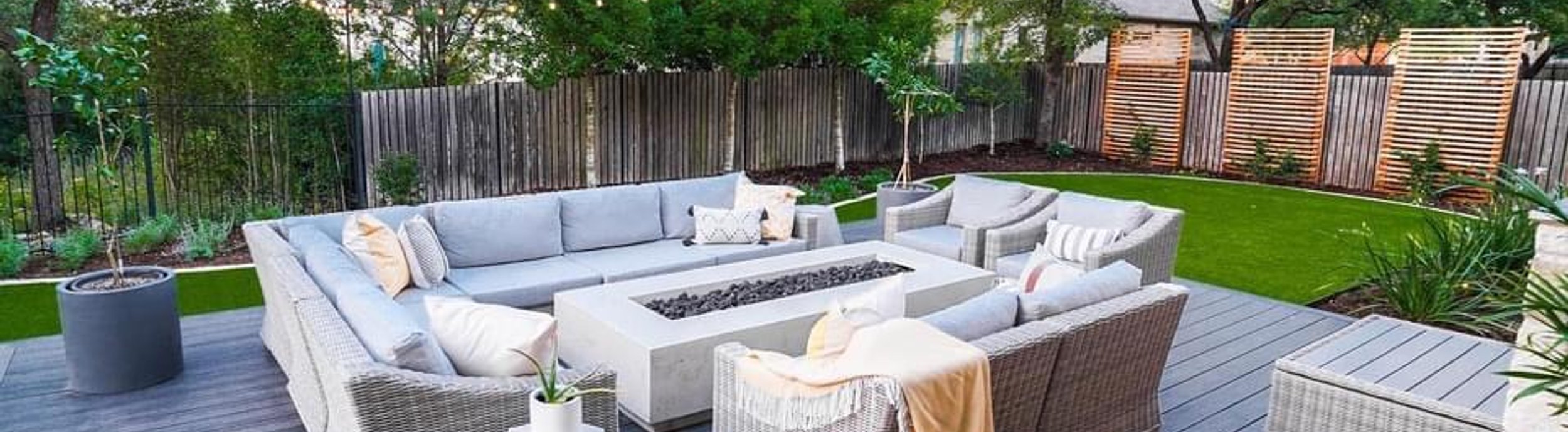
Yes, when they are built like a structure and not like decor. A screen is a short run of wall, usually 6 to 8 feet tall, set right where you need it. In a Bee Cave backyard under big live oaks, we set cedar slat screens just inside the existing fence, beside a new composite deck and fire table. They rise above the fence line to screen the house behind, and the gaps between panels keep the yard from feeling boxed in.
What makes a custom fence or screen last here:
- Deep footings. A tall, solid panel catches wind like a sail. We set posts in concrete deep enough for shifting clay, and we call 811 at least two business days before we dig, as Texas requires.
- Tight slat spacing. Narrow gaps hide the view and still let some breeze through.
- Room for the trees. Post holes can cut oak roots. Inside Austin city limits, work that may disturb the critical root zone of a tree 19 inches or wider needs a city tree review first.
- Living trellises. A cedar or steel trellis covered in native crossvine becomes a green wall. Crossvine clings to fences on its own, though deer browse it in winter.
What is the cheapest backyard privacy that still lasts?
Screen the view, not the whole lot. A new 6 foot cedar privacy fence runs about $35 to $55 per foot in Austin, so raising 150 feet of fence adds up fast. A 12 to 16 foot run of screen panels beside the patio, plus a few large evergreens, often fixes the same problem for much less.
Other ways to keep the cost down:
- Keep the fence you have if the posts are sound, and add screening inside it.
- Plant small where you can wait, and buy big only at the one or two spots that matter.
- Skip roll-up reed and fabric screening. In our experience, Texas sun and wind wear it out in a season or two, and then you pay twice.
The most expensive privacy is the kind you build twice.
Ready to stop feeling watched in your own backyard?
We design and build privacy into complete backyards across Austin and the Hill Country, from the sightline study and a 3D design you can see first to the fences, screens, pergolas, and planting. We don't offer mowing or weekly maintenance, and a well-planned screen needs very little of it.
Fall is the best time to plant a living screen. Call Thrive Landscape and Design at (737) 321-7812 or schedule a design consultation, and we will stand where you sit, find the views that bother you, and plan the fix.